Beyond the Map: What the Street Teaches Me About Travel
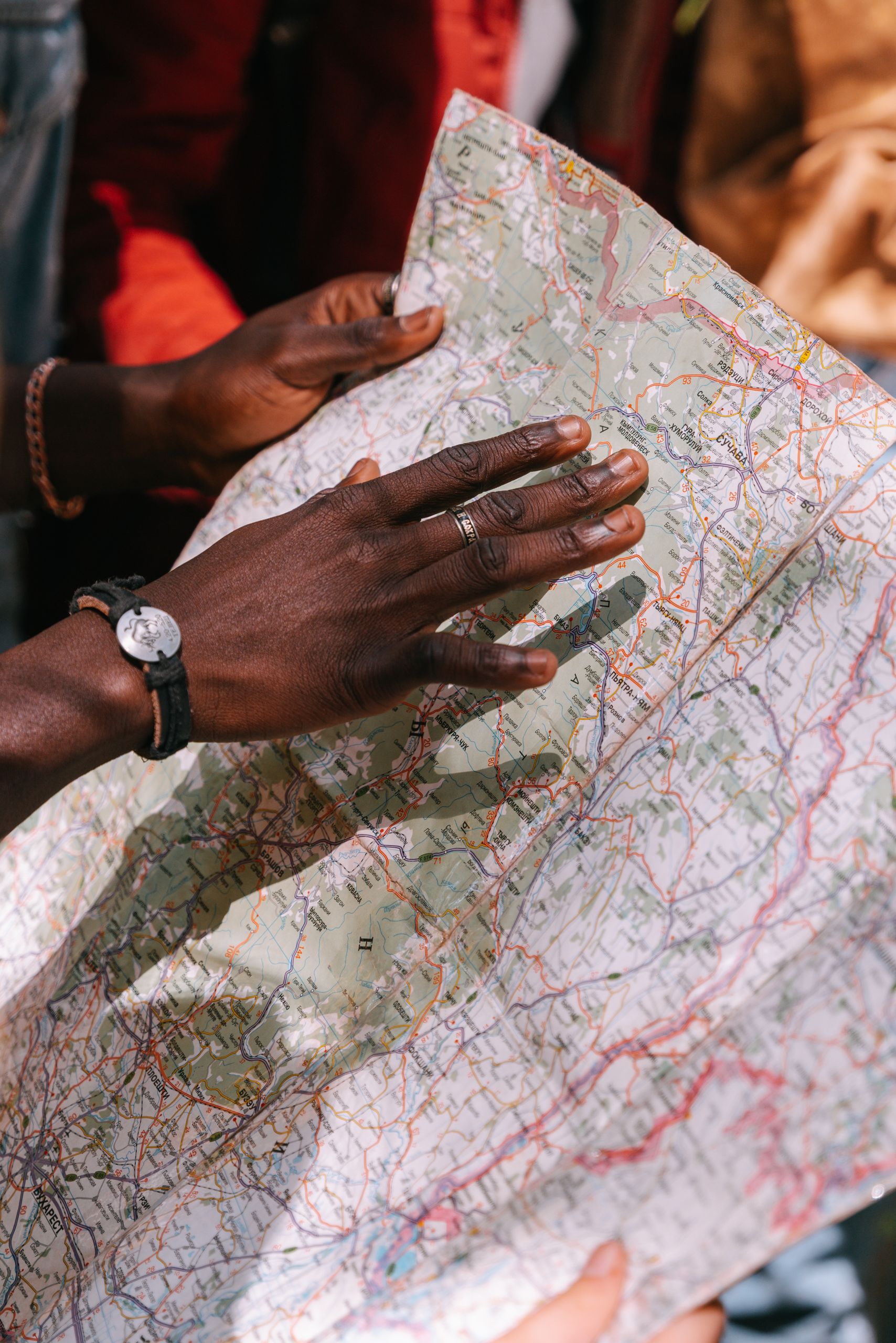
One afternoon in an unfamiliar city, my map told me that I was only a few minutes from where I wanted to go. The route looked simple: continue straight, turn left, cross one more block, and arrive.
The street told me something different.
The sidewalks grew quieter, most of the storefronts were closed, and the easy movement I had felt a few blocks earlier disappeared. Nothing dramatic happened, but my body registered the change before I could explain it. I stopped, looked around, and chose another route.
A good map is useful, but it cannot tell me everything. Beyond the map lives the mood of a street, the smell from a kitchen, the sound of people gathering, the feeling in my body, and the way a place responds to strangers.
Beyond the Map, the Route Is Not the Experience
A map can tell me how to reach a destination, but it cannot tell me what the journey will feel like. Two streets may cover the same distance while offering completely different experiences.
One route may be lively, shaded, and full of businesses. Another may feel isolated, steep, poorly lit, or difficult to navigate with luggage, limited mobility, or a tired body.
Navigation reduces a city to lines, distances, and estimated arrival times. Travel happens inside texture, weather, crowds, noise, elevation, and the practical conditions that determine whether moving through a place feels easy or exhausting.
The route gives direction. The experience requires interpretation.
What the Street Knows Better Than the Map
The street communicates through details that rarely appear on a screen. Open windows, outdoor seating, schoolchildren, delivery workers, construction barriers, music, and the flow of pedestrians all reveal how the area functions.
A map may label a square as public space without showing whether anyone feels comfortable sitting there. It can identify a market without explaining which hours feel local, crowded, tourist-oriented, or nearly empty.
Walking allows the place to correct my assumptions. A neighborhood I expected to pass through quickly may invite me to slow down, while an attraction that looked essential online may feel less meaningful once I arrive.
The street carries information through use. It shows me what people actually do with the place.
Travel Beyond the Map Requires Discernment
Travel requires more than knowing where I am. I also need to understand whether I should continue, pause, turn around, ask for help, or adjust the plan entirely.
This connects with my reflections on finding my own rhythm and confidence through solo travel. Confidence does not mean ignoring uncertainty or proving that I can handle every situation alone.
Good judgment sometimes looks like leaving. It may mean choosing the bus instead of walking, changing the meeting point, entering a busy café, or returning to a familiar street before dark.
Discernment protects the journey from becoming a performance of fearlessness.
Women Read Safety Through More Than Directions
Women often gather information quickly because our bodies have learned to scan public space. We notice who is nearby, whether the street remains active, how easy it would be to change direction, and whether anyone appears to be watching our movement too closely.
Lighting, visibility, traffic, open businesses, and the presence of other women can influence whether a route feels comfortable. None of those factors guarantees safety, but together they shape how much the body can relax.
A navigation app may recommend the shortest path through a poorly lit park or empty industrial area. The algorithm calculates efficiency without experiencing vulnerability.
I treat the suggested route as information, not authority. My body is allowed to contribute to the decision.
Smell, Sound, and Mood Become Travel Information
Travel enters through more than sight. Smell and sound often tell me what kind of place I have entered before I understand it visually.
Bread, smoke, fish, coffee, fuel, flowers, rain, or food cooking behind an open door can reveal the rhythm of a street. Church bells, traffic, conversation, music, machinery, or sudden silence add another layer.
Mood emerges from those sensory details. A place may feel celebratory, tense, sleepy, commercial, residential, or shaped by work that visitors rarely notice.
These impressions are not complete explanations. They are invitations to pay closer attention rather than assuming the map has already told me what the area means.
Beyond the Map, Cultural Context Still Matters
Observation can deepen travel, but it can also lead to confident misinterpretation. A quiet street may not be unsafe. A closed market may reflect the day of the week, local customs, weather, or a holiday I failed to research.
This is why respectful curiosity in cultural travel writing matters. I can describe what I noticed without presenting my first impression as the definitive truth about a place.
Context requires research, conversation, and humility. The street offers information, but local people understand histories, tensions, and routines that remain invisible to a visitor passing through.
Paying attention should make me more careful with conclusions, not more certain that I have understood everything correctly.
Getting Lost Can Reveal the City, but Not Every Detour Is Romantic
Travel writing often romanticizes getting lost. Sometimes an unexpected turn does lead to a beautiful courtyard, neighborhood café, or conversation I would have missed.
Other detours create stress, cost money, or place a traveler in a situation that feels unsafe. Being lost with daylight, mobile data, comfortable shoes, and time to spare is very different from being lost at night with luggage or a dying phone.
I can appreciate spontaneity without pretending every navigation failure becomes a gift. The conditions surrounding the mistake determine whether it feels adventurous or destabilizing.
A thoughtful traveler leaves room for discovery while maintaining enough preparation to return safely.
Maps Carry Power and Leave Things Out
Maps appear objective, but every map reflects choices. Someone decided which roads, borders, landmarks, businesses, and neighborhoods deserved emphasis.
Digital platforms may highlight highly reviewed restaurants, tourist attractions, and commercial districts while making informal markets, community spaces, or historically significant locations harder to find. Places with fewer online reviews can appear less important even when they matter deeply to residents.
Names carry power too. A map may preserve colonial language, outdated boundaries, or official titles that differ from what local communities use.
Looking beyond the map includes asking whose version of the place became visible and what knowledge remained outside the platform.
Local Directions Offer More Than Efficiency
Asking someone for directions can reveal how residents understand their own city. People describe routes through landmarks, memories, habits, and practical warnings that a navigation app cannot provide.
A person may tell me to avoid a steep hill, watch for a hidden entrance, take the bus after dark, or stop at a particular bakery along the way. The directions become part of local knowledge.
That exchange requires respect. Not everyone has time to help, and I should not assume that a stranger exists to guide me through the city.
When someone does offer assistance, the information often contains more humanity than the fastest digital route.
Travel Tools Support the Journey Without Replacing Attention
Planning tools can reduce unnecessary uncertainty. iVisa can help travelers review entry requirements, while coverage through SafetyWing may offer practical support when unexpected medical or travel problems arise.
Guided experiences available through GetYourGuide can add historical and cultural context that a route alone cannot provide. A knowledgeable guide may explain why a street developed, who lived there, and how the area has changed.
These resources support logistics and learning. They do not replace situational awareness, research, or the willingness to change course when conditions feel different from what I expected.
The most useful tool remains one I can combine with judgment.

A DG Speaks Recommendation
I want more years to keep walking, trust my judgment, and remain curious about what every street has to teach me
I partnered with Happy Aging to share products that support energy, vitality, and an active life shaped by movement, confidence, and meaningful discovery.
Slow Travel Gives Me Time to Learn Past the Lines
Understanding a place becomes easier when I do not have to master it immediately. A longer stay allows me to repeat routes, observe different times of day, and recognize where my first impression was incomplete.
The street that felt empty on Sunday may become lively on Monday morning. A square that seemed designed for tourists may function as a gathering place for residents after work.
Slow travel gives the map time to become layered with experience. Locations stop being pins and begin carrying memory, conversation, routine, and emotional meaning.
I still use navigation. I simply stop expecting it to provide the whole story.
The Map Helps Me Move, but the Street Teaches Me How to Be There
When I chose another route that afternoon, I did not feel defeated. I felt attentive.
The map had offered one possibility, and the street had given me additional information. Together, they helped me decide how I wanted to continue.
Beyond the map lives the part of travel that cannot be reduced to instructions. It includes instinct, context, sensory awareness, local knowledge, and the humility to recognize that a place is more complicated than the route displayed on my phone.
The map helps me locate myself. The street asks me to notice where I have arrived.
That distinction matters because travel is not only movement through space. It is also the practice of understanding how to enter a place without assuming that access equals comprehension.
I want to know when to linger and when to keep moving. A lively street may invite curiosity, while a quieter one may require a different kind of attention.
Some routes become memorable because of what I saw. Others stay with me because I trusted myself enough to change direction.
Learning past the lines means accepting that the fastest route may not be the best one. Efficiency cannot measure safety, beauty, cultural context, accessibility, or the emotional quality of moving through unfamiliar space.
I still value the map.
I value it more when I remember its limits.
The map gives me a path. The city gives me signals, stories, contradictions, and choices that appear only once I begin walking.
Travel becomes richer when I use both.
Continue exploring stories about maps, solo travel, cultural awareness, and the lessons that begin once the route meets the real world through DG Speaks Travel.