Beyond the Postcard: Why I Am Finally Going to Stonehenge
I have seen Stonehenge so many times without ever standing near it. The stones appeared in schoolbooks, documentaries, history programs, and photographs beneath dramatic English skies. Over time, the image became so familiar that it almost felt like a memory.
Still, a photograph cannot tell me how the wind moves across Salisbury Plain. It cannot show me how the monument sits within the land or how large the stones feel beside a human body. Most of all, it cannot recreate the moment when something known only through books and screens becomes real.
Visiting Stonehenge from London has been a dream of mine for years. I want to see the stones with my own eyes, stand as close as access allows, and think about the people who imagined, transported, raised, and returned to them across generations.
My fascination goes beyond engineering or mystery. I have always been drawn to ancient religions and spiritual traditions that existed outside the Judeo-Christian framework that later became dominant across much of the world. European colonialism and slavery helped spread those traditions while suppressing, displacing, or recasting many other ways of understanding the sacred.
Stonehenge reminds me that people were defining their relationships to nature, community, death, the heavens, and the unknown long before the religious categories most familiar to us took shape.
During my upcoming time in England, I will take a guided excursion booked through GetYourGuide. For this part of the trip, I would rather spend my energy observing, listening, and asking questions than coordinating several transportation connections.
Why visiting Stonehenge from London matters to me
My interest in ancient religion is not about romanticizing the past. Earlier societies were not automatically peaceful, equal, or environmentally harmonious. I simply want to understand how people interpreted existence before modern science, globalized religion, and written doctrine supplied so many of the explanations we now inherit.
How did they understand the movement of the sun and stars? What did they believe happened after death? Which forces felt protective, dangerous, ancestral, feminine, masculine, or divine? How did ritual shape relationships among people, land, animals, seasons, birth, fertility, illness, and loss?
I am especially curious about traditions connected to nature and the divine feminine. Those ideas appear across many cultures, although they do not carry one universal meaning. Approaching them responsibly requires curiosity rather than imposing modern labels on people who left no written account of Stonehenge’s purpose.
That uncertainty gives the monument much of its power for me. Archaeologists can study human remains, construction phases, tools, materials, nearby settlements, and the stones’ relationship to the sky. Even with that evidence, no surviving text tells us exactly what happened there or how the people who gathered around the monument understood the sacred.
We are left with evidence, interpretation, imagination, and humility.
Stonehenge begins before the Britain most visitors recognize
Many travelers begin British history with castles, kings, cathedrals, empire, or Shakespeare. Stonehenge demands a much earlier starting point. It belongs to a world before modern Britain, before England, and before written records could explain what people believed.
Modern tourism often packages historic places into neat stories with clear beginnings and conclusions. Stonehenge resists that treatment. Some parts of the human past remain beyond complete recovery.
I find that absence of certainty refreshing. Major religious traditions often reach us through institutions, doctrines, scriptures, and official explanations. Stonehenge offers no comparable guide. Instead, it asks us to consider that spiritual life once existed in forms we may never fully recover.
The labor behind the mystery
Ancient monuments often reach us through the language of mystery. Their scale seems impossible, so popular culture fills the gaps with legends, supernatural explanations, and conspiracy theories.
Mystery fascinates me, but labor interests me just as much. Human beings moved enormous stones, organized workers, shared knowledge, managed resources, and sustained a collective project across generations. None of that happened by accident.
My work in food systems and international development taught me to look beneath visible outcomes. A completed structure represents only the final result. Behind it sit decisions about labor, leadership, food, water, transportation, knowledge, and cooperation.
Who fed the people doing the work? How did communities divide responsibilities? What forms of authority, obligation, belief, or shared purpose kept the project moving? Which landscapes supplied stone, wood, water, food, and pathways?
Stonehenge is more than an object. It shows that people organized themselves around an idea powerful enough to outlast them.
The landscape may change how I understand the stones
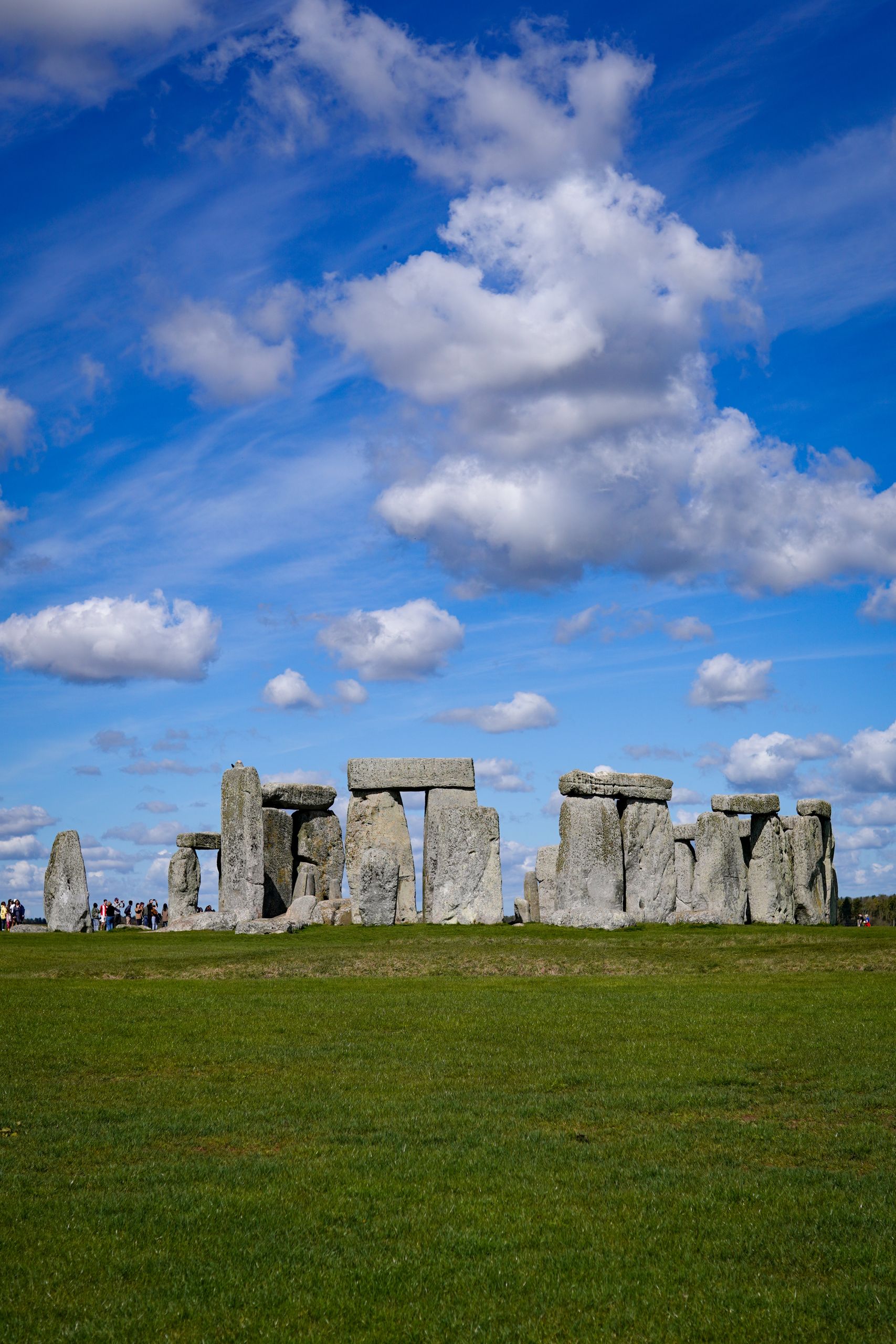
Most photographs isolate Stonehenge from its surroundings. The stones dominate the frame while the wider landscape disappears.
Seeing the site in person will offer something different. I will be able to notice distance, scale, weather, sound, light, and the openness of the plain. Those details may shape the experience as much as the monument itself.
Sacred and ceremonial places rarely exist independently of landscape. The journey toward a site can help create its meaning. Horizon lines, seasonal light, water, pathways, and nearby settlements may all have influenced how people understood Stonehenge.
I keep imagining my first clear view of the stones. Perhaps they will appear smaller than expected from a distance. Maybe the open plain will make them feel even more imposing. Wind may dominate the moment. Rain could flatten the sky.
I am going with questions rather than conclusions. That feels like the most respectful way to encounter a place created by people whose worldview we can only partly reconstruct.
Why I chose a guided Stonehenge excursion
I love independent travel, but independence does not require turning every outing into a logistical challenge. My time in London already includes performances, historic sites, cultural experiences, and preparation for a multi-day walk toward Canterbury.
A guided trip allows me to leave the city, reach Stonehenge, receive historical context, and return without carrying the entire transportation puzzle in my head.
A knowledgeable guide can also explain how the visible monument connects to the wider archaeological landscape. I want to hear what researchers know, where they disagree, and which interpretations have changed over time.
I do not need anyone to manufacture certainty where none exists. A responsible guide should make the unanswered questions clearer rather than smoothing them away.
Travelers interested in visiting Stonehenge from London can browse excursions through GetYourGuide or explore additional experiences through my Viator partner shop.
What I plan to carry
British summer weather can shift quickly, so I need a day bag that works across several conditions. A light rain layer, water, a portable charger, and a small first-aid kit should cover the essentials without weighing me down.
I also want enough room to add or remove a layer without turning the bag into a disorganized pile. My Bagail packing cubes and travel bags link includes organizers for clothing, toiletries, electronics, and smaller day-trip items.
For sunscreen, pain relief, blister care, and travel-size health essentials, readers can also browse my CVS Creator link.
Reliable mobile data will help with meeting points, messages, and navigation. I use Holafly, and the promo code DGSPEAKS is available at checkout.
Stonehenge and the Mithraeum reflect the same curiosity
Stonehenge is not the only ancient sacred site I hope to encounter in England. While in London, I also plan to visit the London Mithraeum, the remains of a Roman temple associated with the worship of Mithras.
The two sites come from completely different periods and religious worlds. Stonehenge predates Roman Britain by thousands of years. The Mithraeum belonged to a later Roman tradition. Still, both draw me for a similar reason.
Each site offers a glimpse into forms of worship outside the Judeo-Christian traditions that now shape much of the world’s dominant religious language.
At the Mithraeum, my questions center on secrecy, ritual, community, masculinity, empire, and the movement of religious ideas across Roman territory. Stonehenge turns my attention toward nature, astronomy, ancestry, ceremony, and the relationship between people and land.
Neither place can provide a complete explanation of what its worshippers believed. That limitation does not make them less meaningful. Instead, it reminds me that human spiritual expression has always been more varied than the traditions that later gained political, military, and cultural dominance.
Once I publish my London Mithraeum experience, I will connect it here so both stories can continue that larger conversation.
The questions are part of the destination
I may leave Stonehenge with fewer certainties than I brought. That possibility does not disappoint me. Some places matter because they resist easy explanation.
The stones have endured while languages, governments, religions, and borders changed around them. Countless visitors have stood nearby and tried to imagine what earlier communities believed, feared, celebrated, mourned, or hoped to influence through ritual.
Soon, I will become one of those visitors.
I want to notice the landscape, feel the weather, listen to the guide, and consider forms of spiritual expression that history never fully preserved. I want to stand before something I have known only as an image and allow it to become a place.
Perhaps Stonehenge will feel smaller than the version that has lived in my imagination. Perhaps it will feel more powerful because it remains unknowable. Either way, seeing it will close the distance between a lifelong fascination and the real landscape that inspired it.
That is what I hope to carry back to London: not a tidy explanation, but a deeper respect for how many ways human beings have searched for meaning beneath the same sky.