Walking Toward Canterbury: Chaucer, Pilgrimage, and the Stories We Carry
I first fell in love with The Canterbury Tales because the pilgrims felt so alive. Chaucer did not give us a polished group of noble travelers. He gave us people with egos, humor, contradictions, prejudices, ambitions, and unmistakable voices.
Some tales made me laugh. Others made me uncomfortable. The full collection showed me that people can share a road without sharing the same values, motives, or view of the world.
That idea stayed with me long before I ever walked the Camino Francés. Canterbury lived in my imagination as a place you reached through movement, conversation, and story. I often wondered how the city might feel after days on foot instead of a quick train ride.
Now I am going to find out.
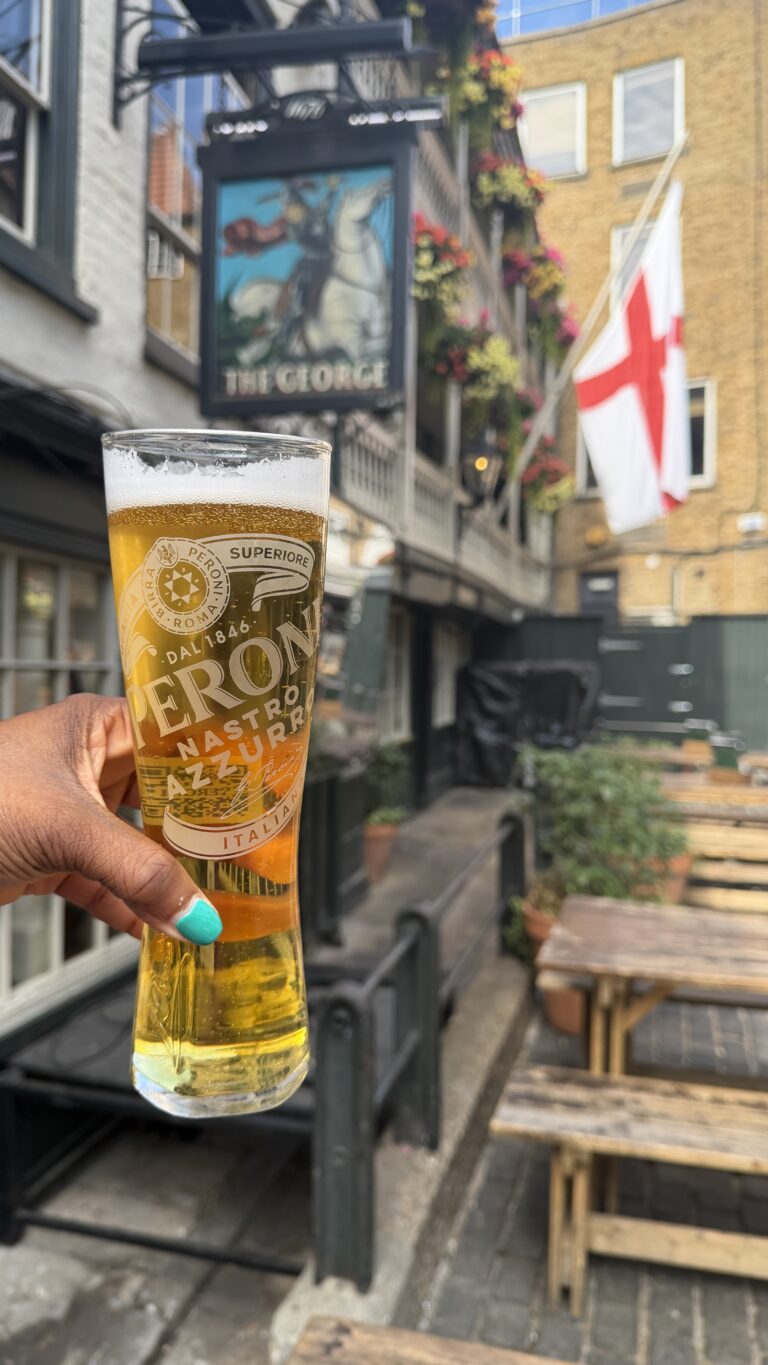
During my upcoming trip to England, I plan to leave Southwark Cathedral and begin walking from London to Canterbury. Chaucer’s pilgrims told stories to pass the time. I will carry a phone, a lightweight backpack, Portuguese lessons, recording equipment, and several decades of stories of my own.
The route will take me through an English landscape shaped by centuries of pilgrimage. Unlike the Camino de Santiago, this path offers fewer obvious markers and less pilgrim infrastructure. That uncertainty makes the journey more demanding, but also more interesting.
I have already shared a practical overview of walking from London to Canterbury. Here, I want to explore the deeper reason this route matters to me: a book I have loved for years inspired me to follow its travelers onto the road.
What I have always loved about Chaucer’s pilgrims
The Canterbury Tales remains powerful because its characters refuse to blend together. Each pilgrim brings a distinct personality, social position, motive, and way of seeing the world.
Real pilgrimages work the same way. One person may walk in faith. Another may seek healing, history, fitness, clarity, grief, release, adventure, or escape. The road can hold all of those reasons at once.
My own journey carries several meanings. Literature drew me toward Canterbury. History gives the route depth. Physical challenge gives it purpose. Personal reflection gives me a reason to keep walking when the days become difficult.
Readers who want to revisit the book before following this journey can find The Canterbury Tales on Amazon.
Like Chaucer’s travelers, I will arrive with more than one story.
This pilgrimage is not a reenactment
I am not pretending to be a medieval pilgrim. GPS will guide me when signs disappear. Mobile data will help me confirm directions and lodging. Modern shoes, contemporary accommodations, and digital language lessons will shape the experience in ways Chaucer could never have imagined.
Even so, walking creates continuity. Distance changes our relationship with arrival. Canterbury will mean something different after I approach it on foot rather than step off a train.
The first miles will carry me through London traffic, pavement, and crowded streets. Gradually, I expect the city to loosen its grip. Buildings should thin. Footpaths may replace sidewalks. The weight of my backpack will settle into my shoulders while the noise begins to fade.
That lesson became clear during my Camino de Santiago. My Camino de Santiago hub documents the planning, gear, friendships, food, discomfort, and transformation of that journey. England will not offer the same infrastructure or pilgrim culture, but the road will still ask me to pay attention.
Walking from London to Canterbury with fewer guarantees
On the Camino Francés, yellow arrows often appeared just when I began to doubt myself. I do not expect that same reassurance in England.
At some point, I may stop at a crossing, pull out my phone, turn in a slow circle, and wonder whether the narrow path ahead is truly the route. That uncertainty makes me nervous. It also forces me to look more carefully.
The London-to-Canterbury walk has less visible pilgrim infrastructure than the Camino. I do not expect constant route markers, pilgrim menus, or albergues filled with people moving toward the same destination.
Preparation therefore matters. I plan to walk only during daylight and reach my accommodation by late afternoon or early evening. Offline maps, saved addresses, weather checks, and flexible expectations will help me respond when the route looks different from what I imagined.
Travelers planning their own walking journey can compare accommodations through Hostelworld or my Expedia travel shop.
Every item must earn its place in my backpack
Every item spread across my bed has to answer the same question: are you worth carrying all the way to Canterbury?
A second pair of pants may feel harmless at home. After several hours on foot, every unnecessary ounce becomes an argument between my shoulders and my judgment.
The challenge grows because this trip continues beyond the pilgrimage. I need walking gear and clothing for London, Canterbury, Oslo, Portugal, Spain, and other stops. My pack must support more than one kind of journey without becoming unbearably heavy.
My Camino packing guide remains a useful reference because the central lesson has not changed: every item must justify its weight.
Packing cubes and compression bags help me organize a small backpack without digging through everything at every stop. Readers can browse Bagail packing cubes and travel bags here.
I will also carry blister care, pain relief, sunscreen, and basic first-aid supplies. My CVS Creator link offers one place to find those practical items.
Women preparing for long walking days may also find my article on pelvic floor health for hikers useful. Hiking preparation involves more than shoes and backpacks. It also includes the parts of women’s health that most gear lists ignore.
Why Canterbury, and why now?
I have spent months making decisions, rearranging plans, managing uncertainty, and preparing to move from one country to another. Several days on foot will reduce life to a simpler set of concerns: where I am going, how my body feels, what I need to eat, and how far I can comfortably walk before resting.
That simplicity is part of what I need.
I do not believe pilgrimage belongs exclusively to one religion. Canterbury’s Christian history remains inseparable from the route, and that history deserves respect. Yet travelers have always carried personal motives onto pilgrimage roads.
My reasons center on physical and psychological release. I want to leave London’s crowded schedule behind, allow my body to settle into repetition, and create enough distance from ordinary demands to hear what my mind has been trying to say.
This journey is not primarily a search for spiritual revelation. I am not asking the road to deliver a dramatic answer. I am asking it for time, movement, and quiet.
The stories I carry will not all be spoken aloud
Chaucer’s pilgrims entertained one another with tales. My walk will include conversation, recorded reflections, and periods of silence. During some stretches, the road will also become an immersive Portuguese classroom.
At some point, I expect to find myself repeating Portuguese phrases beneath an English sky. A voice in my headphones will ask a question, and I will speak back while passing fields, hedges, villages, and road signs pointing toward Canterbury.
The combination may seem strange, but it reflects the life I am building. England will be beneath my feet. Portugal will be in my ears. Canterbury will be ahead of me.
Language learning creates its own form of attention. Repetition settles into the rhythm of walking. New phrases attach themselves to movement and landscape. A trail becomes a classroom without walls.
Safety will still come first. I will remove my headphones near traffic, road crossings, unfamiliar paths, animals, conversations, and any place where I need full awareness. Immersion should deepen the journey rather than disconnect me from it.
Imagining my first sight of Canterbury
I keep wondering when I will first see Canterbury. Perhaps the cathedral towers will rise gradually above the rooftops. Maybe a bend in the road will reveal them without warning.
By then, my feet may hurt. My clothes may need washing. I may feel too tired for a grand emotional reaction. Hunger might matter more than symbolism in that moment.
Still, the arrival will carry weight. I will have reached on foot a city that first entered my imagination through literature. For a brief moment, the distance between book and landscape will close.
I plan to remain in Canterbury rather than treat the cathedral as a finish-line photograph. The Cathedral Quarter, Westgate, St. Dunstan’s, gardens, historic streets, cafés, bookshops, and Roman Museum all deserve time.
Arrival also needs space. During the Camino, I learned that reaching a destination can feel more complicated than expected. The body stops before the mind fully understands that the journey has ended.
Canterbury may not provide a grand revelation. It may offer fatigue, relief, curiosity, and a quiet sense that I followed a story long enough to enter it.
Following the road beyond the page
Walking from London to Canterbury allows me to step into a story that has lived in my imagination for years. I will not encounter Chaucer’s exact road or his collection of pilgrims. Instead, I will meet a modern landscape, carry my own questions, and discover what several days of movement reveal.
The tales first taught me that people can move toward the same destination while carrying entirely different lives. Soon, I will join that tradition in my own way.
I will leave Southwark with literature behind me, Canterbury ahead of me, and enough road between the two to create a new story.