The Winter Meal I Want to Remember
I still remember the way certain winter evenings felt when I was growing up. The sky would darken early, the cold would settle around the house, and the kitchen would become the warmest place in the world. Before I even knew what was cooking, I could hear the soft bubbling of a pot on the stove and smell onions, herbs, or meat slowly coming together.
Those meals did not need to be fancy. In fact, they rarely were. Yet, they gave me something far more lasting than an impressive plate. They gave me a sense of safety, closeness, and home.
Even now, a winter meal memory can return through one familiar scent. Suddenly, I am standing in another kitchen, watching steam gather on the windows while everyone slowly makes their way toward the table.
When the Kitchen Became the Warmest Room
Cold weather changes the rhythm of a home. Outside, the daylight disappears too soon. Wind presses against the windows, and the evening seems to stretch ahead. Inside, however, the kitchen begins to feel like its own small world.
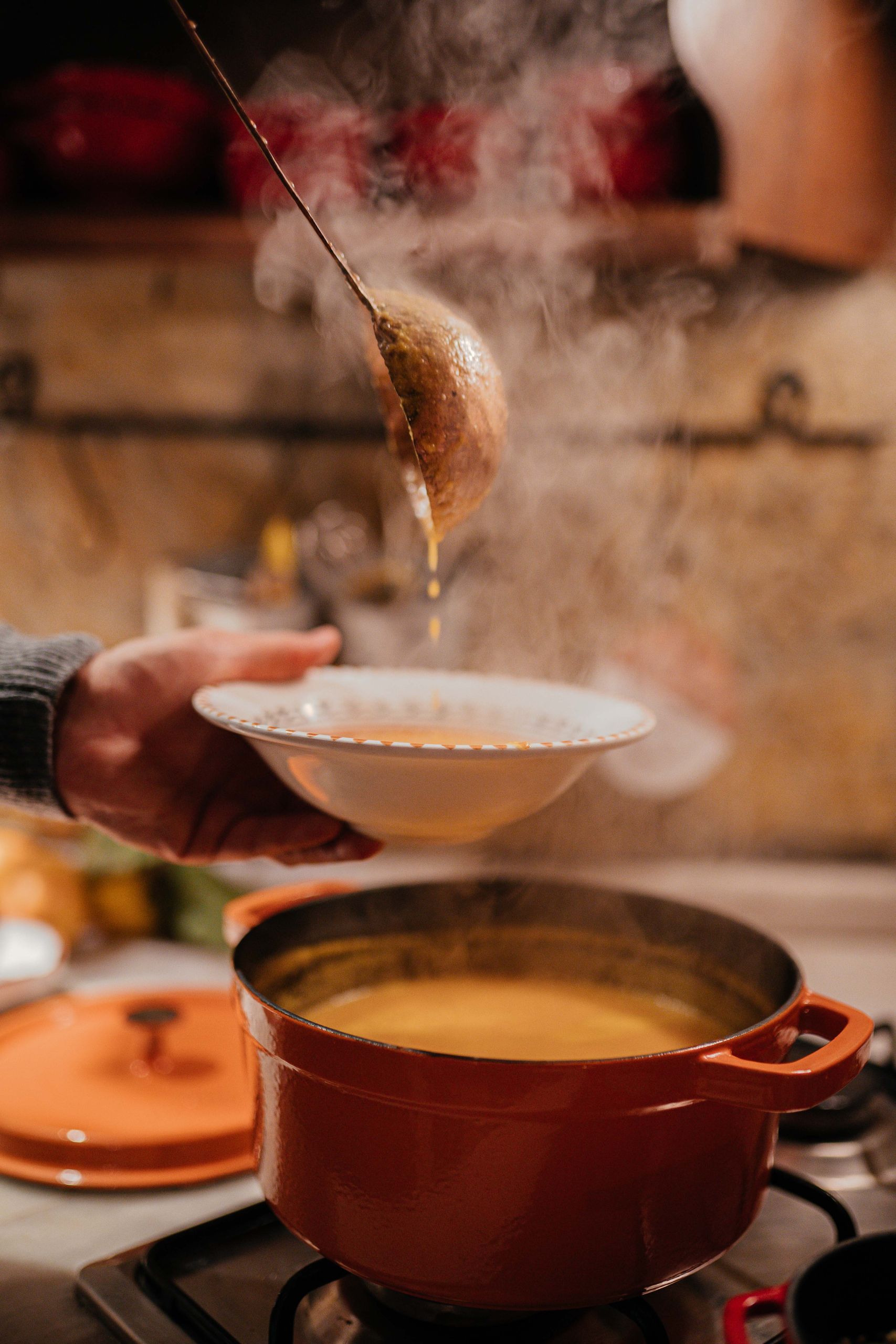
I have always noticed the tiny details first. A wooden spoon rests beside the stove. Warm air rushes out when someone opens the oven. Meanwhile, a pot sends steam into the room as though it is quietly announcing that something good is coming.
During warmer months, I usually want food that feels light and quick. Fresh fruit, crisp salads, and simple meals make sense when the sun stays out late. Winter asks for something different.
Once the temperature drops, I want food that takes its time. Beans should simmer until they soften. Meat should become tender enough to fall apart. Most of all, the house should smell like someone has been caring for it all day.
A Bowl Can Hold More Than Dinner
Comfort food does more than satisfy hunger. It can settle the nerves after a difficult day. Likewise, it can remind us that we belong somewhere, even when the rest of life feels uncertain.
A bowl of soup may bring back the memory of someone caring for us while we were sick. Warm bread can remind us of a grandmother, aunt, father, or neighbor who always made sure everyone ate. Sometimes, one familiar seasoning can carry us across decades and continents in a single breath.
That emotional connection explains why some meals remain with us. We may forget the plates, the tablecloth, or even the exact year. Still, we remember the warmth and how safe we felt while eating.
I explore this connection more deeply in my reflection on how food memories follow us home. Our taste buds may hold the flavors, but our hearts decide which stories stay.
The Table Always Seemed to Pull Us In
Winter meals have a way of drawing people closer. Maybe the cold makes us linger. Perhaps the early darkness encourages us to slow down. Whatever the reason, conversation often lasts longer around a warm table.
I love meals where nobody needs to impress anyone. The food does not have to look perfect. A chipped bowl can hold wonderful soup, while a crowded table can create a beautiful memory.
Gathering around food also reminds me that community often begins with small acts. Someone cooks. Another person carries plates to the table. Someone else washes the dishes afterward. Each person contributes something, even when nobody speaks about it.
That same spirit connects food with community resilience. Strong communities grow long before a crisis arrives. They form when people share meals, check on their neighbors, and make room for others at the table.
Food Made for the Early Dark
Winter food should feel sturdy to me. It should offer something solid when the days feel short and the world seems heavy.
My ideal cold-weather meal might include stew, roasted chicken, beans, greens, warm bread, or vegetables caramelized around the edges. Soup holds a special place in my winter kitchen because it welcomes almost anything. A few forgotten vegetables can become something comforting with broth, seasoning, and enough time.
Some days, I follow a recipe carefully. On others, I open the refrigerator, look at what needs attention, and build the meal from instinct.
That kind of cooking feels creative and practical at the same time. Good food does not always require rare ingredients or a large budget. Instead, simple ingredients can become deeply satisfying when we treat them with patience.
When I want to keep quality protein in the freezer, I may order from ButcherBox. Having meat ready at home can make winter cooking easier, especially when I do not want to make another trip into the cold.
My Kitchen Has Never Looked Like a Cooking Show
Social media can make home cooking look like a performance. Every countertop appears spotless. Each plate looks carefully styled. Even the soup seems to know exactly where the camera sits.
My kitchen rarely works that way.
Something usually spills. Occasionally, I forget an ingredient or discover that I used the last onion yesterday. A meal may take twice as long as expected, and every pot I own might somehow end up in the sink.
None of that makes the food less meaningful.
Home cooking matters because someone chose to make something. That decision carries care, effort, memory, and intention. A meal does not need to look polished to make someone feel loved.
Useful tools can make the process smoother, of course. I keep some of my favorite kitchen finds in my Amazon shop. Still, no gadget can replace the desire to nourish yourself or another person.
Every Pot Tells More Than One Story
Food carries culture into the present. Certain flavors return to our tables because they connect us with family, ancestry, migration, celebration, and survival.
My own relationship with food reflects many layers of identity and experience. African American, Afro-Colombian, Panamanian, Southern, and global influences all shape how I think about a meal. Therefore, my winter table does not belong to one tradition.
One evening, I may want greens cooked low and slow. Another night, beans seasoned with Latin American flavors might feel like the only right choice. Travel continues to add new ideas because every place teaches me another way to create comfort.
Culture lives in recipes, but it also thrives through improvisation. Families adapt dishes when ingredients change. People move, budgets shift, and each generation develops its own preferences. Even so, the spirit of the food can survive.
Sometimes Memory Pulls Up a Chair
Not every winter meal memory feels cheerful. A familiar dish can bring back someone who no longer sits at the table. Without warning, grief enters the kitchen.
It may appear while I chop an onion, reach for an old pan, or season something the way a loved one once did. Those moments can hurt. However, they can also create a gentle kind of connection.
Cooking a loved one’s dish does not erase the loss. Instead, it allows us to remember through scent, taste, and ritual. We keep part of that person close by continuing something they once shared with us.
Perhaps that explains why food memories carry so much emotion. They do not remain neatly in the past. We bring them forward whenever we cook, gather, or tell the story again.
New Traditions Need a First Time
Some of our most meaningful food traditions begin in childhood. Others can begin tonight.
A winter meal might become an annual dinner with friends. It could turn into a quiet evening when you make soup, turn off your phone, and give yourself permission to rest. Maybe December becomes the month for one special breakfast or a favorite dessert.
Traditions grow because we return to them. At first, we repeat something simply because it feels good. Eventually, it begins to mean more than we expected.
I prefer traditions that allow room for change. The menu can evolve, and different people may sit at the table. What matters most is the feeling we create together.
What I Need at the End of the Year
By winter, many of us feel tired in ways that sleep cannot always fix. We carry unfinished plans, complicated emotions, financial pressure, and disappointment over everything that did not happen as expected.
A warm meal cannot solve every problem. Still, it can offer a moment of steadiness. It gives the body something nourishing while allowing the mind to slow down.
I do not need every dinner to become a grand occasion. Often, I appreciate the simplest meals most. A warm bowl, a spoon, and a quiet place to sit may provide exactly what I need.
That is the heart of a winter meal memory. The menu matters less than the feeling. What remains is the sense that, for a little while, the world softened around us.
The Meal I Hope I Remember
Before the season ends, I want at least one dinner that feels like a place to land. I want food that warms my hands before I take the first bite. More importantly, I want to notice the moment while I am living it.
I want to listen to the conversation, breathe in the aromas, and appreciate whoever shares the table with me. Even when I eat alone, I want to offer myself the same care I would give someone I love.
Eventually, the dishes will be washed. The leftovers will disappear, and winter will loosen its grip. Yet, the memory may stay.
Years from now, I probably will not remember every ingredient. However, I hope I remember the warmth, the comfort, and the feeling that, for one evening, I was exactly where I needed to be.
You may also enjoy exploring more stories through DG Speaks Food, DG Speaks Culture, and DG Speaks Travel.