BLKNWS: Terms & Conditions Review: The Future of Black Storytelling
Every once in a while, a film reminds me why I fell in love with storytelling in the first place. Not because it gives me every answer, but because it makes me ask better questions. This BLKNWS Terms & Conditions review begins there, with a film that feels less like something you watch and more like something you enter.
BLKNWS: Terms & Conditions, directed by Kahlil Joseph, is adapted from his acclaimed video art installation and expands that concept into a feature-length cinematic experience. The film has screened through major festival spaces, including the Sundance Film Festival, where its boundary-pushing form became part of the conversation around the future of independent cinema.
I did not experience this as a traditional documentary. Instead, I experienced it like a transmission. Images arrive like memory. Sound moves like a pulse. History interrupts the present. Fiction, archive, music, interviews, and cultural fragments sit beside one another without asking permission to become one neat thing.
That may frustrate some viewers. Honestly, I understand that. BLKNWS does not hold your hand. However, if you surrender to its rhythm, the film begins to work on you in a different way. It becomes less about following a plot and more about recognizing a frequency.
A Film Built Like a Mixtape, Not a Lecture
What struck me first was the structure. BLKNWS: Terms & Conditions does not unfold like a straight line. It moves like a collage, a broadcast, a dream, a group chat, a museum wall, and a late-night conversation all at once.
That approach could have become chaotic in less confident hands. Instead, the editing gives the film its own internal music. A historical image cuts against a modern one. A conversation shifts into performance. A familiar cultural reference suddenly carries new weight. Then, before the viewer can settle too comfortably, the film moves again.
The pacing feels intentional because Black memory rarely arrives in a tidy order. It comes through songs, sayings, news clips, family photographs, jokes, warnings, rituals, and fragments of history we inherit before we fully understand them. In that sense, the film’s form is not a gimmick. It is the argument.
That is what I wanted more from my earlier draft. I do not want to simply say this film is about memory. I want to talk about how the filmmaking itself behaves like memory.
The Craft: Sound, Image, and the Rhythm of Black Consciousness
The sound design does a tremendous amount of work here. Music does not sit politely in the background. It guides the film’s emotional temperature. Jazz, soul, electronic textures, voices, silence, and ambient sound all help create the feeling that we are moving through a living channel of Black thought.
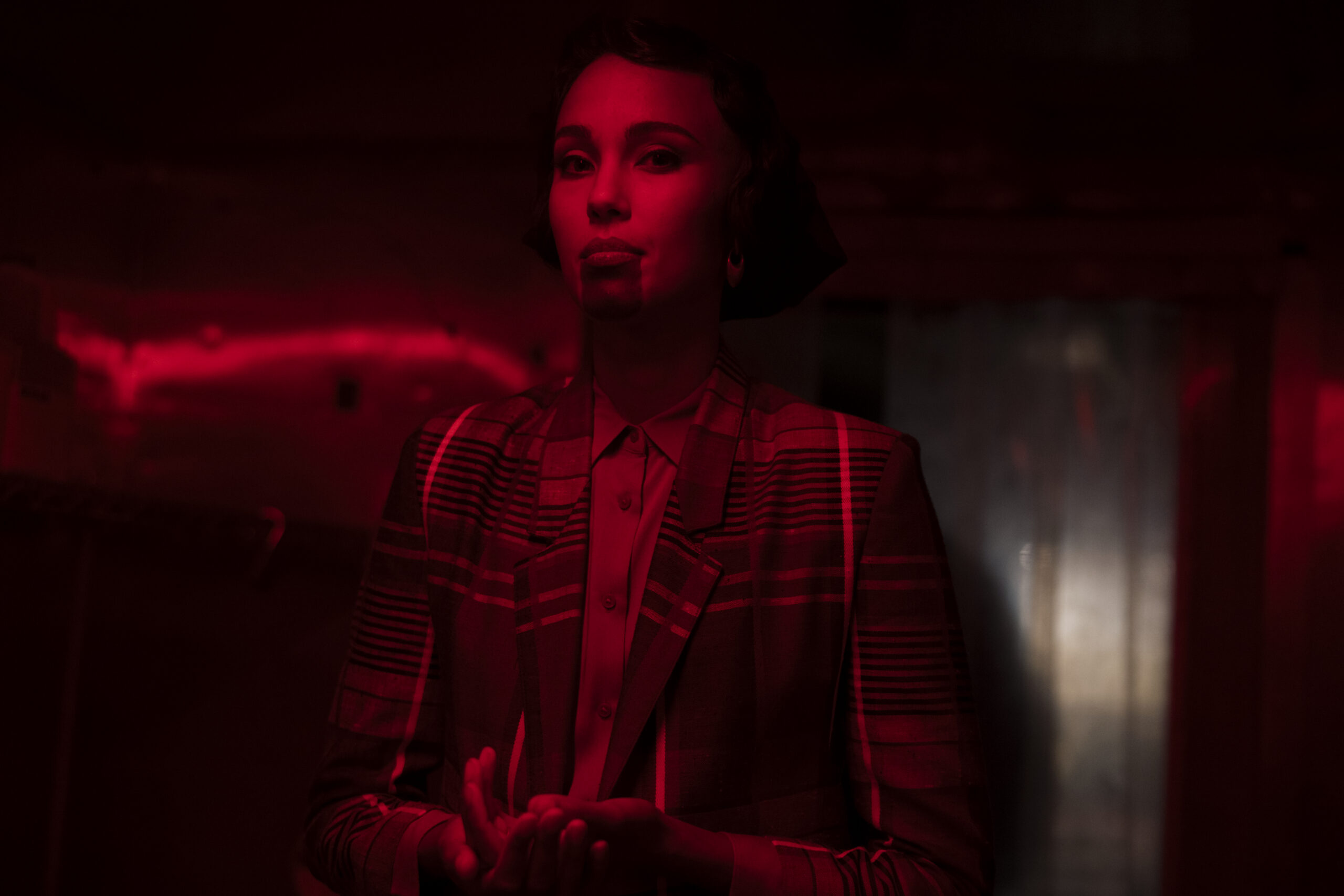
Visually, the film feels rich without feeling decorative. The cinematography understands texture. Faces, screens, rooms, landscapes, and archival images all carry different kinds of weight. Some frames feel polished and composed, while others feel immediate, almost like they have been pulled from the rush of life itself.
Because of that, the film never lets beauty become empty. The images are beautiful, yes, but they also ask something from us. They ask us to notice who has been framed, who has been cropped out, and who gets to decide what deserves to be seen.
The editing may be the boldest element. It trusts viewers to make connections without spelling everything out. That kind of trust feels rare. So much media assumes audiences need everything explained quickly. BLKNWS assumes we can think, feel, remember, and interpret at the same time.
Black Storytelling Without Permission
One reason this film excited me is that it refuses to make Black storytelling small enough for easy consumption. It does not organize Black life into a familiar lesson. It does not flatten Black history into trauma alone. It does not ask mainstream audiences where they would like the complexity placed.
Instead, the film moves with confidence. It allows Black life to be intellectual, funny, spiritual, stylish, political, wounded, joyful, experimental, and unfinished. That freedom matters to me because I believe storytelling can become a tool for liberation when people stop asking permission to describe themselves.
I kept thinking about how often Black artists get praised only when their work can be explained in the easiest possible terms. BLKNWS has no interest in that kind of simplification. It gives us layers, and then it lets those layers breathe.
That same hunger for creative freedom runs through other films I have covered, especially stories that use music, memory, and movement to challenge how culture gets recorded. A film about sound and Black cultural roots can open a similar doorway, even when it moves with a completely different beat.
Media Is Never Just Media
BLKNWS understands something I think about constantly as a writer and media maker: media does not simply report reality. It shapes reality. It decides what becomes visible, what becomes forgettable, and what becomes official.
That is why the film’s use of screens, headlines, news language, and digital culture feels so sharp. We are living in an age where information moves fast, but wisdom often moves much slower. A person can scroll through endless content and still miss the deeper story.
Joseph seems interested in that gap. What do we know because someone told us? What do we know because our families carried it? What do we know because artists preserved it in a form institutions could not easily control?
Those questions connect naturally to the way I think about storytelling across DG Speaks. Whether I am writing about food, film, travel, or culture, I keep coming back to the same truth: stories shape what people believe is possible.
The Archive Is Alive
I love films that treat archives as living things. Not dusty storage. Not dead paperwork. Living evidence.
In BLKNWS: Terms & Conditions, the archive feels restless. Old images do not simply stay in the past. They speak. They argue. They return with new meaning because the present keeps giving them new context.
That approach reminded me of the kind of cultural memory I see in films about land, displacement, music, and inheritance. When people fight to preserve a farm, a city, a song, a library, or a neighborhood, they are also fighting to preserve the right to explain themselves.
Because of that, I would not describe this film as confusing, even though it can feel dense. I would describe it as layered. It asks viewers to stop expecting history to behave like a straight hallway and start understanding it as a house with many rooms.
What Works and What May Challenge Viewers
This is not a film for viewers who want a tidy beginning, middle, and end. The structure can feel demanding. At times, I wanted to pause and sit with an idea longer before the film moved to the next one.
Still, that impatience may say as much about modern viewing habits as it does about the film. We have become used to stories that organize themselves for us. BLKNWS asks us to do some work, and I respect that.
The film’s greatest strength is also what may divide audiences. Its abundance can feel overwhelming. However, abundance is part of the point. Black life, Black history, and Black imagination cannot be reduced to one clean message without losing something essential.
For me, the film’s density became part of its beauty. I did not feel like I had “solved” it when it ended. I felt like I had been invited into a conversation I wanted to keep having.
Why This Story Matters
What makes BLKNWS: Terms & Conditions important is not only that it experiments with form. It experiments with authority. It asks who gets to create the record, who gets to interrupt it, and who gets to imagine something beyond the official version.
That matters because freedom of expression is not just about saying whatever we want. It is also about building forms large enough to hold the truth of who we are. Sometimes that truth needs a documentary. Sometimes it needs music. Sometimes it needs a family photograph, a news broadcast, a prayer, a joke, or a frame that refuses to behave.
This is where the film feels most powerful to me. It understands creativity as more than style. Creativity becomes a tool for positive change because it gives communities new ways to see themselves and new ways to challenge the world that misnames them.
DG Speaks Take
BLKNWS: Terms & Conditions is bold, dense, musical, visually alive, and unapologetically experimental. It may not satisfy viewers looking for a conventional documentary, but it will reward anyone open to cinema that moves like memory and argues through rhythm.
Watch it if you are interested in Black storytelling, media criticism, experimental cinema, cultural memory, and films that refuse to explain themselves into blandness. More than anything, watch it if you believe art should not only reflect the world but help us imagine how the world could be different.
For more DG Speaks film writing, explore my coverage of independent cinema at IndieLisboa, my reflection on the Black roots of a global sound, and my review of a film that turns Black imagination into its own kind of cosmic language.