Sun Ra: Do the Impossible Review: Black Imagination Without Permission
I’ll be honest: documentaries are usually not the category I gravitate toward first at film festivals.
After a long day of screenings, I’m usually looking for narrative films, emotional tension, strong characters, or something visually immersive. So I didn’t necessarily walk into Sun Ra: Do the Impossible expecting it to become one of the films I kept thinking about afterward.
But that’s exactly what happened.
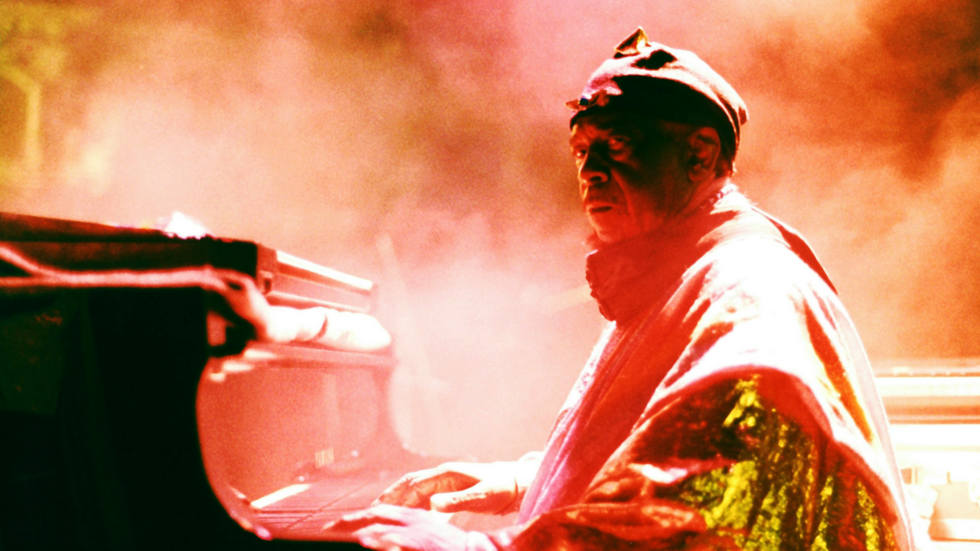
What immediately struck me is that this film understands Sun Ra as more than a musician. It understands him as a visionary. A world-builder. Somebody who refused to accept the limitations placed on Black creativity, identity, and imagination.
And honestly, that’s what made the documentary feel so relevant.
Sun Ra Was Imagining Beyond the World He Was Given
Long before terms like “Afrofuturism” entered mainstream cultural conversations, Sun Ra was already living inside those ideas.
He built entire worlds through music, mythology, fashion, spirituality, performance, and language. He treated imagination not as escapism, but as possibility.
That distinction matters.
Because historically, Black artists have often been expected to create within certain boundaries. Realism. Struggle. Pain. Social commentary that remains easily recognizable and digestible to mainstream audiences.
Sun Ra rejected those expectations completely.
He imagined beyond them.
And this documentary understands how radical that actually was.
The Film Refuses to Simplify Him
One thing I appreciated throughout the documentary is that it never tries to reduce Sun Ra into a simple narrative.
The film allows him to remain expansive, eccentric, intellectual, spiritual, contradictory, and difficult to categorize all at once.
Honestly, I think that restraint is one of the film’s biggest strengths.
Too often, documentaries flatten complicated cultural figures into something easier for audiences to consume. But Sun Ra: Do the Impossible trusts viewers enough to sit inside the complexity of who he was.
And because of that, the film feels much more honest.
You leave understanding that Sun Ra was not simply making music. He was constructing an entire philosophy around liberation, creativity, identity, and freedom.
Why Sun Ra Still Feels So Relevant Today
Watching this film in 2026 at the IndieLisboa Film Festival, I kept thinking about how many current conversations around culture, technology, innovation, and identity still connect back to ideas Sun Ra was exploring decades ago.
Today we constantly talk about:
- futurism
- artificial intelligence
- reinvention
- cultural ownership
- creativity
- alternative realities
But Black artists have long been imagining new futures and challenging dominant systems through art. They just haven’t always received recognition for it.
That’s part of what makes Sun Ra feel so important.
He created outside of permission.
And honestly, that mindset still feels revolutionary.
Especially now, in a time where so much creativity feels flattened by algorithms, branding, and commercial expectations.
The Documentary Feels Bigger Than Music
What I also appreciated is that the film never limits Sun Ra’s impact to jazz alone.
This is not simply a documentary about music history.
It’s about Black imagination itself.
It’s about what happens when somebody refuses to allow existing systems to define the limits of possibility.
And culturally, that conversation feels incredibly important right now.
Because imagination is power.
The ability to envision yourself beyond restriction, beyond oppression, beyond expectation — that is a form of liberation in itself.
And Sun Ra: Do the Impossible understands that deeply.
Sun Ra Taught Us the Power of Defiance
By the end of the film, I realized I wasn’t really thinking about genre anymore.
I was thinking about freedom….to create, to imagine, and to exist outside imposed limitations.
Sun Ra: Do the Impossible is not just a film about an artist.
It’s a reminder that imagination itself can be radical.
And that reminder feels especially necessary right now.