Hold Me Close Review: The Beauty of Everyday Love
Every film does not need to shout. Some films simply ask you to lean in, pay attention, and notice the life happening in the corners. This Hold Me Close review begins there, with a short documentary that finds beauty in the kind of love many films rush past.
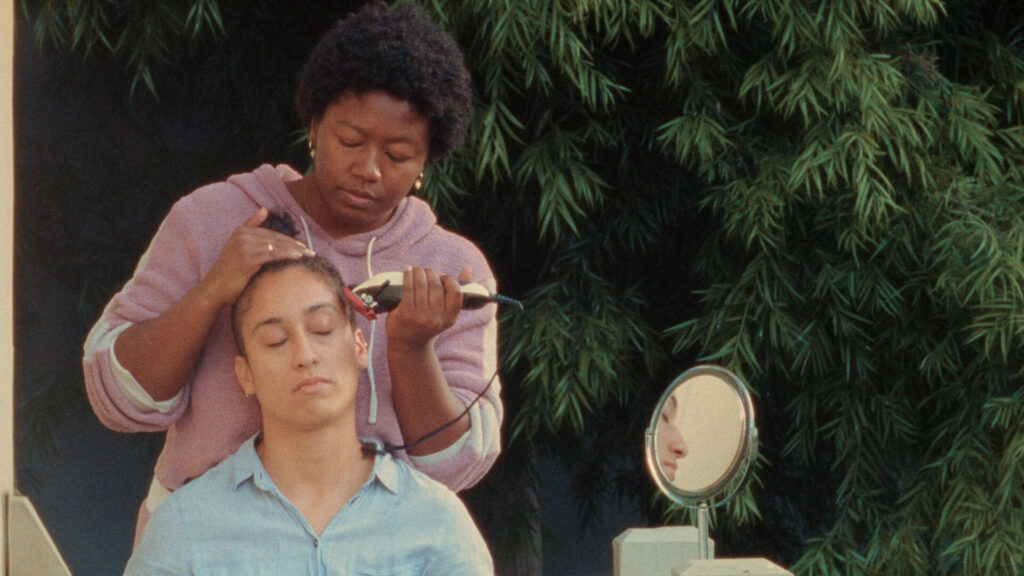
Hold Me Close, directed by Aurora Brachman and LaTajh Simmons-Weaver, follows Corinne and Tiana, two Queer Black womxn moving through the joys and pains of life together inside the home they share. The Sundance Film Festival describes it as a chronicle of the power and complexity of their relationship, and that feels right. At only 19 minutes, the film does not need a grand structure to make its point. It trusts closeness.
What moved me most was how ordinary the love felt, and I mean that as praise. Not ordinary as in plain. Ordinary as in lived. The kind of love that exists in rooms, routines, glances, small arguments, quiet repairs, and the decision to remain emotionally available when the world makes that difficult.
Love Without Performance
So many relationship films depend on big moments. Someone confesses. Someone leaves. Someone returns in the rain. Hold Me Close feels far more interested in the space between those dramatic beats.
That choice matters because real love spends most of its life in the in-between. It grows while someone is making coffee, adjusting flowers, laughing at something only the two of you understand, or sitting through a conversation that requires honesty instead of performance.
The film understands intimacy as a practice, not a pose. Because of that, it avoids the trap of turning queer Black love into either a lesson or a spectacle. Corinne and Tiana are not presented as symbols first. They are people first. That distinction gives the film its warmth.
The Craft: A Camera That Knows When to Stay Still
The filmmaking works because it has patience. The camera does not seem hungry for drama. Instead, it respects the room. It lets bodies, pauses, gestures, and domestic space carry meaning.
That restraint is not easy. A less confident film might push too hard for emotion. Here, the directors allow softness to build naturally. The pacing gives conversations room to breathe, and the editing lets small moments gather emotional force without overexplaining them.
The use of self-recorded audio also adds an intimate texture. We hear a relationship from the inside, not only from the outside looking in. As a result, the film feels less like observation and more like being trusted with something private.
Visually, the home becomes more than a setting. It becomes part of the language of the film. A room, a table, a wall, a flower arrangement, or a shared silence can say as much as a line of dialogue. That kind of domestic detail reminded me why I love intimate cinema. It understands that the small things are rarely small.
Being Seen Is Different From Being Watched
Modern life gives us endless ways to be watched. We post, perform, caption, edit, explain, and update. Yet being watched is not the same as being seen.
Hold Me Close understands that difference beautifully. The film is not interested in surveillance or spectacle. Instead, it is interested in recognition. What does it mean for someone to know your moods, your fears, your humor, your defenses, and your tenderness?
That question stayed with me because freedom is not only political. Sometimes freedom is relational. It is the ability to be fully yourself with another person and not feel the need to shrink, translate, or apologize.
This is where the film feels especially aligned with the kind of storytelling I care about. It gives space to people whose love has too often been politicized before it is allowed to simply be human.
A Love Story With Texture
The film does not pretend love is always easy. That matters. Tenderness becomes more believable when a film also allows room for tension, uncertainty, and the ordinary friction of sharing a life.
In a conversation with the Daily Utah Chronicle, the creators discussed wanting to show “a beautiful blueprint of what a healthy form of love looks like,” without reducing the story to race or gender alone. That intention comes through in the finished film because it does not flatten Corinne and Tiana into representation. It gives them emotional texture. [oai_citation:0‡The Daily Utah Chronicle](https://dailyutahchronicle.com/2025/01/28/sundance-2025-hold-me-close/?utm_source=chatgpt.com)
That is also why the film feels connected to broader conversations about intimacy and belonging. Watching it alongside other independent films about identity, memory, and Black interior life, I kept thinking about how rarely cinema lets marginalized people exist in fullness without asking them to carry the entire burden of explanation.
Why This Story Matters
Hold Me Close matters because it honors ordinary love without making it small. In fact, the film seems to understand that ordinary love may be one of the most radical things people can protect.
There is power in seeing Black queer domestic life treated with care, beauty, and emotional seriousness. Not as an issue. Not as an argument. Not as a debate. Simply as life.
That is where the film quietly becomes political without turning into a speech. It reminds us that freedom of expression also includes the freedom to show tenderness, rest, desire, conflict, repair, and joy without having to justify the humanity of the people onscreen.
For me, that kind of storytelling matters just as much as louder cinema. Sometimes change comes through protest. Other times, it comes through images that normalize dignity where the world has tried to deny it.
What May Challenge Viewers
Viewers looking for a dramatic plot may find the film too quiet. Its power comes from mood, intimacy, and accumulation rather than major narrative turns.
Even so, I think that quietness is the point. The film asks us to slow down enough to recognize emotional truth in the everyday. That patience may not work for everyone, but it worked for me.
At its best, Hold Me Close feels like a private room that briefly opens to the audience. We are invited in, but we are not allowed to consume the relationship carelessly. That boundary gives the film dignity.
DG Speaks Take
Hold Me Close is tender, restrained, intimate, and beautifully attentive to the emotional architecture of everyday love. It proves that a short film does not need to be loud to leave an impression.
Watch it if you appreciate quiet documentaries, queer Black storytelling, domestic intimacy, and films that trust the small gestures. It may not announce itself with fireworks, but it understands something deeper: sometimes love looks like staying present long enough to be truly known.
For more DG Speaks film writing, explore my reflections on identity and self-definition, my review of youth, memory, and vulnerability, and my coverage of independent films that make room for complicated human stories.