Munich Residenz: Walking Through Power, Beauty, and Memory
The Munich Residenz did not feel like one palace. It felt like a city built indoors, where every doorway led into another version of power.
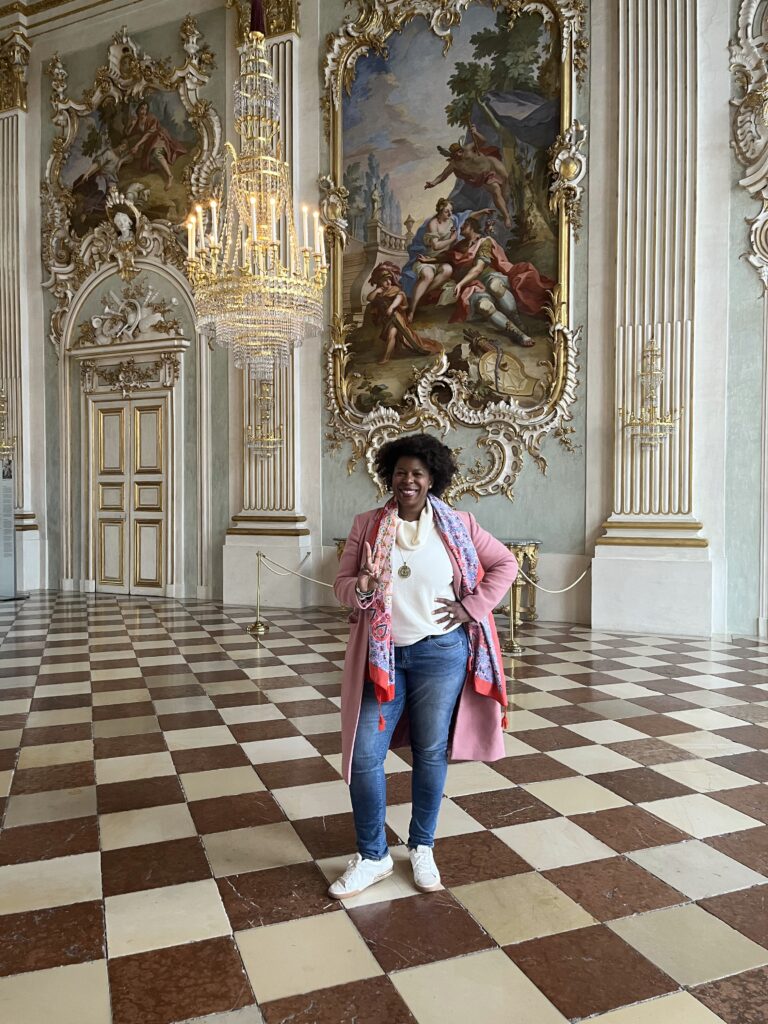
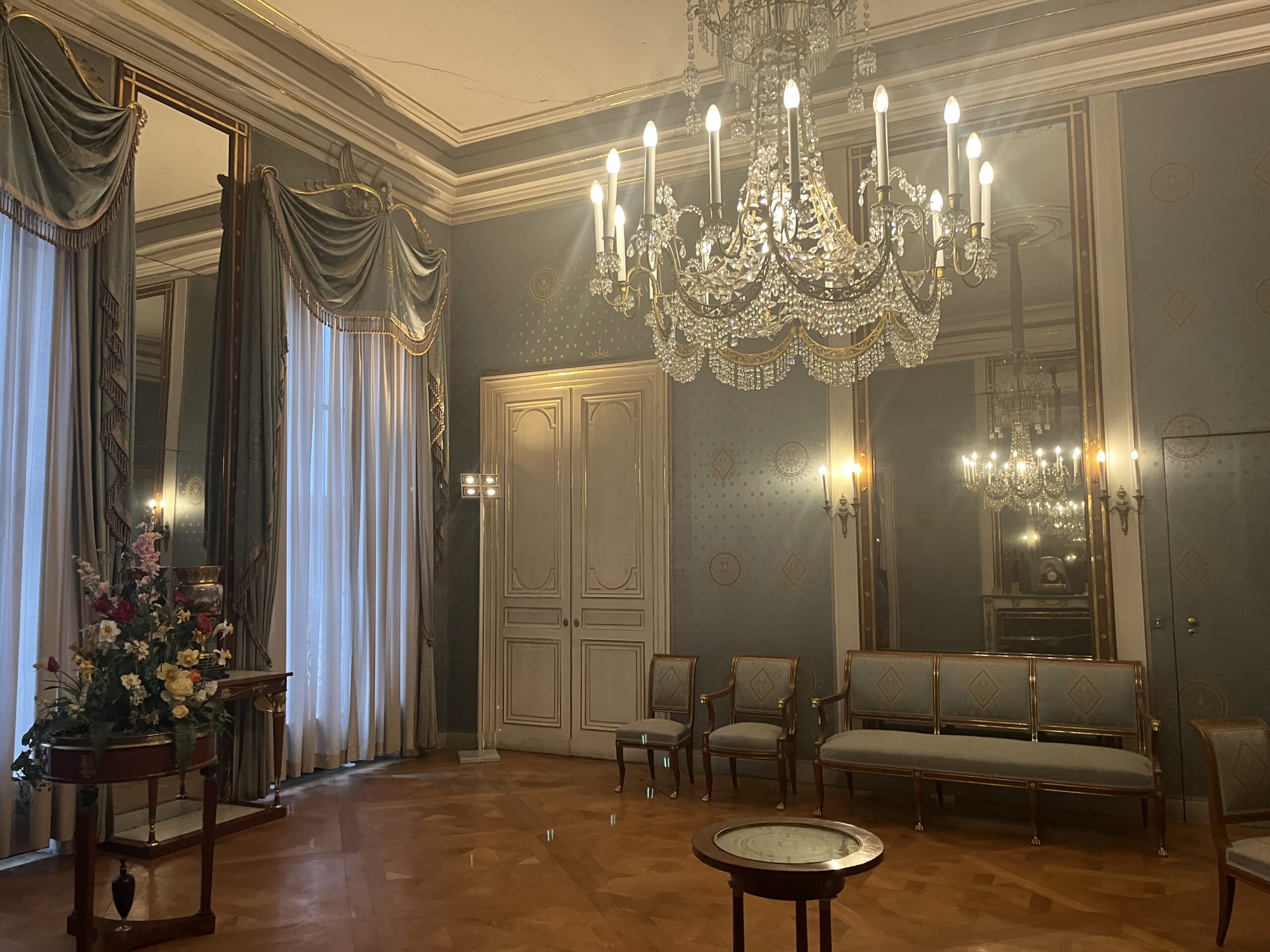
I entered expecting gold, portraits, and grand rooms. Naturally, the palace delivered all three. Yet the details held my attention longer than the scale. A carved face appeared inside gilded vines. Harps stood like sculptures. Mirrors multiplied the rooms.
A Palace Built Across Centuries
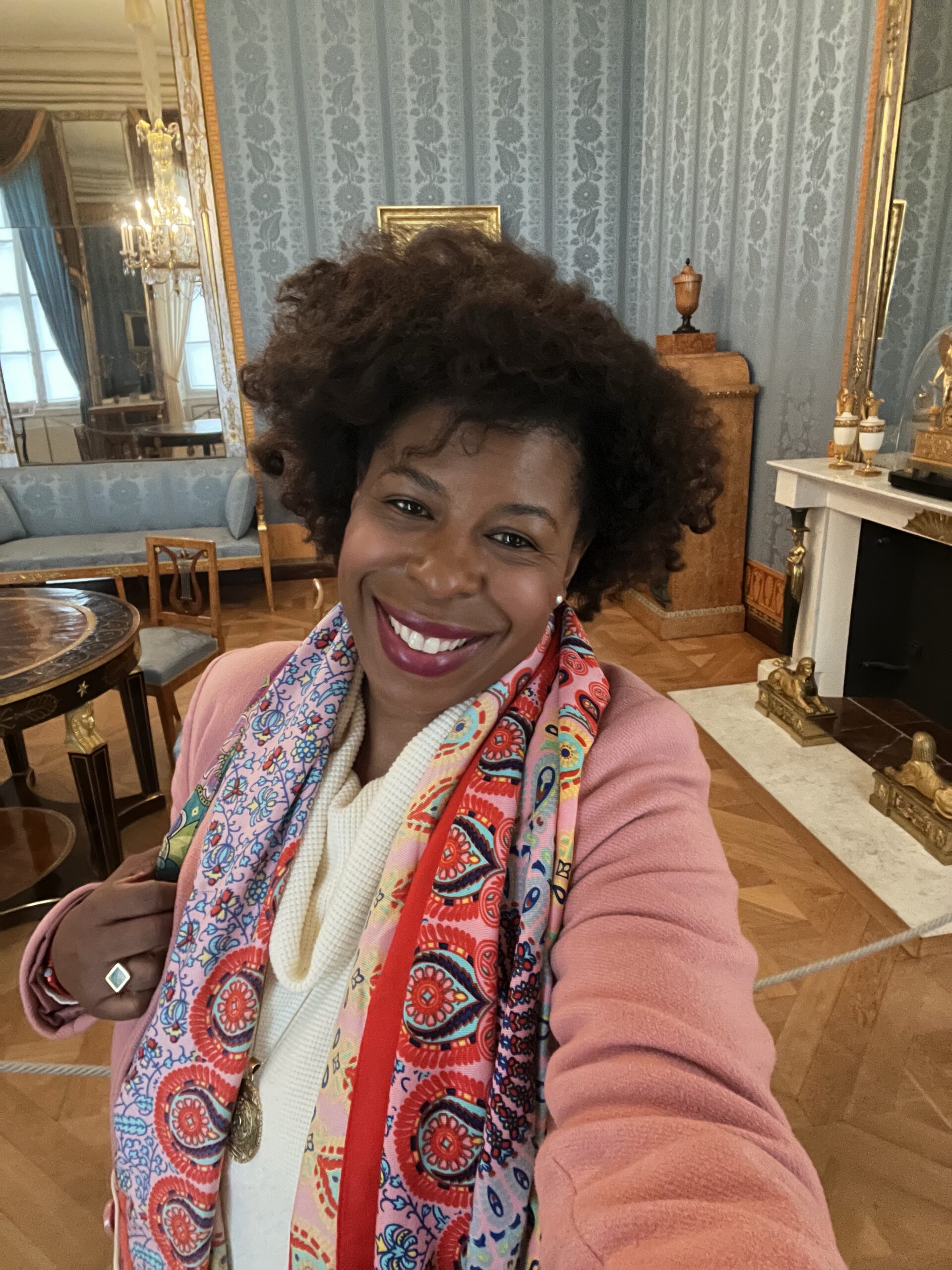
The Munich Residenz served as the home and seat of government for Bavaria’s Wittelsbach rulers from 1508 until 1918. What began as a castle developed into an enormous complex.
Renaissance spaces meet Baroque drama. Rococo ornament leads toward Neoclassical restraint. Rather than hiding those shifts, the palace turns them into a timeline of political taste.
The Green Gallery Turned Art Into Theater
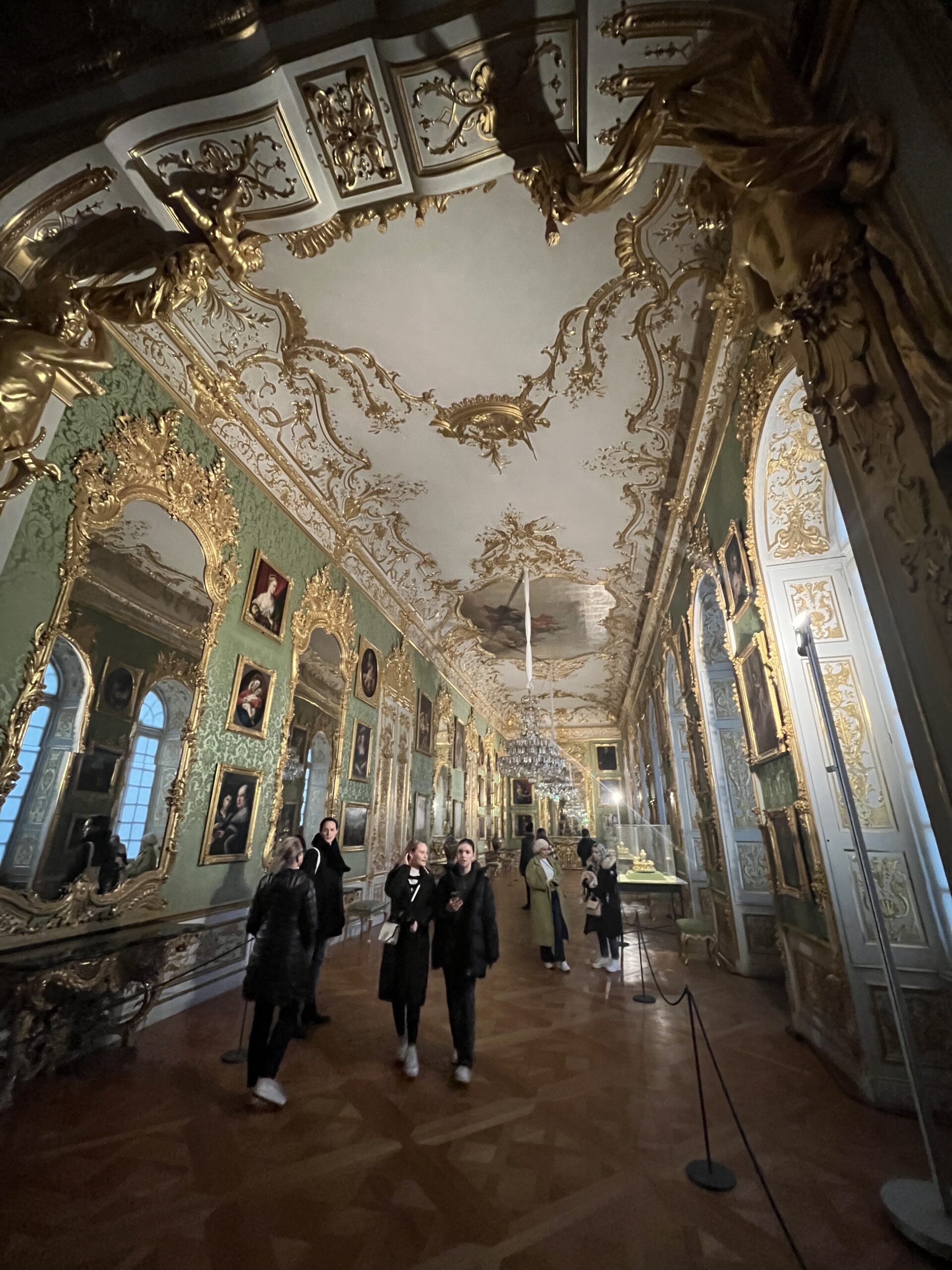
The gallery hosted court festivities and displayed more than seventy paintings in tiers. Consequently, the room was not simply a place to appreciate individual works. Together, the paintings created an environment of possession and prestige.
Modern museums often isolate a painting against a blank wall. Here, art competed with wallpaper, frames, furniture, chandeliers, and reflections.
Portraits Worked Like Political Documents
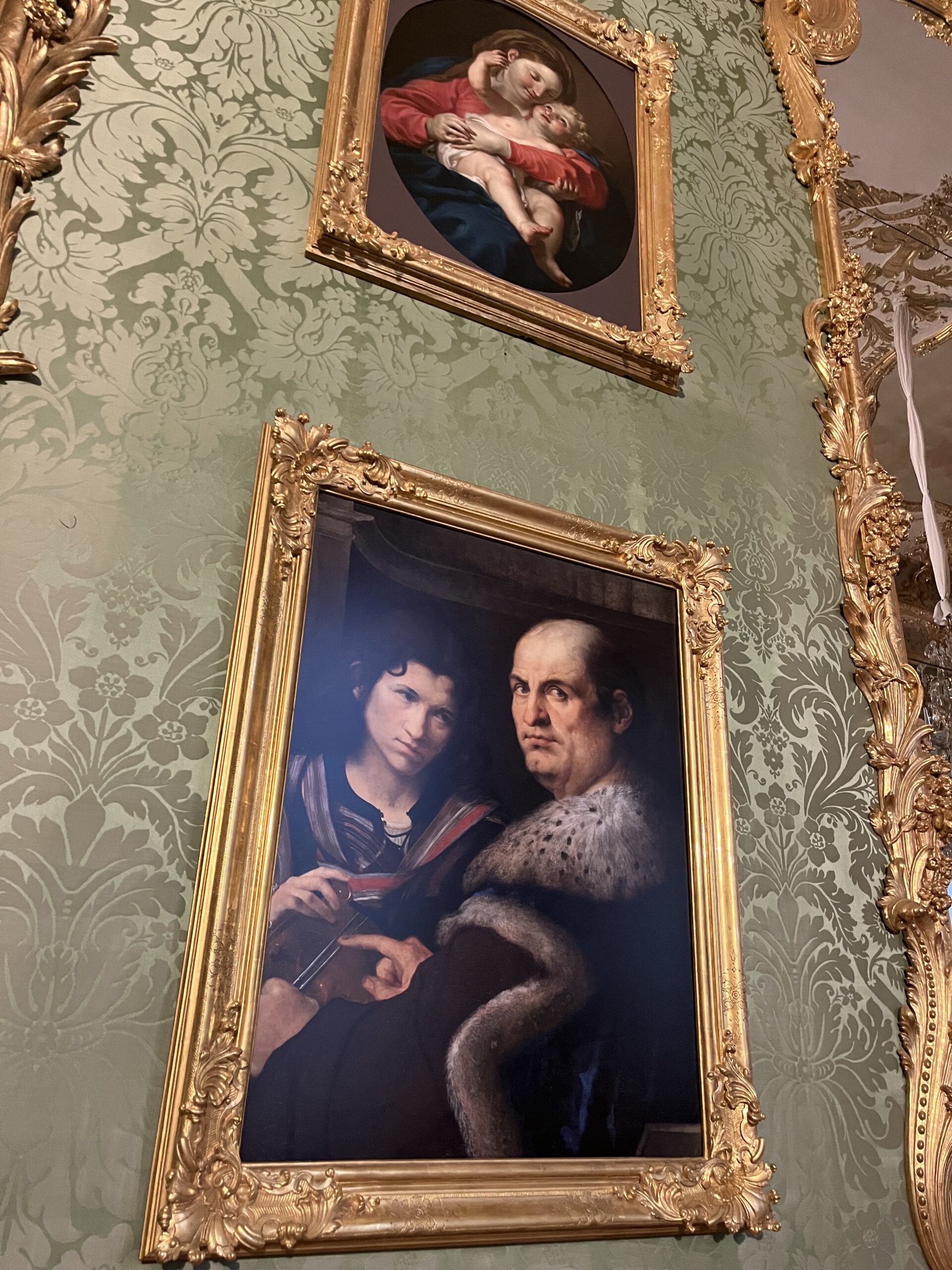
A royal portrait carries more than a face. Fabric signals rank. A crown suggests authority. Children become evidence of continuity.
Royal women appeared beautifully dressed and carefully posed. Their portraits showed status, although they rarely revealed the complicated lives beneath the silk and jewels.
Objects Connected Bavaria With the Wider World
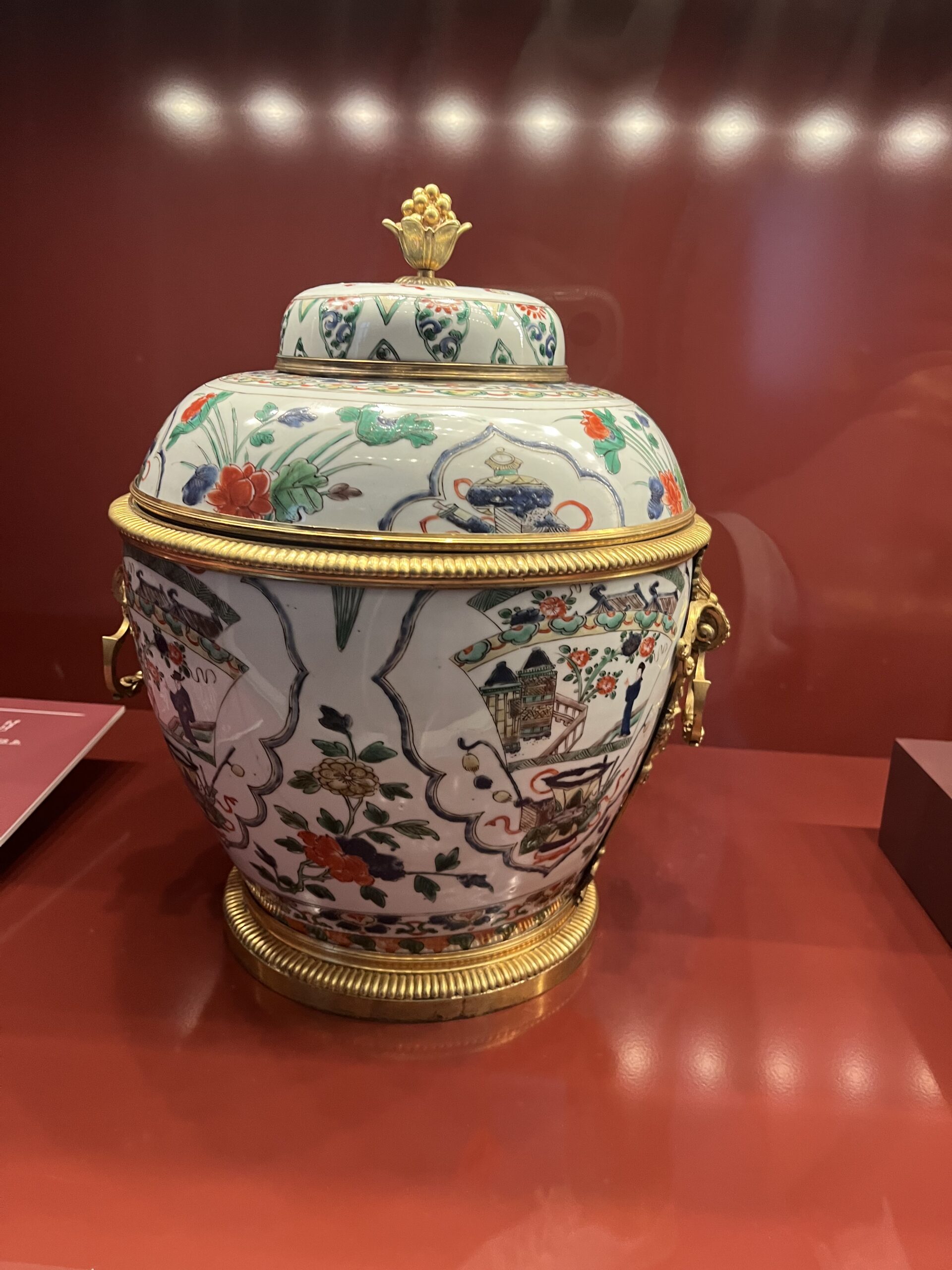
An ornate porcelain vessel condensed trade, taste, and cultural exchange into one object. European courts collected porcelain as a symbol of refinement and reach.
Furniture, devotional pieces, silver, musical instruments, and tableware also restored the routines of palace life. People ate, prayed, entertained, wrote, listened, and performed social roles in these rooms.
The Harps Returned Sound to Silent Rooms
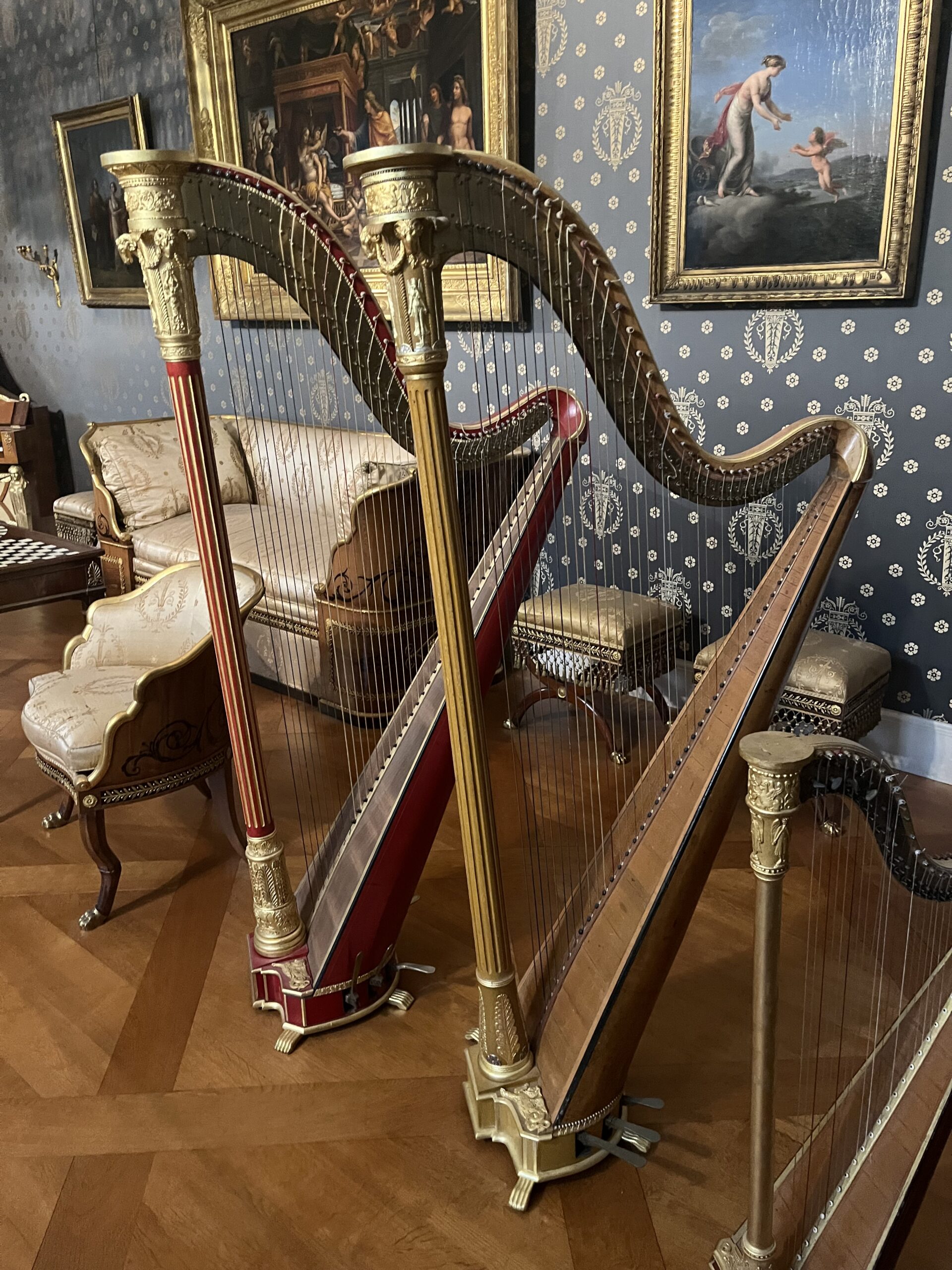
Museums silence the spaces they preserve. Visitors whisper, furniture sits untouched, and instruments become sculpture. Still, the harps invited me to imagine music moving through the rooms.
That thought connected Munich with my reflection on music and cultural memory in Vienna.
Gold Rewarded Close Attention
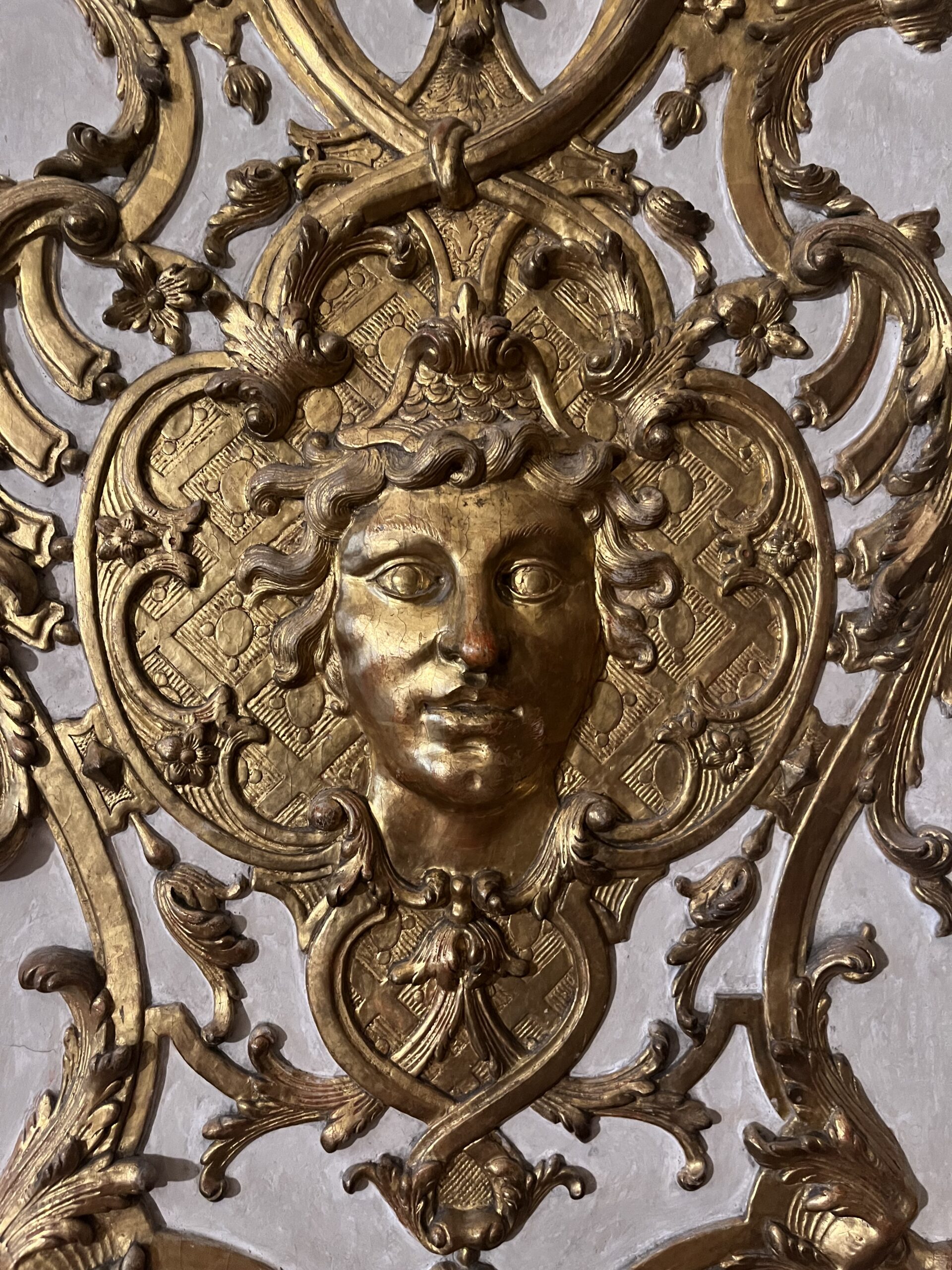
The palace dazzles from across a room. Nevertheless, its smallest details often carry the strongest personality. My rhythm became simple: step back, take in the room, then move toward one unexpected detail.
I Held Awe and Historical Awareness at the Same Time
As a Black woman, I do not enter European royal spaces as a neutral observer. I remain conscious of colonization, extraction, racial hierarchy, and the global systems that helped European powers accumulate wealth.
Germany’s colonial empire developed later than those of several neighboring powers, yet its consequences were severe. That history belongs in the wider conversation about European grandeur, even when one palace room does not explain the full story.
At the same time, I refuse to flatten every artisan’s achievement into the ambitions of rulers. Carvers, painters, metalworkers, textile makers, musicians, builders, and designers created breathtaking work. Their ingenuity deserves recognition, even when the political system surrounding that work demands critique.
I could marvel at the rooms and still ask difficult questions. In fact, holding both responses made the visit more honest.
Beauty Cannot Be Separated From Labor
Who carved the wood? Who cleaned the mirrors? Who carried fuel, prepared meals, repaired fabric, and polished silver? Countless unnamed workers made court life possible.
I can admire craftsmanship while asking who benefited from the system that produced it. Those questions make cultural travel more meaningful and connect with why I believe travel is a political act.
Planning the Visit
Wear comfortable shoes and give yourself more time than expected. Choose priorities based on art, political history, architecture, or decorative arts. Then, leave room for an unexpected room to hold you longer.
Check current official access details before visiting because routes and rooms can change. Guided Munich experiences are available through GetYourGuide.
For wider planning, begin with my Munich travel guide and continue to Nymphenburg Palace.
What Stayed With Me
I remember the green walls, the portraits, and the glittering rooms. Most of all, I remember standing inside a machine built to turn wealth into legitimacy.
The Munich Residenz is beautiful, excessive, political, intimate, and deeply human. That combination made it far more interesting than a simple palace tour.
The Residenz Was Rebuilt, Not Simply Preserved
One detail changed the way I viewed the palace: much of the Munich Residenz suffered severe destruction during the Second World War. Beginning in 1945, extensive reconstruction slowly returned major rooms and collections to public view.
That knowledge complicated my sense of authenticity. I was not walking through an untouched building. I was moving through a cultural decision to rebuild, recover, and interpret what war had damaged.
Reconstruction carries its own questions. Which rooms receive priority? How closely should artisans reproduce lost surfaces? Where should museums reveal damage instead of hiding it? The official Bavarian Palace Administration describes the Residenz today as one of Bavaria’s largest museum complexes. Yet its current grandeur also tells a story about postwar memory and the desire to restore cultural identity.
The Wittelsbach Story Spanned More Than One Political Era
The Wittelsbach rulers governed Bavaria first as dukes, later as electors, and finally as kings. The Residenz served as their seat of government and principal home from 1508 until 1918.
That timeline explains the building’s visual complexity. Each generation inherited rooms, objects, political responsibilities, and a need to redefine authority. Rather than demolishing every earlier layer, rulers often added new spaces that reflected current tastes.
Walking through the palace felt like moving through competing ideas of leadership. One room used symmetry and order. Another relied on gold, mirrors, and sensory excess. Every style argued that its patrons deserved to rule.
What I Noticed as a Black and Latina Woman
European palaces often present power as if it developed within sealed national borders. However, court wealth depended on wider networks of trade, extraction, craftsmanship, diplomacy, and empire.
Porcelain, pigments, precious materials, textiles, and luxury goods moved across regions and continents. People outside the portraits contributed to the beauty inside the rooms, even when museum labels did not name them.
My identity shapes what I notice. I admire technique, yet I also look for absence. Whose labor disappears? Which global connections appear only as decorative objects? Who enters the story as a ruler, and who appears as material, servant, curiosity, or not at all?
Those questions did not lessen my enjoyment. They helped me move beyond passive admiration.
How to Avoid Palace Fatigue
The Residence Museum, Treasury, and Cuvilliés Theatre form separate experiences within the larger complex. Trying to absorb everything in one hurried visit can flatten the details into a blur.
I recommend choosing a central theme. Follow portraiture, music, decorative art, architecture, or political history. Take a short pause when the rooms start blending together. Then return with a fresh eye.
The official visitor information notes that personal photography is generally permitted without flash or a tripod. Large bags must remain in the cloakroom, and food cannot enter the museum rooms. Review current details on the official Munich Residenz visitor page before your visit.
Most importantly, leave space for surprise. My strongest memories came from objects I had not planned to find.
Affiliate disclosure: This article contains affiliate links. If you book or buy through one of these links, DG Speaks may earn a commission at no extra cost to you.