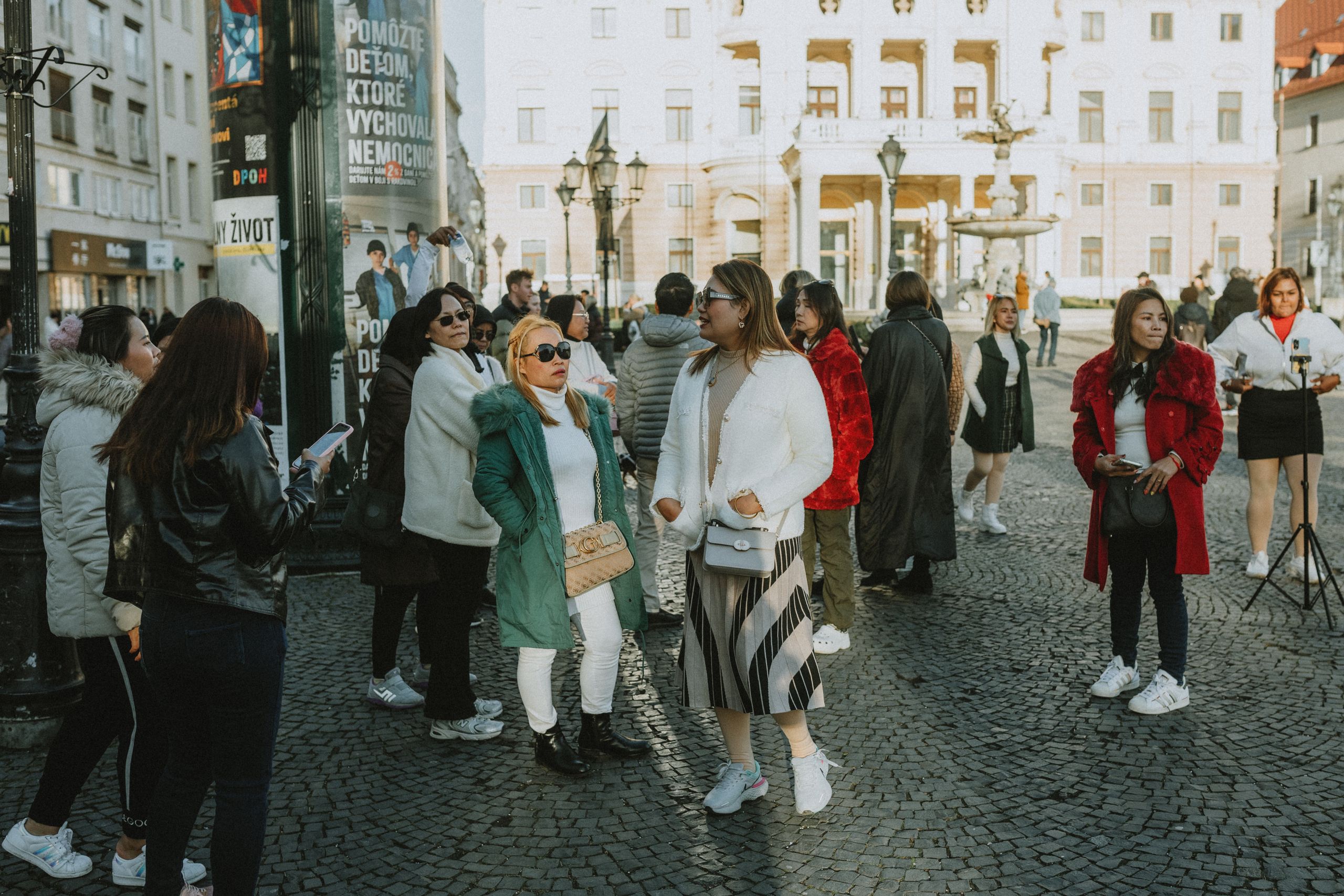
Why I Notice the Space Between People
I noticed it while waiting to cross a busy street.
Several of us had gathered at the corner, each person leaving a careful amount of room between themselves and the next body. A woman stepped closer to the curb. A man moved slightly behind her. Someone carrying grocery bags shifted sideways to create a path for a person using a cane.
No one discussed what was happening.
We adjusted to one another quietly.
Then, the light changed, and the small group moved across the street together before separating again on the other side.
The whole interaction lasted less than a minute, but it made me think about the space between people. Not only physical distance, but emotional distance too. The way we stand, wait, greet, avoid, lean in, and step back tells a story long before words arrive.
The Distance Between Us Is Never Completely Empty
Distance has a language.
Sometimes, it says respect. A person gives me room to pass, allows me to finish speaking, or recognizes that I need a moment before answering.
At other times, distance says fear.
Someone crosses the street, tightens their grip on a bag, or moves away before any real interaction has occurred.
Space can also hold habit, culture, fatigue, class, caution, grief, or uncertainty. Two people may stand close because closeness feels natural to them. Others may care deeply for one another while needing more physical room.
The movement itself does not always explain the meaning.
Context does.
The Sidewalk Becomes a Quiet Teacher
I learn a great deal about a place by watching how people share its sidewalks.
Do faster walkers move around slower ones with patience? Does anyone make room for a stroller, wheelchair, or person carrying heavy bags?
What happens when a group takes up the entire path?
These ordinary moments reveal how people negotiate public life. Nobody needs to announce their values. Their movement often says enough.
A sidewalk can show generosity.
Someone steps aside without irritation. Another person holds a gate or pauses to let an elder move through first.
It can also reveal entitlement.
People block the way, expect others to disappear around them, or move as though their destination matters more than every body they encounter.
Public space asks us to keep making small decisions about one another.
The Step Back Can Be a Form of Care
I once thought warmth always required moving closer.
Close friendships, affectionate families, and romantic relationships seemed to be measured through access. If someone loved me, they should want to be near me, talk often, and share freely.
Life has taught me that closeness without room can become pressure.
A step back does not always mean rejection.
It may mean someone is trying to remain kind rather than speaking from irritation. A pause can create enough space for emotion to settle before a conversation continues.
Sometimes, giving another person room is more loving than demanding immediate reassurance.
Space can protect a relationship from the things we say when we feel cornered.
Boundaries Do Not Have to Feel Like Closed Doors
Boundaries are often described as walls.
I understand the image, but I do not always want my limits to feel like concrete barriers. A boundary can be more like a doorway that I am allowed to open and close intentionally.
I can be kind and still say that I need time alone.
I can care about someone without answering every message immediately. Another person can decline a hug, end a conversation, or ask for more physical room without becoming cold.
The boundary does not erase warmth.
It helps define the conditions under which warmth can remain genuine.
Closeness feels different when it is chosen rather than demanded.
A Crowded Train Creates Its Own Rules
Public transportation compresses people into temporary intimacy.
On a crowded train, strangers may stand close enough to feel one another shift when the vehicle turns. Bags touch, shoulders meet, and everyone begins making small adjustments to avoid becoming more intrusive than the space requires.
People often create emotional distance when physical distance disappears.
They look through windows, focus on phones, or direct their eyes above the crowd. The body is close, but the attention politely retreats.
I find that unspoken agreement fascinating.
Most people understand that forced proximity is not an invitation. We share the space while pretending, as gently as possible, that we are not standing quite so close.
The Empty Seat Can Carry a Message
Seating choices reveal another kind of distance.
A person enters a waiting room, bus, café, or park and decides where to sit. They may choose the farthest available chair or leave an empty seat between themselves and a stranger.
Sometimes, the decision is practical.
They want quiet, more room, or easy access to an exit.
However, empty seats can also reveal bias. Some people repeatedly find that strangers would rather stand than sit beside them.
Race, disability, body size, age, clothing, and housing status can shape who is treated as safe company.
No one says anything aloud.
The distance says it for them.
Women Learn to Measure Space Quickly
As a woman, I know that distance can become safety information.
I notice how closely someone walks behind me. I pay attention when a person changes direction at the same time I do or stands nearer than the situation seems to require.
The calculations happen quickly.
Is this ordinary proximity, or is someone entering my space intentionally?
Should I slow down, cross the street, move toward other people, or trust that nothing is wrong?
Women are often expected to remain pleasant while making these assessments. We do not want to overreact, offend anyone, or appear fearful.
Still, politeness should never matter more than safety.
A step away may be the body recognizing something before the mind has found language for it.
The Body Knows When Closeness Feels Wrong
Sometimes, discomfort appears as tension before I understand why.
My shoulders rise. I stop breathing naturally, or I become unusually aware of where the exits are.
The other person may not have done anything obvious.
That does not mean I need to ignore the feeling.
I am learning to respect what my body reports without automatically assuming I understand the entire story. The response may come from present danger, past experience, cultural conditioning, or bias that I need to examine.
Awareness allows me to pause before choosing what the feeling means.
Travel Changes the Rules I Thought Were Universal
Travel has taught me that personal space is not measured the same way everywhere.
In some places, people stand closer during conversation. Greetings may involve kisses, hugs, or touch that would feel unusually intimate somewhere else.
Other cultures maintain more distance and reserve.
Neither pattern is automatically warmer or colder.
They reflect different ways of organizing respect, familiarity, and belonging.
This is one reason I value cultural travel writing grounded in respectful curiosity. A behavior that initially feels rude, distant, or invasive may carry another meaning within its own cultural context.
Observation should come before judgment.
I Have to Remember That I Am Entering Someone Else’s Rhythm
As a traveler, I can take up more space than I realize.
I stop suddenly to check directions, stand in the middle of a sidewalk to take a photograph, or move slowly while residents are trying to reach work.
My curiosity does not cancel their daily lives.
A neighborhood is not an empty stage waiting for visitors. People live there, shop there, raise children, and move through routines that existed before I arrived.
Respectful travel includes awareness of my body in public space.
Can people pass? Am I photographing someone without permission? Is my group blocking an entrance?
Small adjustments allow curiosity and courtesy to exist together.
Closeness Can Exist Without Conversation
Some of the most comforting moments between people happen in silence.
Two friends sit together without needing to fill every pause. A couple walks side by side, or a family shares a room while everyone does something different.
No one is performing connection.
The relationship feels secure enough to hold quiet.
Silence can also create painful distance.
It may become avoidance, punishment, or evidence that something important is being withheld.
The absence of words does not tell me which kind of silence I am experiencing.
The emotional atmosphere does.
Technology Can Make Distance Difficult to Read
Digital communication changes how I understand closeness.
Someone can watch every story I post and still never ask how I am. Another person may respond slowly but remain deeply present when we finally speak.
Visibility is not intimacy.
Constant access can create the illusion that we are connected because we know where someone traveled, what they ate, or how they spent the weekend.
We may know the updates without knowing the person.
Real closeness asks for more than access to information.
It requires attention.
The Phone Can Create Distance Across a Small Table
I have sat with someone while both of us kept reaching for our phones.
We were physically close, but our attention kept leaving the table.
A notification arrived, and the conversation paused. Then, one of us remembered something to check, and another small gap opened.
The device had not moved us farther apart.
It had divided the moment.
I do not believe every phone belongs hidden during every interaction. People have responsibilities, families, and reasons to remain reachable.
Still, I notice when a screen becomes easier to face than the person in front of me.
Community Begins by Crossing Small Distances
Strong communities are not created only through dramatic acts of solidarity.
They grow through repeated, ordinary contact.
A neighbor waves. A shopkeeper remembers a face, or someone notices that the person who usually sits at the park has not appeared for several days.
These relationships may remain light.
They still reduce anonymity.
This connects with my reflections on how community resilience begins before a crisis. People are better able to support one another when recognition and trust already exist.
The emotional distance has been crossed slowly, one greeting at a time.
Public Space Gives Strangers a Chance to Become Familiar
Parks, libraries, markets, cafés, sidewalks, and community centers create opportunities for repeated contact.
I may not become friends with everyone I see.
Still, familiar faces change the emotional character of a place. The neighborhood feels less anonymous when I recognize the person walking the same dog or working behind the same counter.
Belonging does not always begin with an invitation.
Sometimes, it begins with being seen often enough that my presence becomes expected.
The Architecture Decides How Often We Meet
Physical space influences social distance.
Porches, stoops, benches, courtyards, parks, and wide sidewalks create opportunities for people to see one another.
Car-dependent neighborhoods create another pattern.
People move from private homes into private vehicles and arrive at destinations without spending much time together in public.
Neither design guarantees kindness or community.
Still, architecture makes certain interactions easier.
A bench creates the possibility of a pause. A porch allows someone to remain connected to the street without leaving home completely.
Design gives social life somewhere to happen.
Wealth Often Purchases Distance
Privacy is not distributed equally.
Money can provide a larger home, private office, quieter transportation, separate bedrooms, or a seat with more space around it.
People with fewer resources may share crowded housing, transportation, workspaces, and public services.
Personal space is partly economic.
The ability to close a door, be alone, or move away from noise can look like a simple preference when it is actually a privilege.
This does not mean wealth guarantees emotional peace.
It means some people have more physical options for protecting it.
A Crowded Place Can Still Feel Lonely
I have been surrounded by people and felt completely alone.
Cities offer constant proximity. Strangers pass, sit beside one another, and share elevators without forming relationships.
Physical closeness does not automatically create emotional connection.
Loneliness in a crowd can feel especially sharp because evidence of other people is everywhere.
What is missing is not another body nearby.
It is recognition.
Love Still Needs Room to Breathe
Closeness can become confused with constant access.
Partners, relatives, and friends may expect immediate replies, frequent updates, and entry into every emotional space.
I have learned that love needs boundaries too.
People require solitude, privacy, rest, and time to understand their own thoughts. A healthy connection should survive an evening alone or a conversation postponed until both people can participate honestly.
Space does not always threaten intimacy.
Sometimes, it keeps intimacy from becoming control.
The Need for Space Should Not Become Disappearance
There is a difference between requesting room and creating uncertainty.
“I need time to think, and I will call you tomorrow” gives the other person information.
Unexplained silence leaves them trying to understand whether the relationship still exists.
Clear boundaries are kinder than emotional disappearance.
They allow both people to adjust without forcing one person to remain suspended inside confusion.
Closeness Without Choice Is Not Intimacy
Physical proximity can be created by crowds, housing, work, family expectations, or social pressure.
None of those conditions automatically produce trust.
Chosen closeness feels different because distance remains possible.
A hug has meaning when refusal is allowed. A conversation becomes intimate because both people decide to remain present.
Choice transforms access into connection.
Quiet Reflection Helps Me Notice My Own Distance
It is easy to analyze the way other people step forward or pull away.
The harder work is noticing myself.
Do I interrupt because silence makes me uncomfortable? Do I withdraw without explaining what I need?
Have I mistaken someone’s boundary for rejection because I wanted access they were not ready to give?
I sometimes use journaling, walking, or quiet practices through Calm when I need to slow my reactions enough to examine them.
Reflection creates a little space between feeling and response.
Inside that space, I have more choices.
A Guided Walk Can Reveal How a City Organizes Closeness
When I travel, public spaces help me understand how a city gathers.
Plazas, parks, markets, cafés, and transit systems reveal how people share space and where social life takes place.
I sometimes browse cultural experiences and walking tours through GetYourGuide when I want more context about the places I am observing.
A thoughtful guide can explain why people gather in one square, avoid another, or use public space differently at night.
Then, I like to return alone.
Context helps me understand the setting. Unstructured time lets me notice how people actually live within it.
Warmth Does Not Require Unlimited Access
I can greet someone warmly without inviting them into every part of my life.
A community can be generous without expecting constant availability. Friends can remain connected while respecting closed doors, quiet mornings, and messages that are answered later.
Warmth becomes more sustainable when it does not depend on self-abandonment.
I want relationships where closeness feels like an offering rather than an obligation.
The Space Between Us Is Full of Meaning
I keep noticing the space between people because it tells stories words often leave unfinished.
A step forward can offer comfort. A step backward may protect safety, preserve dignity, or give someone enough emotional room to remain kind.
Distance can hold culture, caution, prejudice, exhaustion, respect, or fear.
Closeness can carry affection, pressure, solidarity, control, or trust.
Neither one explains itself completely.
I have to pay attention to context, choice, and the person standing across from me.
Public life teaches these lessons constantly. The sidewalk, train, park, waiting room, and restaurant all show how people negotiate belonging without always saying what they need.
I want to become more thoughtful inside those negotiations.
I want to recognize when someone needs room without turning their boundary into an insult. I want to offer warmth without demanding access and question the fear or bias that sometimes determines who I avoid.
A person can step back and still be kind.
A community can make space without losing connection.
Closeness means more when it is chosen with care.
The space between us is not empty.
It is where trust, caution, history, and possibility meet.
Explore more reflections on community, public life, belonging, and human connection through DG Speaks Culture. You can also discover how social customs shape the experience of place through DG Speaks Travel and read more about the tables, markets, and shared meals that bring people together in DG Speaks Food.