What Women Tell Each Other Over Lunch
One afternoon, I sat down for lunch with a woman who had answered “I’m fine” at least twice before the food arrived. We talked about work, the restaurant, and the minor frustrations of the week while menus closed and plates settled between us.
A few bites later, her shoulders dropped. The polished version of the story gave way to the real one.
She began describing what had actually been happening, including the parts that were difficult to explain quickly. I listened as the conversation moved through anger, humor, uncertainty, and the kind of clarity that sometimes appears only after a woman hears herself say the whole thing aloud.
I love the stories women tell over lunch. Not the public version or the summary designed to keep everyone comfortable, but the fuller account that emerges after hunger has eased and nobody needs to rush immediately toward the next sentence. Women lunch stories matter because they preserve the emotional truth of our lives while we are still living them.
Women Lunch Stories Begin When the Shoulders Drop
The beginning of lunch often stays close to the surface. We ask about work, travel, family, traffic, or whatever has happened since the last time we sat across from one another.
Food creates a natural pause. We order, taste, pass something across the table, and give the conversation time to find its real subject.
Then the body changes. A woman settles into the chair, exhales, and allows a more honest version of the day to enter the room.
That transition cannot always be forced. Truth often needs a few ordinary minutes before it trusts the table.
The Lunch Table Holds the Story Between Bites
Eating gives the hands something to do while difficult words gather. A woman can stir a drink, tear bread, or look down at her plate while deciding how much she wants to reveal.
The meal offers rhythm without demanding constant eye contact. Silence feels less exposed when someone can take a bite, refill a glass, or pause to consider what comes next.
Food does not make the conversation safe by itself. The people around the table create that safety through patience, discretion, and the refusal to turn vulnerability into spectacle.
When those conditions exist, lunch becomes more than a break in the day. It becomes a place where a woman can stop editing herself.
Laughter Moves Between the Heavy Things
Women can tell a painful story and still find the absurdity inside it. One detail becomes so precise, ridiculous, or familiar that everyone at the table begins laughing before the seriousness has fully left the room.
That laughter does not trivialize what happened. It releases pressure and reminds us that hardship does not own every emotional response.
Humor is one of the ways women return agency to a story. We name what hurt, recognize what was unacceptable, and still refuse to surrender every part of the memory to pain.
Laughter between heavy things is not denial. It is often evidence that the story no longer has complete control over the teller.
A Midday Meal Can Become a Form of Rest
Lunch occupies an unusual space. The day has already begun, but it is not yet over, which means the meal can interrupt pressure before exhaustion takes full control.
For women moving between work, caregiving, appointments, household tasks, and constant communication, sitting down with another woman can feel like a brief return to self. The hour may not solve the larger problem, but it creates a boundary around attention.
This connects with my reflections on why women’s rest and softness are not surrender. Rest can look like sleep or solitude, but it can also look like a shared plate and enough time to finish a thought.
A lunch hour becomes restorative when nobody treats connection as another task to complete efficiently.
Friendship Keeps the Details Official Records Miss
Women remember one another in ways that formal records rarely do. A friend may recall the first time I mentioned a concern, how my voice changed when I spoke about someone, or which dream I kept postponing while telling everyone I had moved on.
Those details matter because memory becomes unstable under pressure. When a woman has been dismissed, manipulated, overworked, or repeatedly asked to question her own perception, a trusted friend can help restore the timeline.
Friendship becomes an archive through repeated attention. We hold names, patterns, dates, jokes, warnings, and versions of the story that never appeared in writing.
The archive does not need shelves to be real. Sometimes it sits across the table and says, “That is not how you described it before.”
Black Women’s Everyday Stories Deserve Cultural Respect
Black women have long preserved knowledge through conversation. Kitchens, porches, salons, offices, restaurants, community gatherings, and family tables have carried stories that institutions either ignored or misunderstood.
Those stories include strategy, humor, grief, workplace realities, family history, migration, love, survival, and warnings passed between generations. Their everyday setting does not make them culturally insignificant.
This belongs beside my reflections on why Black women storytellers deserve more than temporary attention. Public culture often celebrates our voices selectively while overlooking the ordinary storytelling spaces that have sustained communities for generations.
A story does not need a stage, microphone, or publishing contract before it becomes part of cultural memory.
Women Lunch Stories Carry Practical Intelligence
Some lunch conversations become informal exchanges of information. Women recommend doctors, explain workplace dynamics, compare salaries, identify unsafe situations, and share resources that formal systems make difficult to find.
One woman knows which organization offers support. Another understands a contract clause, has navigated a similar health system, or recognizes a pattern the person telling the story has not yet named.
This knowledge can become protective. A conversation over lunch may help someone prepare for a negotiation, leave a harmful situation, ask a better question, or realize that what she experienced was not normal.
Calling every exchange gossip dismisses the social intelligence women have used to help one another survive institutions that do not always protect us.
The Best Listening Does Not Rush Toward Advice
Advice can arrive too quickly when listeners feel uncomfortable with uncertainty. Before the story has finished, someone offers a solution, explains what she would do, or asks why the teller did not act sooner.
That response can make honesty retreat.
I try to ask what kind of support the woman wants. She may need strategy, resources, validation, a difficult question, or simply enough room to hear herself describe the situation without interruption.
Listening does not mean withholding honesty. It means allowing the person who owns the story to remain at its center.
Lunch Is Not Equally Available to Every Woman
The idea of an unhurried meal with friends can sound simple, but time and access are distributed unevenly.
Some women work through lunch, care for children or relatives, lack predictable schedules, or cannot afford restaurant meals. Others may have a lunch break in theory while workplace culture makes using it feel risky.
Even meeting at home requires food, preparation, transportation, privacy, and the labor of cleaning afterward. Connection often depends on someone creating the conditions that make it possible.
I want to honor the table without romanticizing the resources behind it. Women deserve rest and friendship, but the ability to access both is shaped by work, income, caregiving, health, and mobility.
A Shared Meal Should Not Create More Labor Than Connection
Hospitality can become another performance when one woman assumes responsibility for preparing everything, making the setting beautiful, serving the food, and cleaning after everyone leaves.
The gathering may nourish the guests while exhausting the host.
A meaningful lunch does not require an elaborate menu. Takeout, leftovers, a simple sandwich, a shared dessert, or coffee with something small can create enough structure for conversation.
The purpose is not to prove that someone knows how to host perfectly. The meal should support connection without making one woman disappear into the work of producing it.
Travel Can Create New Tables, but Access Does Not Equal Ownership
Some of my most memorable travel experiences have involved sitting with women around food. A cooking class, market visit, neighborhood meal, or guided tasting can introduce stories that no landmark could tell on its own.
Food experiences available through GetYourGuide may create opportunities to learn when local women, cooks, and guides shape the experience and receive fair recognition for their expertise.
Still, being welcomed to a table does not make every story mine to repeat. Hospitality should not be mistaken for unlimited access to someone’s private life, family history, or cultural knowledge.
Respectful listening includes knowing when a story belongs in memory rather than content.
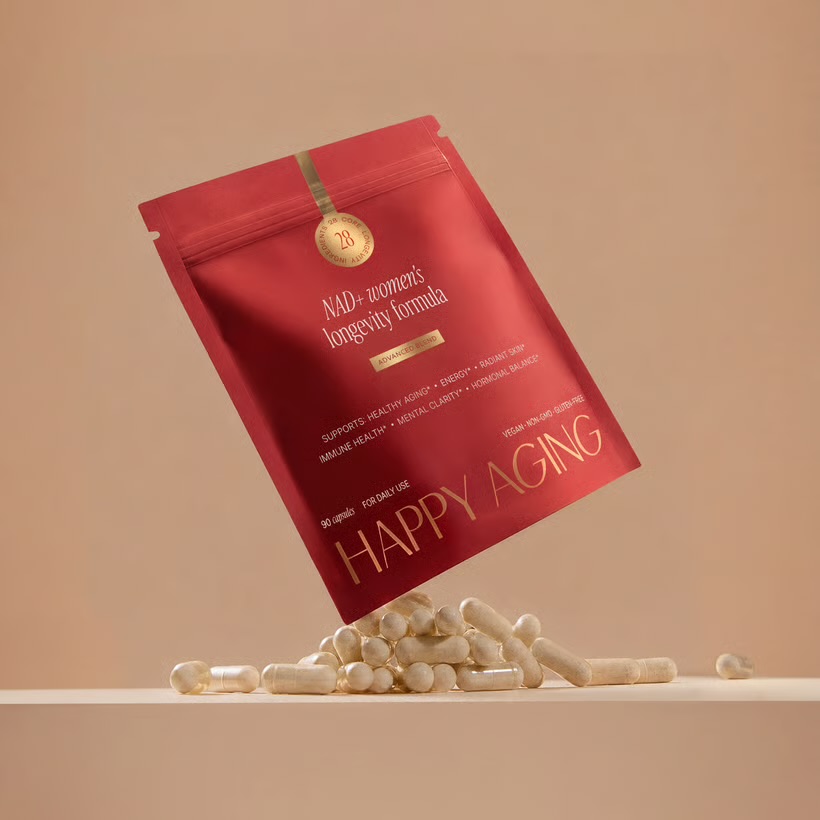
A DG Speaks Recommendation
I want more years to gather with women, share honest stories, and stay connected to the friendships that help carry me
I partnered with Happy Aging to share products that support energy, vitality, and a life grounded in connection, reflection, and everyday well-being.
Some Stories Need to Stay at the Table
Storytelling matters, but privacy matters too.
A woman may trust me with something because she believes the conversation will remain contained. The emotional power of the story does not automatically give me permission to publish, summarize, or reshape it for another audience.
Women need places where honesty does not immediately become material. Listening should not function as extraction.
Protecting what was shared may be the most important way I honor both the story and the woman who told it.
Why Women Lunch Stories Matter
By the time that afternoon lunch ended, the plates had cooled and the conversation had moved through several emotional worlds. We had laughed, grown quiet, asked questions, and allowed the story to become more complicated than the first version suggested.
The situation itself had not been resolved. Something still changed because the woman no longer carried it alone.
Women lunch stories matter because they preserve the parts of life that official narratives often remove. They hold the contradiction, humor, exhaustion, ambition, disappointment, and uncertainty that make a woman’s experience recognizable rather than polished.
A lunch table can carry stories about work, children, bodies, aging, parents, love, money, travel, grief, and dreams that have not yet found a safer place to exist. The conversation moves between serious and ordinary subjects because life rarely separates them as neatly as public storytelling does.
These meals also remind me that friendship needs time. Connection cannot survive entirely through abbreviated messages, reactions, and promises to catch up later.
Sometimes a woman needs another woman to sit across from her long enough for the real sentence to arrive.
The meal may not fix the problem. It can interrupt isolation, restore memory, offer practical knowledge, or remind someone that her response makes sense.
That is not a small thing.
Women have archived our lives this way for generations. We have carried one another’s stories across plates, coffee cups, folded napkins, kitchens, restaurant booths, and lunch hours that ended before the conversation did.
Before anyone official decides what counts as history, women are already remembering.
The table becomes part of the archive whenever we listen carefully enough to keep the truth intact.
Continue exploring stories about women, friendship, storytelling, and the everyday spaces where community becomes real through DG Speaks Culture.