The Table Where Women Tell the Real Story
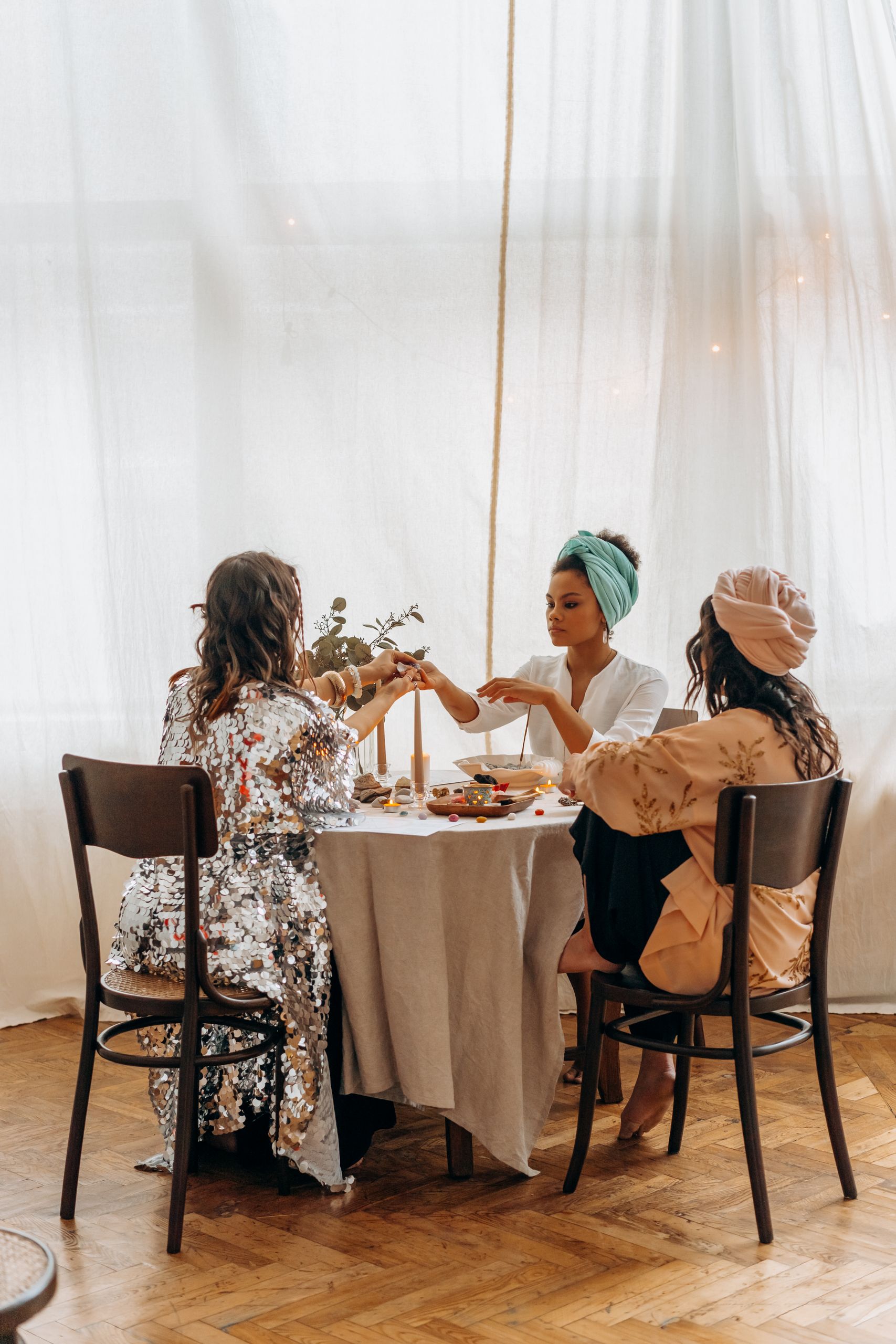
One afternoon, a meal stretched much longer than any of us had planned. The plates had mostly been cleared, coffee had gone lukewarm, and nobody seemed ready to leave.
The conversation began lightly. We laughed about work, travel, family, and the small absurdities that become funny only after enough time has passed. Then one woman paused, looked around the table, and told us what had actually happened.
Her first version had been brief and polished. The fuller story contained anger, disappointment, uncertainty, and details she had apparently been carrying alone. Before she finished, another woman nodded with the unmistakable recognition of someone who had lived through a different version of the same thing.
The table changed because she felt safe enough to tell the real story. Not the polite version, the public version, or the shortened version designed to make everyone comfortable. Women table stories have carried entire lives across lunch plates, serving dishes, coffee cups, and the quiet space that opens after someone finally says what she means.
Women Table Stories Often Begin After the First Laugh
Laughter can become a doorway. It relaxes the room, softens the distance between people, and signals that nobody needs to perform perfect composure.
After the first laugh, someone may admit what she has been avoiding. Another woman adds context, asks the question nobody else thought to ask, or finishes the sentence because she already understands where the story is going.
Humor does not make the experience less serious. Women often use it to create enough emotional room for honesty.
The laughter says we are still here. The story that follows explains what surviving required.
The Truth Arrives Between Bites
Food gives the hands something to do while the heart catches up. A woman can tear bread, stir coffee, or move food around her plate while deciding whether the room feels safe enough for the next sentence.
That physical rhythm matters. Direct eye contact can feel too intense when the story remains tender, while the shared activity of eating creates a gentler form of attention.
The meal does not solve the problem being discussed. It offers structure while the truth takes shape.
This connects with my reflections on how food memories continue following us home. We remember what we ate, but we also remember who sat across from us when we finally told the truth.
Safety Determines Which Version of the Story Gets Told
Women learn early that honesty carries consequences. A story can be dismissed as overreaction, repeated without permission, used as gossip, or turned into evidence that the woman telling it lacks judgment.
Safety requires more than friendliness. The people around the table need to listen without rushing to defend someone who is not present, searching for blame, or converting vulnerability into entertainment.
Trust also depends on confidentiality. A woman should not discover that the hardest thing she shared privately has become someone else’s conversation starter.
The real story appears when the room communicates that honesty will not be punished.
Friendship Becomes an Archive
Women remember details for one another. We hold dates, names, patterns, warnings, promises, and earlier versions of events that become important when someone begins questioning her own memory.
A friend may remember how hopeful I sounded before a situation changed. She recalls the first concern I minimized, the boundary I tried to set, and the moment the story stopped matching what I had been told.
That kind of memory can become grounding. It returns context when confusion has reduced everything to one isolated incident.
Friendship becomes an archive because not every significant life is documented formally. Women preserve one another through conversation.
Black Women’s Stories Need More Than Temporary Attention
Black women have always used kitchens, porches, dining rooms, beauty salons, churches, workplaces, and community gatherings as spaces for storytelling. Those stories preserve humor, strategy, warning, survival, and cultural knowledge.
Public culture often celebrates Black women’s voices briefly, especially when pain becomes useful to a larger conversation. Sustained listening is much rarer.
This is why my reflections on why Black women storytellers deserve more than a moment belong inside this conversation. The stories shared privately at tables are not lesser forms of knowledge because they were never published.
They are cultural records, even when the archive exists only in the people trusted to remember.
Women Table Stories Carry Warnings and Strategies
Not every table story is reflective. Some are practical.
Women tell one another which employer failed to pay fairly, which neighborhood felt unsafe, which doctor listened, which landlord ignored repairs, and which relationship pattern should not be mistaken for charm.
That information travels through networks because formal systems often fail to protect women consistently. A warning shared over lunch may prevent someone else from entering a dangerous or exploitative situation without context.
These conversations are not merely gossip. At their best, they become informal systems of protection.
Advice Should Not Take Over the Story
Listening can become difficult when everyone wants to solve the problem immediately. Advice arrives before the woman has finished explaining what happened.
Sometimes she needs practical help. Other times she needs to hear herself tell the story in a room where nobody requires an immediate decision.
I try to ask what kind of support she wants. Does she need advice, resources, reassurance, honest feedback, or simply a witness?
Making that distinction allows care to respond to the person rather than the listener’s discomfort with uncertainty.
The Table Must Hold Accountability Too
Safety does not mean automatic agreement. A loving table should offer compassion without requiring women to affirm every decision uncritically.
Sometimes care sounds like a difficult question. A friend may notice a pattern, challenge an excuse, or remind someone of a boundary she once said mattered.
Accountability works only when it remains rooted in respect. Humiliation, superiority, and public correction rarely create the conditions for honest change.
The strongest friendships make room for truth in both directions. A woman can tell what happened and still be invited to examine what she wants to do next.
Meals Create Time That Modern Life Often Removes
Meaningful conversation requires time, yet many women live inside schedules that make unhurried connection difficult. Work, caregiving, commuting, household labor, and constant communication leave friendship fitted around whatever remains.
A meal creates a temporary boundary around attention. Everyone has agreed to sit, eat, and remain in one place for a while.
The food can be elaborate, but it does not need to be. A simple lunch, shared dessert, coffee, or takeout placed in the center of the table can provide enough structure for the conversation to deepen.
The value comes from time that has not already been promised elsewhere.
Women’s Stories Travel Across Cultures
Every culture creates its own spaces where women exchange information and preserve memory. The setting may be a family meal, tea service, market stall, communal kitchen, religious gathering, or neighborhood café.
Travel allows me to notice how hospitality and conversation interact in different places. Food experiences available through GetYourGuide can offer cultural context when local women, cooks, and guides shape the story rather than appearing only as part of the scenery.
Visitors should listen carefully without assuming that access to one intimate conversation grants authority over an entire culture. Hospitality is not permission to extract someone’s private life for content.
Respect means understanding that a story can move me deeply and still remain the teller’s to control.

A DG Speaks Recommendation
I want more years to gather with women, share honest stories, and remain connected to the people who help me remember myself
I partnered with Happy Aging to share products that support energy, vitality, and a life grounded in connection, reflection, and everyday well-being.
Not Every Story Belongs Outside the Table
Storytelling has value, but so does privacy.
A conversation can contain cultural meaning without becoming public material. The fact that a story is powerful does not automatically make it mine to repeat, publish, summarize, or reshape for an audience.
Women need places where honesty does not become content. The table can serve as one of those places when everyone understands that listening is not ownership.
Protecting the story may be part of protecting the woman who trusted us with it.
Why the Table Listens
By the time that afternoon meal ended, nothing about the table itself looked extraordinary. A few cups remained, plates needed clearing, and the food had cooled while the conversation deepened.
What happened there still mattered.
One woman told the version she had been carrying alone. Others helped her place it inside a larger pattern, not by taking the story away from her, but by refusing to let her hold it without witnesses.
Women table stories preserve what official histories frequently miss. They carry private turning points, family truths, workplace realities, survival strategies, jokes, regrets, warnings, and the emotional details that make a life understandable.
The table listens because the people around it know how to make space. They allow silence, resist premature advice, remember what was said before, and understand when the next response needs to be laughter rather than analysis.
These conversations are not always solemn. Women can move from grief to absurdity, anger to appetite, or heartbreak to a joke so precise that everyone at the table has to stop and breathe.
That movement is part of the wisdom.
Life rarely arrives in one emotional category, and women’s storytelling has never required pain to remain untouched by humor, pleasure, food, or friendship.
I keep honoring these conversations because they are culture, memory, and survival at once. They remind me that storytelling does not begin only when someone receives a microphone, publishing contract, stage, or public audience.
Sometimes it begins when a woman puts down her fork, looks around the table, and decides the room can handle the truth.
Continue exploring stories about women, storytelling, community memory, and the spaces where truth becomes possible through DG Speaks Culture.