The Leopard and the Moon and the Weight of Grief
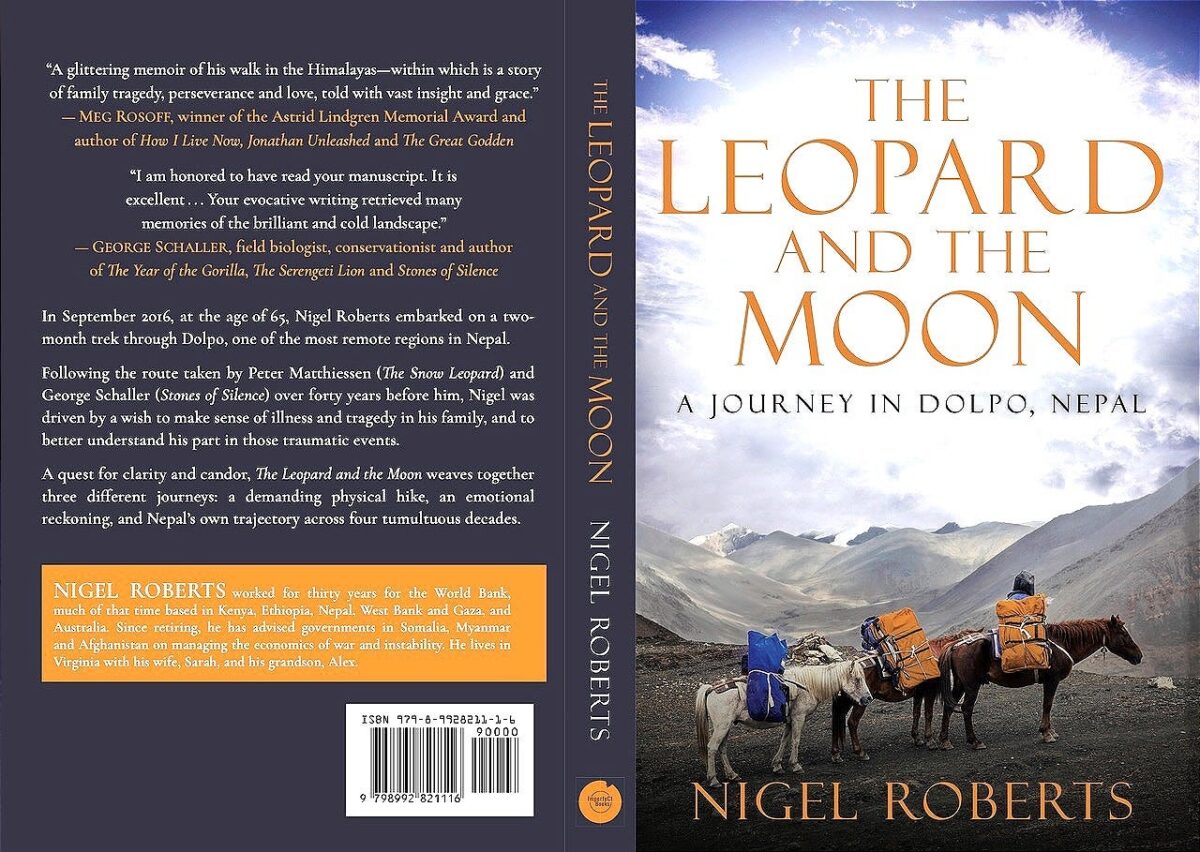
The Leopard and the Moon: A Journey in Dolpo, Nepal is one of those books that settles into your spirit long after you’ve finished reading.
Initially, I was drawn to the memoir by the setting. Nepal carries a certain emotional and spiritual weight in the imagination of many travelers, myself included. The mountains, the isolation, the stillness, and the intensity of the landscape naturally invite reflection. However, what makes The Leopard and the Moon so compelling is that the real journey unfolding here is not geographical. It is emotional.
At its core, this is a story about grief, guilt, memory, and the unbearable question so many people quietly carry after loss: Could I have done more?
That question sits at the heart of author Nigel Roberts’ deeply personal memoir.
A Journey Through Nepal and Through Memory
At 65 years old, Roberts undertook a demanding 450-mile trek through Dolpo, one of the most remote regions of Nepal. Yet this was never simply an adventure story. It was an act of confrontation.
During our conversation, Roberts spoke candidly about the emotional motivations behind the journey. He admitted that guilt played a significant role in pushing him toward such a physically and emotionally exhausting experience.
What stood out during our conversation was Roberts’ willingness to discuss these experiences openly.
He openly acknowledges how easy it can be to avoid difficult emotions within the distractions of everyday life in the United States. Work, routines, entertainment, obligations, and noise often allow people to suppress grief instead of fully sitting with it. Nepal, however, offered something entirely different. The isolation and intensity of the Himalayan landscape forced introspection in ways ordinary life could not.
There is something incredibly human about that.
Sometimes healing requires removing ourselves from familiarity long enough to truly hear our own thoughts.
The Brutal Honesty of Public Grief
One of the most powerful aspects of The Leopard and the Moon is Roberts’ willingness to publicly wrestle with his own perceived failures as a husband and father.
That level of vulnerability is rare.
So much of modern culture encourages people to curate themselves carefully, especially when discussing family tragedy or mental health. Roberts does the opposite. He leans directly into discomfort, accountability, and emotional complexity.
At one point in his reflections, he describes the memoir almost as a confession.
Honestly, I think many readers will deeply connect with that.
Grief is rarely clean or simple. It is tangled with regret, unanswered questions, guilt, anger, tenderness, and memory. People often replay moments repeatedly in their minds wondering whether one different decision could have changed everything.
Roberts’ memoir does not offer easy absolution. Instead, it offers honesty.
And sometimes honesty is more healing than certainty.
Mental Health, Addiction, and Family Silence
The memoir also explores the devastating ripple effects of bipolar disorder, depression, and addiction within families.
Roberts lost both his daughter Tess and his wife Mandana following their struggles with bipolar disorder and addiction. Rather than framing mental illness through judgment or simplistic narratives, he discusses the complicated reality many families experience when trying desperately to help loved ones who are suffering.
This part of the conversation especially stayed with me because so many communities still struggle to discuss mental health openly.
In many families, particularly within communities of color, immigrant communities, and older generations, mental illness is still surrounded by silence, shame, confusion, or misunderstanding. Addiction is often treated as moral failure rather than connected to deeper emotional pain.
Roberts spoke about how easy it is for caregivers and family members to become enablers while also feeling completely powerless to stop what is happening.
That emotional contradiction feels painfully real.
People want to save the people they love. Sometimes they simply do not know how.
Nepal as Emotional Landscape
The setting of Nepal itself becomes almost like another character within the memoir.
Roberts previously lived and worked there for more than eight years, and the country clearly carries deep personal meaning for him. He describes Nepal as a place where he feels freer from the inhibitions of his own culture and more capable of emotional honesty.
That perspective fascinated me because travel often transforms people in exactly that way.
There are places in the world that somehow strip away performance and force deeper reflection. The vastness of the Himalayas, the physical difficulty of the trek, and the isolation of Dolpo create conditions where emotional avoidance becomes almost impossible.
The memoir also draws inspiration from Peter Matthiessen and his classic work The Snow Leopard, another deeply introspective Himalayan narrative that wrestled with family, loss, spirituality, and personal inadequacy.
What Forgiveness Really Looks Like
One of the most emotional moments in the interview came when Roberts discussed forgiveness.
Not forgiveness from society. Not forgiveness from readers.
Forgiveness from his grandson.
Roberts shared that his grandson Alex read the section of the memoir describing the final day of his daughter’s life, including painful moments Roberts feared may have contributed to her death. After reading it, Alex told him that what happened was not his fault.
That moment honestly stopped me in my tracks.
Sometimes healing arrives quietly through unexpected grace from the people who know our pain most intimately.
And perhaps that is part of what makes The Leopard and the Moon resonate so deeply. It understands that grief does not disappear. Instead, people slowly learn how to carry it differently.
In Closing
The Leopard and the Moon is not a light read. Nor should it be.
It is emotionally raw, introspective, uncomfortable, reflective, and deeply human. Yet within all of that pain, there is also tenderness, beauty, and extraordinary honesty.
For readers interested in memoirs about grief, mental health, family dynamics, healing, and transformative travel, this book offers something profoundly moving.
More than anything, it reminds us that survival often depends not on having all the answers, but on having the courage to confront the questions we spend most of our lives trying to avoid.
About Nigel Roberts
Nigel Roberts is a dual citizen of the UK and the United States who spent more than 30 years working with the World Bank in countries including Nepal, Ethiopia, Australia, and the West Bank and Gaza. He currently lives in Virginia with his wife Sarah and grandson Alex.
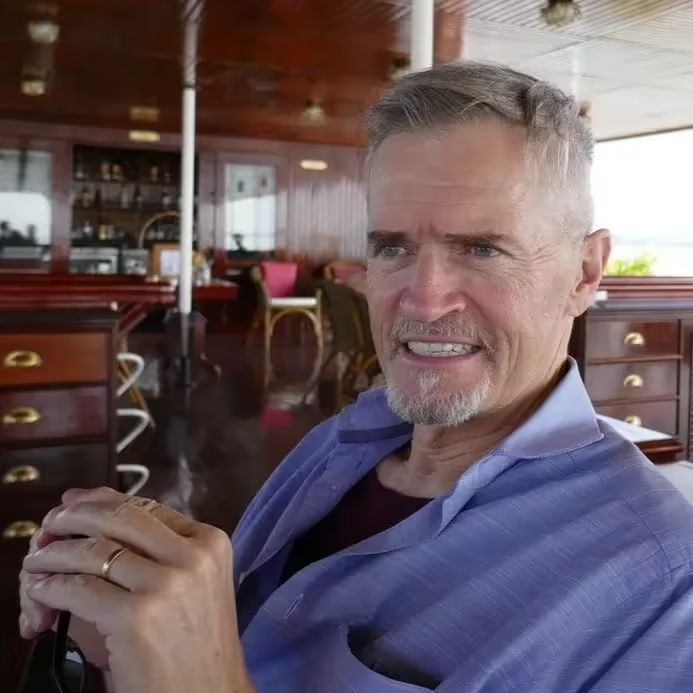
His memoir, The Leopard and the Moon: A Journey in Dolpo, Nepal, was released in May 2026.
Learn more through Nigel Roberts’ Substack.