The Rise and Fall of WeWork: A Cautionary Tale of Too Much Money, Too Soon at the SXSW Film Festival
WeWork: or The Making and Breaking of a $47 Billion Unicorn gave me the answer to a question I had been asking for years: How did a company with such a promising concept lose its way so spectacularly?
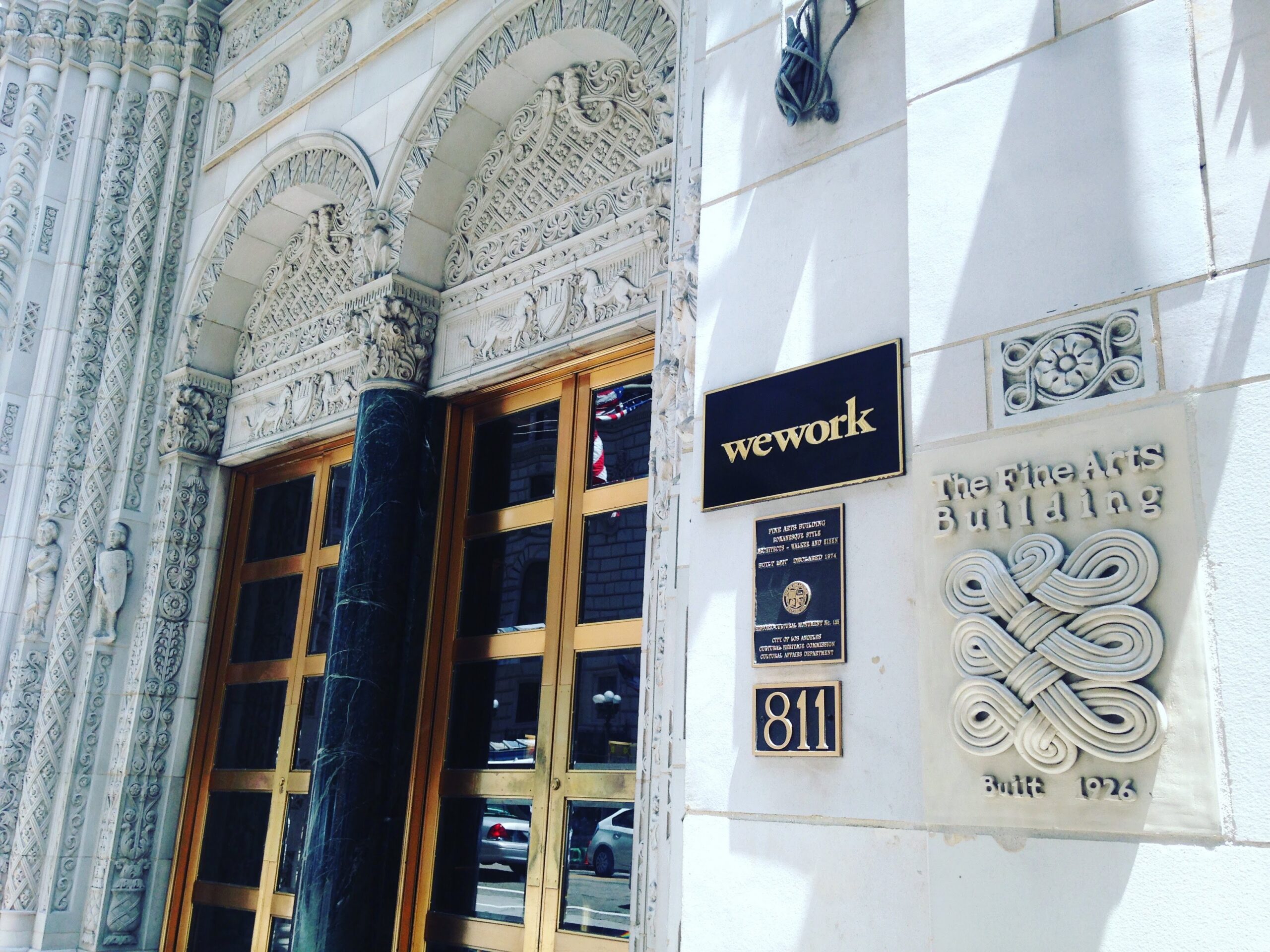
I have been a WeWork member since 2016. When I first joined, I absolutely loved it.
The offices felt festive yet chic. More importantly, membership offered instant access to a network of ambitious people who were open to collaboration, partnership, and new ideas.
I had recently left my traditional 9-to-5 job, but I had no desire to sit alone in my house every day. I wanted energy, community, and a reason to get dressed and leave home.
WeWork appeared to understand that need perfectly. After all, the promise was right there in the name: we work.
Why I Joined WeWork
At first, WeWork felt like much more than office space.
The company created attractive work environments where freelancers, entrepreneurs, consultants, and small teams could work without committing to a traditional commercial lease.
That flexibility mattered to me. I could work from an office in Washington, D.C., then use my Global Access membership while traveling to New York, Austin, Los Angeles, and San Diego.
Each location offered reliable workspaces, meeting areas, community events, and the chance to meet people outside my immediate professional circle.
The social side also played a major role in the appeal.
During a trip to Austin, Texas, I attended a WeWork St. Patrick’s Day party sponsored by Guinness. As a beer geek, I certainly appreciated the celebration.
However, the rotating beers on draft were not merely a fun perk. I actually included that benefit when calculating whether the membership made financial sense.
Happy hour in Washington can easily cost between $50 and $80. Since many people in the city socialize after work, those expenses add up quickly.
With WeWork, I could tell a friend, “Meet me for the office, and let’s grab a beer.” We could catch up without paying another expensive bar bill.
That saving helped me justify a membership that cost more than $300 per month.
Watching WeWork Fall Apart
Over time, however, the magic began to wear off.
The company kept expanding, yet I rarely saw offices filled to capacity. Most of the WeWork locations I visited appeared to have significant amounts of vacant space.
That observation made me question the company’s rapid growth.
How could WeWork continue opening locations when so many desks and offices already sat empty? More importantly, how could the company justify a valuation of $47 billion?
The answer becomes much clearer in WeWork: or The Making and Breaking of a $47 Billion Unicorn.
Directed by Jed Rothstein, the documentary premiered at the 2021 South by Southwest Film Festival. It explores the company’s rapid rise, the personality of co-founder Adam Neumann, and the failed public offering that exposed serious problems inside the business.
My review is part of my broader South by Southwest coverage, where I explore the films, conversations, technology, culture, and business ideas shaping the festival.
I am especially drawn to stories that examine who holds power, how industries operate, and what happens when ambition grows faster than accountability. That same curiosity guides my coverage of independent film at SXSW.
Hulu presents the film as an examination of the community-centered idea that sent the coworking company soaring before revealing what was happening behind the scenes.
My SXSW Review of the WeWork Documentary
My main takeaway from the documentary is simple: investors poured too much money into a promising concept and allowed founder worship to replace financial discipline.
Adam Neumann did not merely serve as the co-founder and chief executive of WeWork. He became the company’s personality, storyteller, spiritual guide, and de facto symbol.
The documentary shows how employees and investors became captivated by his charisma, ambition, and grand vision.
Unfortunately, enthusiasm for Neumann often appeared more important than evaluating whether the company could operate sustainably.
That distinction matters.
A charismatic founder can attract attention, inspire employees, and persuade investors to take risks. However, charisma cannot replace sound governance, realistic projections, responsible spending, or a path to profitability.
The documentary presents WeWork as a warning about what happens when people stop challenging a founder because they want to believe in the mythology surrounding him.
The Community Was Real, but So Was the Real Estate
I do not believe the entire WeWork concept was fraudulent.
The need for flexible office space was real. Freelancers, consultants, startups, remote workers, and small companies needed professional places to work without signing long commercial leases.
The community also felt genuine, at least in the early years.
I met interesting people, attended events, worked in attractive offices, and enjoyed the feeling of belonging to something larger than my own business.
Still, WeWork remained a real estate company.
The company leased office buildings, redesigned the interiors, and rented smaller spaces to members. No amount of language about changing the world could remove the financial risks attached to those long-term leases.
The company’s 2019 filing with the U.S. Securities and Exchange Commission revealed the scale of those risks. WeWork reported substantial losses while carrying major long-term lease obligations.
Anyone interested in the financial details can read the company’s original 2019 registration statement filed with the SEC.
The filing forced investors to look beyond the beautiful offices, free beer, motivational speeches, and promises of community.
Once they did, the numbers told a much less inspiring story.
When Growth Destroys the Original Appeal
WeWork’s rapid expansion also weakened what originally made the company special.
You cannot continue presenting a coworking space as an exclusive collective of creative disruptors when another location appears on nearly every block.
The pace of growth undermined the novelty.
At first, membership felt like entry into an exciting community. Eventually, it felt more like paying a premium for a desk inside a beautifully designed office.
Once the excitement faded, members had to ask a basic question: Was the experience worth the price?
For me, the answer eventually became no.
It only took a few months for me to realize that paying more than $300 for access to a desk was difficult to justify consistently.
I am certain other independent professionals reached the same conclusion.
The Offices Never Looked Full to Me
My Global Access membership allowed me to visit WeWork locations in Washington, New York, Austin, Los Angeles, and San Diego.
I never visited a location that appeared fully occupied.
In many cases, more than half the visible workspaces seemed vacant.
My observations were anecdotal, of course. I did not have access to company occupancy records. Still, the empty desks made the extraordinary valuation difficult to understand.
A company can describe itself as a technology disruptor, a community platform, or a global movement. However, unused office space still represents a financial problem.
Investors appeared to focus heavily on membership growth, location counts, founder charisma, and the promise of global domination.
Meanwhile, more practical questions received less attention.
Were the locations consistently profitable? How long did members stay? What did it cost to acquire them? Could flexible monthly memberships reliably support long-term lease obligations?
Those questions should have mattered from the beginning.
Adam Neumann and the Danger of the Visionary Founder
Adam Neumann fit perfectly into the early 2010s era of celebrated startup founders.
Investors often treated these men as visionaries capable of transforming ordinary industries through personality, technology, and relentless growth.
Questioning the founder sometimes looked like a failure of imagination.
However, the WeWork documentary shows why admiration must never replace accountability.
Neumann’s ability to sell a vision helped WeWork grow. Yet that same ability appears to have shielded the company from reasonable scrutiny for too long.
When a company becomes too closely tied to one personality, employees may hesitate to challenge bad decisions. Investors may also ignore warning signs because they fear missing the next great opportunity.
That is not leadership. It is a governance failure.
Investors Were Watching the Wrong Metrics
The documentary does not place every failure at Neumann’s feet.
Investors also played a major role.
They supplied enormous amounts of money, encouraged aggressive expansion, and rewarded a growth-at-all-costs strategy.
That funding allowed WeWork to open offices rapidly and present expansion as evidence of success.
However, opening more locations does not automatically create a healthy company. Revenue growth also means little when expenses and obligations grow even faster.
The proposed public offering forced investors to confront the difference between a popular company and a financially sustainable one.
WeWork’s valuation reached approximately $47 billion in private markets. Yet the company withdrew its planned initial public offering in 2019 after investors raised concerns about losses, governance, conflicts of interest, and the overall business model.
The collapse exposed the danger of valuing hype more than fundamentals.
What Entrepreneurs Can Learn From WeWork
The WeWork story offers several lessons for entrepreneurs, investors, and anyone building a purpose-driven company.
Those lessons also connect with what I learned at the American Express Summit for Success. Inspiration and networking matter, but a business must also create real value, understand its finances, and build systems that can survive beyond one charismatic leader.
- A powerful story cannot replace a sustainable business model. Branding may attract customers and investors, but the numbers must eventually support the vision.
- Rapid growth can create hidden weaknesses. Expansion often looks impressive, yet it can magnify financial problems and operational failures.
- Community must create real value. Customers may enjoy events and perks, but they will still evaluate whether the core product justifies the cost.
- Founders need accountability. Strong boards, experienced advisers, and honest employees protect a company from unchecked decision-making.
- Investors must examine the right metrics. Membership numbers and location counts matter less when retention, occupancy, margins, and cash flow remain weak.
- Businesses should solve customer problems without creating unsustainable risks. Flexible leases helped members, but they placed enormous long-term obligations on WeWork.
WeWork also reminds us that access to a large platform does not remove the need for strategy. I explored a similar issue in my article about how Amazon can empower women and minority-owned businesses. Major companies can open doors, but entrepreneurs still need ownership, accountability, strong margins, and assets they control.
Was WeWork a Good Idea?
I still believe WeWork began with a good idea.
Independent professionals need community. Small companies need flexible offices. Remote workers often benefit from separating home and work.
WeWork understood those needs and created a product people wanted.
The problem was not necessarily coworking. The problem was trying to turn coworking into a world-changing movement worth tens of billions of dollars.
The company sold the idea that it was reinventing human connection, consciousness, and the future of work.
Yet beneath the language, it still leased offices and rented desks.
There is nothing wrong with operating a real estate business. However, investors should value it according to what it actually is.
My Final Thoughts on the WeWork Documentary
WeWork: or The Making and Breaking of a $47 Billion Unicorn is one of the most memorable business documentaries I watched during SXSW 2021. It also stands out among the stories featured in my South by Southwest coverage because it examines far more than one company’s collapse.
The documentary shows why independent filmmaking matters at festivals like SXSW. Through interviews, archival material, and careful storytelling, the film turns a complicated corporate failure into an accessible warning about power, money, leadership, and belief.
Readers can explore more of my coverage of independent film at SXSW for additional festival stories and reviews.
The film answered many of my questions about how WeWork went from an exciting coworking company to one of the most dramatic corporate collapses of its era.
It also confirmed something I had already begun to suspect as a member.
Once the free beer, stylish offices, and excitement of being one of the cool kids wore off, WeWork needed to prove that it offered enough value to justify its prices and expansion.
The company could not rely forever on atmosphere, branding, or the personality of Adam Neumann.
I do not know whether WeWork will ever return to the position it once held. However, I believe future entrepreneurs will study this story as a warning about unchecked ambition, inflated valuations, weak governance, and the danger of confusing a charismatic founder with a sound business.
Future generations may even laugh at the excesses of the “We” era.
Still, the lesson is serious. A company may promise to change the world, but eventually it must prove that the business actually works.