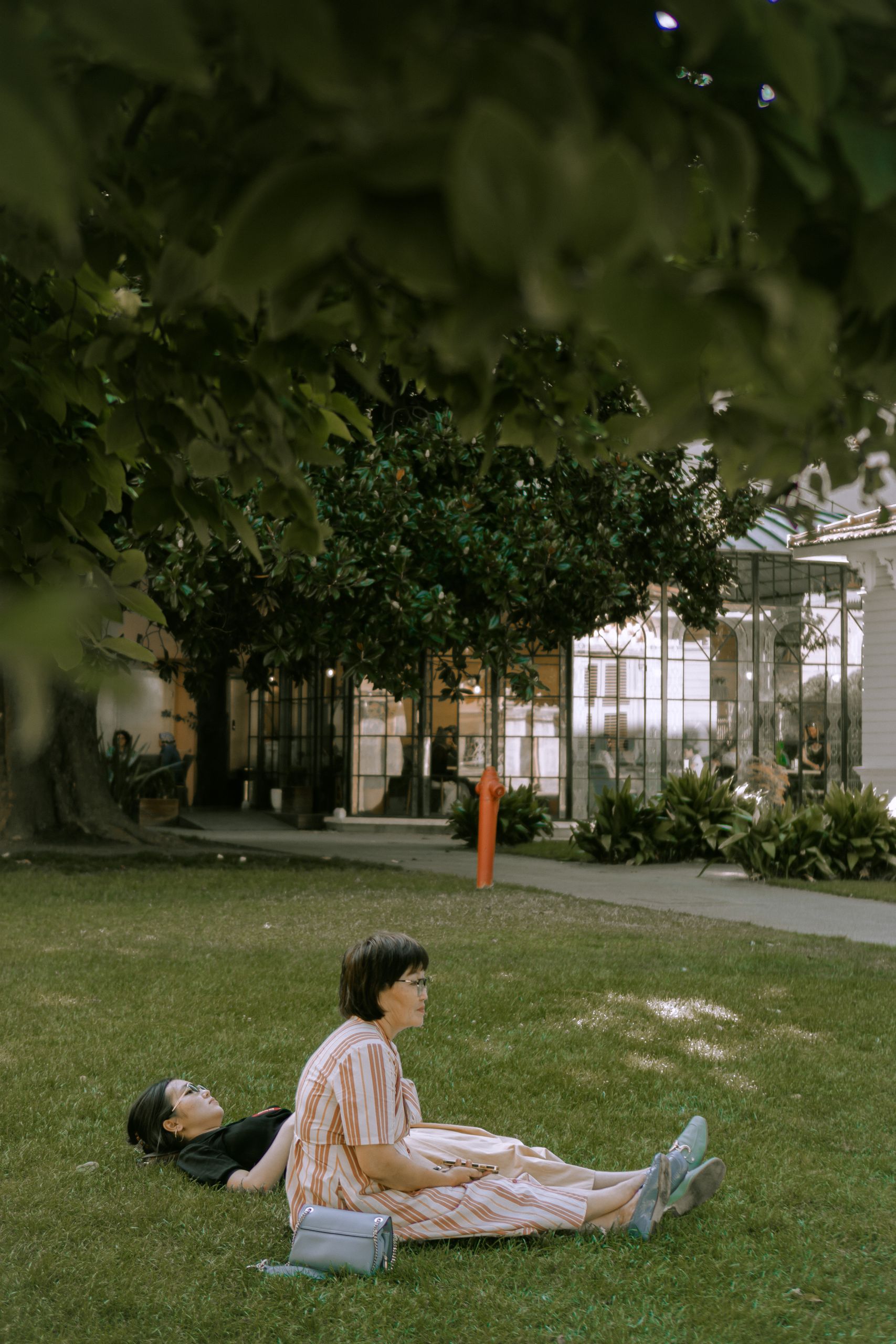
Why I Am Paying Attention to the Women Who Rest in Public
I was walking through a city park when I noticed an older woman sitting alone on a bench. She was not checking her phone, watching children, waiting for someone, or eating on the run. She was simply sitting, looking out at the street as though the afternoon belonged to her.
Nothing dramatic happened. People passed, bicycles moved along the path, and traffic continued beyond the trees. Still, I kept thinking about how complete her rest looked.
I notice women resting in public because the sight still feels more unusual than it should. A woman lingering over lunch, stretching out in the sun, or sitting quietly without appearing available to anyone makes a claim that is easy to underestimate.
Her body belongs in public even when it is not working.
The Bench Can Become a Small Rebellion
A bench offers something simple: a place to stop.
That simplicity matters because public space often asks women to remain in motion. We are shopping, commuting, caregiving, exercising, meeting someone, or moving quickly enough to signal that we have a reason to be there.
Rest interrupts that expectation. A woman who sits without explanation is not proving productivity, serving anyone, or preparing to leave.
The bench becomes a small rebellion because it allows the body to occupy space without earning the right through labor.
Not Every Woman Is Waiting to Serve
Women are frequently interpreted through usefulness.
A mother is expected to remain alert to everyone around her. A worker on break may still be answering messages, while a woman seated alone can be mistaken for someone waiting to assist, listen, or make room.
Rest challenges those assumptions. It shows a woman existing outside the role of helper, employee, caregiver, hostess, or emotional support system.
This is part of why my reflection on women, rest, and why softness is not surrender remains important to me. A woman does not stop mattering when she stops producing.
Black Women Are Rarely Allowed to Look Unoccupied
Black women carry a particular history around labor, strength, and visibility.
We are often praised for endurance while receiving little protection from the conditions that require it. Competence becomes expected, and rest may be interpreted as laziness, disengagement, or a lack of ambition.
That expectation shapes how Black women move through public space. A relaxed posture can feel vulnerable when the world is accustomed to reading our bodies through service, resilience, or threat.
Rest belongs in our stories too. My writing on why Black women storytellers deserve more than a moment connects to this because representation must include ordinary ease, not only struggle, excellence, and survival.
Public Leisure Has Never Been Equally Available
Public space is often described as though it belongs to everyone automatically.
In practice, access depends on race, gender, age, disability, class, and whether a person is perceived as belonging in the neighborhood. Security, policing, harassment, and social judgment all shape who can remain still without being questioned.
A woman may feel comfortable sitting alone in one park and exposed in another. The same bench can offer relief to one person while making someone else feel watched.
Leisure with witnesses matters because public ease is never only personal. It reflects whether the surrounding environment allows a woman to lower her guard.
The City Reveals Its Values Through Places to Sit
Benches, shade, restrooms, wide sidewalks, and safe transit stops are not decorative details.
They determine whether older people, disabled people, pregnant women, caregivers, children, and anyone managing pain can remain in public life. A city without places to rest quietly communicates that certain bodies should move quickly, spend money, or go home.
Commercial spaces may offer seating, but the invitation often depends on a purchase. Public seating offers a different kind of belonging because the person does not have to become a customer first.
Design can either support human limits or pretend everyone has the same physical capacity.
Rest Can Still Feel Unsafe
Stopping does not always bring relief immediately.
A woman may sit while continuing to monitor her bag, the people nearby, the light, and the distance to the next exit. Her body is resting, but her attention remains on duty.
This is why rest cannot be reduced to posture. Real ease requires enough safety for the nervous system to believe that the pause will not become a problem.
Internal practices can help. Guided meditations, breathing exercises, and sleep support through Calm may make it easier to slow the body down, but individual tools cannot replace safe, accessible public space.
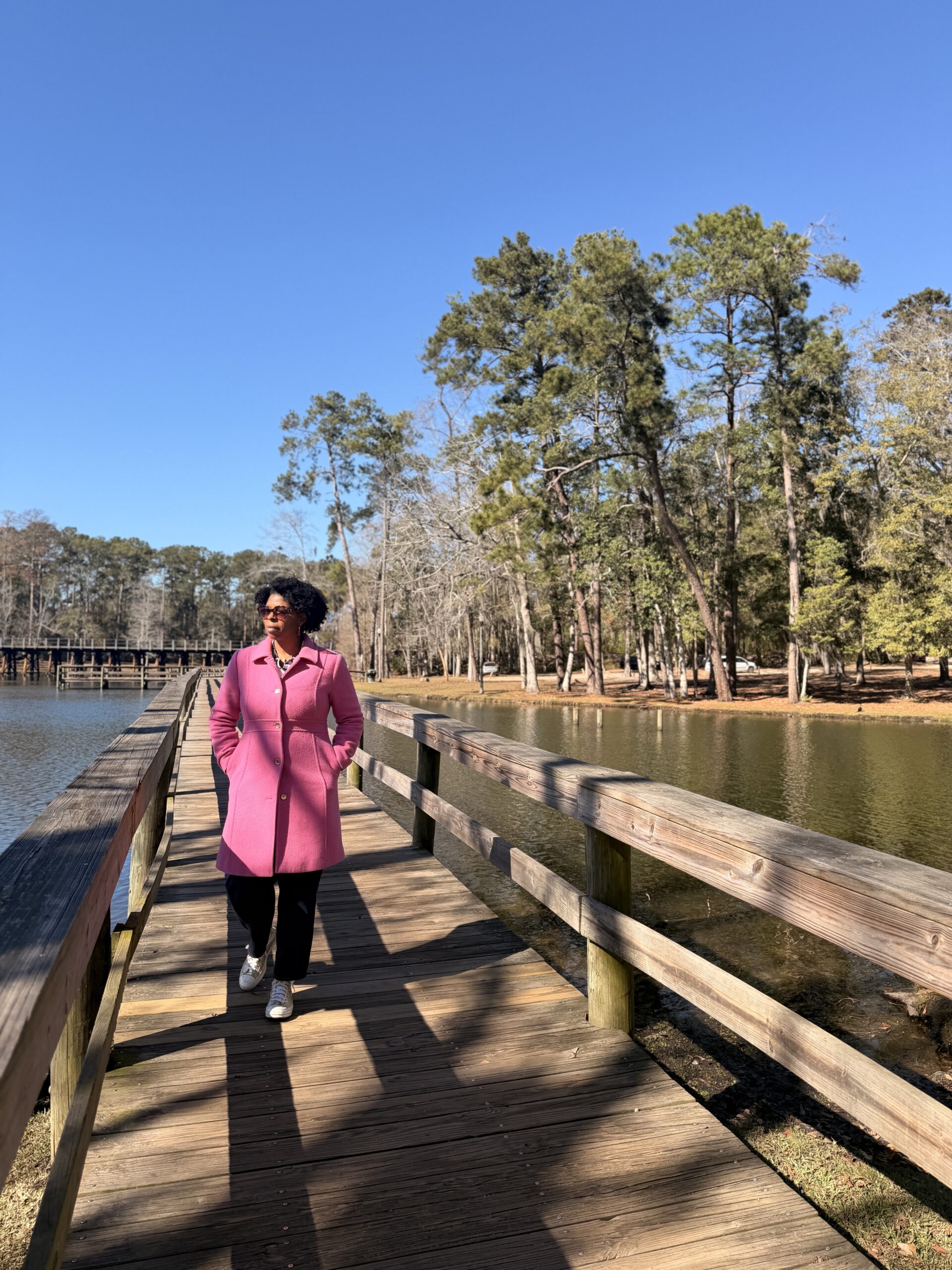
A DG Speaks Recommendation
I want more years with enough strength to move and enough wisdom to pause
I partnered with Happy Aging to share products that support energy, vitality, and a life that makes room for both movement and rest.
Rest Does Not Need to Look Beautiful
Public rest is often made acceptable when it looks graceful.
A woman reading beneath a tree appears cultured. Friends drinking coffee look social, while someone stretched across a bench may be judged very differently.
That distinction reveals how quickly rest becomes tied to respectability. Women are allowed ease more readily when the posture, clothing, location, and activity remain visually pleasing.
Real rest may look messy. It can include tired eyes, shoes removed under a table, a body leaning heavily against a wall, or silence that is not arranged for anyone else’s comfort.
The Antidote Is Making Rest Visible and Ordinary
The problem is not only that women need more rest. We also need to see women resting without treating the sight as unusual.
The antidote begins with making ease ordinary.
Women can take the bench, linger after lunch, sit alone without pretending to wait for someone, and allow children to play without remaining in constant motion. Communities can provide shade, seating, restrooms, safe transit, and parks designed for people who need more than a decorative path.
Public policy matters as much as personal permission. A woman cannot meditate her way around a missing bench, an unsafe street, or a restroom that does not exist.
Rest becomes sustainable when both the person and the environment support it.
A Woman at Rest Is Not Wasting Time
Productivity culture teaches us to measure every hour by what it produces.
Under that logic, sitting becomes wasted time unless it improves performance later. Rest must make us more focused, creative, efficient, or emotionally regulated before it can be justified.
I resist that bargain.
A woman does not need to return from a bench with a better idea, a calmer attitude, or a completed plan. The pause can have value simply because her body needed it.
A Public Claim to Softness
When I think back to the woman in the park, I remember how little she seemed to require from the afternoon. She was not performing leisure for a photograph or making the pause look productive.
She was simply there.
Women resting in public remind me that ease is part of belonging. A body should be able to occupy a park, café, sidewalk, library, or public square without immediately becoming useful, available, or suspicious.
The claim may look small, but it reaches beyond the individual woman. Each visible pause makes rest easier to imagine as part of ordinary life rather than a private reward granted after exhaustion.
I want more benches filled with women who are not waiting to serve anyone. More friends lingering after the plates are cleared. More mothers taking a quiet minute, and more older women watching the street without apology.
Rest is part of our story too.
Continue exploring reflections on women, public life, Black women’s experiences, and the cultural meaning of rest through DG Speaks Culture.