Farmers Markets as Hope in Public: Beauty, Labor, and the True Cost of Local Food
One Saturday morning, I arrived at the farmers market before the crowd had fully settled in.
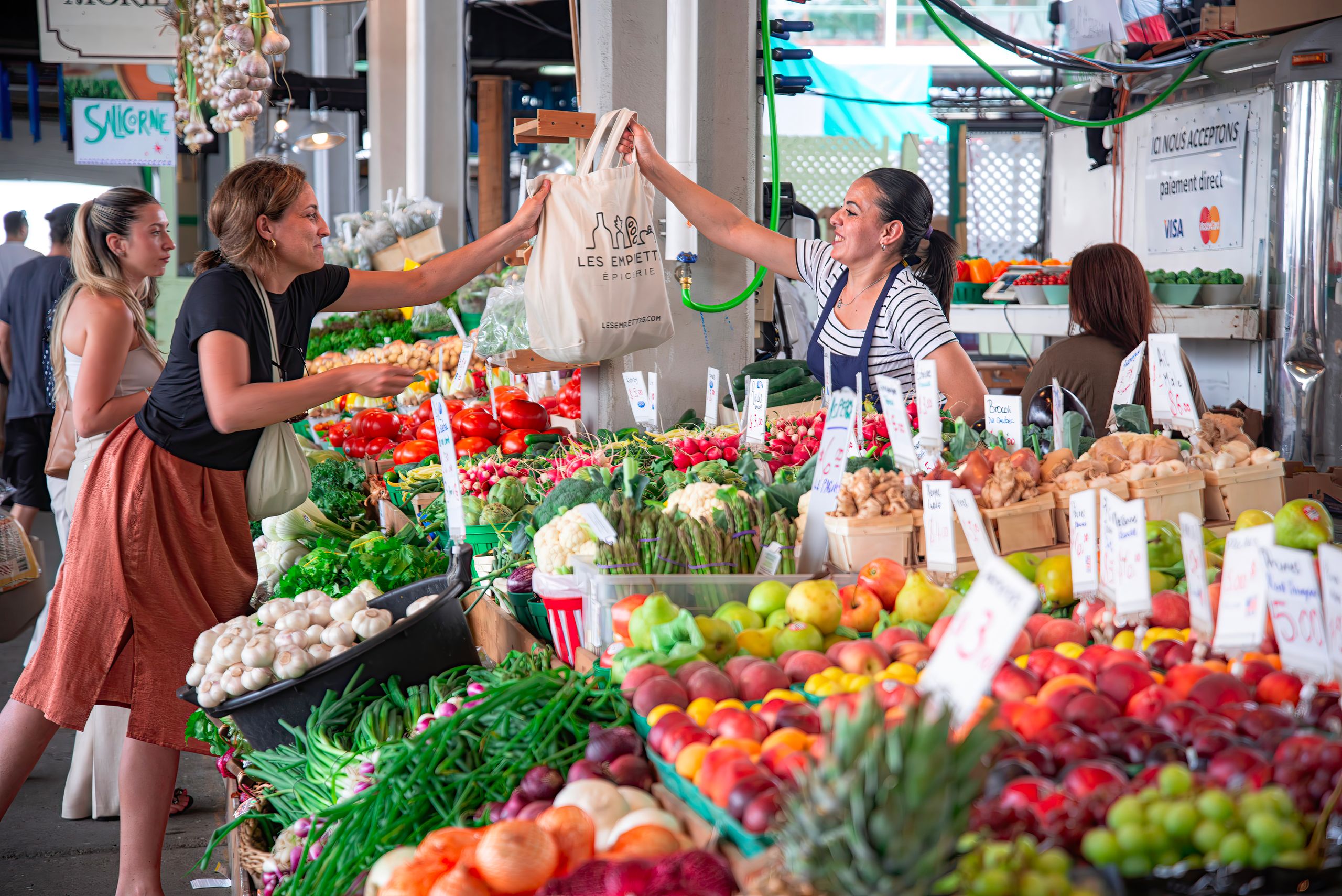
Vendors were still adjusting tablecloths, stacking peaches, spraying greens with water, and writing prices on small chalkboards. A woman carried crates of eggs from the back of a truck while someone nearby arranged loaves of bread in careful rows.
The market was already beautiful.
Sunlight caught the red of the tomatoes, the deep green of the kale, and the gold of flowers gathered into jars. Herbs released their scent whenever someone brushed against them, and the peaches looked soft enough to perfume the entire table.
For a moment, the market felt like abundance made visible.
Then, I noticed the farmer behind the tomatoes wiping sweat from his face before answering another question about price.
I watched a customer pick up a bunch of greens, turn over the handwritten sign, and quietly place the vegetables back on the table.
That small exchange held the contradiction I keep returning to.
Farmers markets can feel like hope in public, but hope at the market is complicated.
The color is real. So is the labor.
The abundance is real. So is the price.
Farmers deserve to earn a living, and families deserve access to fresh food. Those truths belong at the same table, even when the system has not yet figured out how to honor both.
The Tables Look Effortless Only From a Distance
A farmers market can appear almost magical to the person arriving with a tote bag and time to wander.
Everything has already been harvested, washed, transported, arranged, and presented. The flowers stand upright in buckets. Eggs sit safely in cartons, and bread looks as though it appeared that morning without flour on anyone’s clothes or heat from an oven.
Yet, the market begins long before the first customer arrives.
Someone prepared the soil, purchased seed, watched the weather, managed pests, repaired equipment, and hoped that enough of the crop would survive to make the work worthwhile.
Harvest came next.
Then, the food had to be sorted, cleaned, packed, loaded, driven, unloaded, displayed, sold, and carried home again if too much remained at the end of the day.
The table represents only the visible portion of the labor.
The Grower Is Standing Behind Every Color
I love the visual richness of a market.
Still, I do not want the beauty of the produce to make the person who grew it disappear.
A tomato is not only red, ripe, and photogenic. It is the result of decisions made over weeks or months.
Someone determined when to plant, how much water the crop needed, and whether the fruit was ready to harvest before the next storm.
The grower may also be the person answering questions, processing payments, and loading the unsold crates after hours of standing in heat, wind, or cold.
Local food is not only an aesthetic.
It is labor and livelihood.
The Market Makes Seasonality Impossible to Ignore
A supermarket can make nearly every food seem permanently available.
Strawberries appear in winter. Apples remain through summer, and vegetables travel far enough that the season of their origin becomes invisible.
The farmers market restores time to the food.
One week, the table holds asparagus. Later, peaches arrive, followed by tomatoes, squash, apples, sweet potatoes, and greens that tolerate colder weather.
Then, something disappears.
The absence teaches as much as the abundance.
Seasonality means accepting that food has a window. I can enjoy it deeply without demanding that it remain available forever.
The First Peach of the Season Carries Anticipation
There is a different feeling in buying the first local peach after waiting months for it.
The fruit is not simply another item on the grocery list.
It marks a change in the year.
I lift it gently, smell it, and begin imagining what it will taste like before I have paid for it. Perhaps I will eat it over the sink because the juice will run down my hand.
That anticipation is part of the pleasure.
Waiting makes the food specific again.
Farmers Market Stories Are Worth Slowing Down For
When I move too quickly through a market, I see only products.
Slowing down reveals stories.
A grower explains that the smaller apples taste sweeter this year. A baker describes why one loaf requires a longer fermentation, while another vendor talks about the difficulty of keeping herbs alive through an unusually hot week.
Those exchanges deepen what I carry home.
This is part of why I believe farmers market stories are worth slowing down for.
The food matters.
Understanding something about the hands, weather, land, and decisions behind it changes the meal.
The Price Tag Tells Only Part of the Story
Farmers market prices often create tension.
A customer may compare a bunch of carrots with a lower-priced option at a supermarket and wonder why local food costs more.
The farmer may look at the same price and know it barely covers seed, fuel, labor, land, packaging, market fees, transportation, and loss.
Both people can be telling the truth.
The customer may genuinely lack room in the household budget.
The farmer may genuinely be unable to lower the price without undermining the business.
The conflict does not originate entirely between them.
It grows from a food system that often hides its real costs until producer and consumer meet across one small table.
Cheap Food Is Rarely Cheap for Everyone
Low prices can feel like access.
For households stretching every dollar, they may be necessary.
However, a low retail price does not always mean the food cost little to produce.
Someone may have absorbed the difference through low wages, environmental damage, unsafe working conditions, government subsidy, or financial loss.
The cost still exists.
It has simply been moved away from the checkout receipt.
Farmers markets make some of those hidden costs more visible because the distance between producer and buyer becomes shorter.
Fair Pay and Food Access Should Not Be Enemies
Too often, conversations about local food become a false choice.
Either farmers receive fair compensation, or low-income families gain access to fresh food.
That framing asks the wrong people to absorb the sacrifice.
Farmers should not be expected to solve hunger by underpricing their labor. Families facing food insecurity should not be blamed for choosing what they can afford.
A better system would create public investment, nutrition incentives, institutional purchasing, stronger local distribution, and policies that allow both producers and communities to thrive.
Justice should not depend on one side losing so the other can eat.
Hope Can Have a Price Tag
The market may look abundant, but not everyone experiences that abundance as available.
A table full of berries can still feel distant when one small container consumes too much of the weekly food budget.
Someone may admire the vegetables, ask about the price, and leave with nothing.
That moment matters.
Beauty in public does not automatically create access.
A food system becomes more equitable when people can participate without choosing between freshness and financial survival.
Nutrition Incentives Can Change Who Gets to Shop
Programs that match or increase nutrition benefits at farmers markets can help close part of the gap.
When customers receive additional purchasing power for fruits and vegetables, the market becomes more accessible without forcing farmers to lower prices below sustainability.
These programs do more than support individual transactions.
They keep public food dollars circulating through local farms and communities.
That connection deserves greater investment.
A Market Is Not Accessible If People Cannot Reach It
Price is only one barrier.
Location and transportation matter too.
A market held for three hours on a weekday morning may work well for tourists, retirees, and people with flexible schedules. It may remain unreachable for workers, caregivers, and anyone relying on limited public transportation.
Parking, sidewalks, shade, seating, language access, and mobility all shape participation.
Fresh food can sit only a few miles away and still remain inaccessible.
The Market Schedule Reveals Who Was Imagined
Every public event carries assumptions about its ideal participant.
Who can shop at that hour? Who has time to browse, speak with vendors, and carry food home?
If a market consistently operates when many residents are working, the problem is not that those residents lack interest in local food.
The schedule may never have included their lives.
Access requires more than invitation.
It requires design.
Women Hold Much of the Food System Together
At many markets, women stand behind the tables.
They grow, bake, preserve, package, sell, manage records, communicate with customers, and keep the business moving between market days.
Some lead farms. Others carry work that remains less visible because the public face of agriculture still often appears male.
This connects with my reflections on women leading change throughout food systems.
Women do not simply participate in food systems.
They build, sustain, and transform them.
The Vendor Table May Be the End of a Very Long Week
By the time I arrive on Saturday morning, the vendor may already be exhausted.
Farming did not stop while the market prepared to open.
Animals still needed feeding. Crops required attention, and weather did not wait for the business side of the operation to become convenient.
Then came the baking, packing, labeling, bookkeeping, and drive.
A cheerful market interaction may sit at the end of several demanding days.
Recognizing that labor should change how I speak, ask questions, and respond to price.
Questions Can Become Respect or Extra Work
I enjoy speaking with growers.
Still, not every question carries the same weight.
Thoughtful curiosity can create connection. Repeated requests for explanations, discounts, or guarantees may add more labor to an already full day.
I try to read the moment.
Is the vendor eager to talk, or is a line forming? Can I ask a specific question rather than expecting a free lesson on farming?
Respect includes recognizing when someone is both educator and working business owner.
Sampling Is Not the Same as Supporting
Samples make markets enjoyable.
They help customers discover unfamiliar foods and decide whether a product fits their taste.
However, sampling without purchasing can become part of a larger pattern in which vendors provide entertainment but receive little financial support.
No customer must buy every product they taste.
Still, I try to remember that the person offering the sample is not only creating an experience.
They are trying to sustain a business.
The Market Is Also a Classroom
Children can learn a great deal at a farmers market.
They see that carrots grow in different shapes, eggs come in more than one color, and food does not begin inside plastic packaging.
A grower may explain how honey is produced or why one vegetable appears only during a short season.
That kind of learning feels immediate.
The child can touch, smell, ask, and connect the food to a person.
Adults Need That Education Too
Many adults have become distant from food production.
We know brands better than seasons and recognize packaging more quickly than plants.
A market can restore part of that understanding.
I learn which crops struggled after heavy rain, what grows well locally, and why certain produce looks different from standardized supermarket versions.
The knowledge may influence what I cook, buy, and waste.
Imperfection Can Be Evidence of Reality
Farmers market produce does not always look uniform.
A tomato may carry a scar. Carrots curve, and apples vary in size.
Industrial retail has trained customers to associate visual consistency with quality.
Yet, appearance does not always predict flavor, safety, or value.
Natural variation reminds me that food is biological.
It grew in weather, soil, and conditions that did not produce identical outcomes.
We Waste Too Much Food for Being the Wrong Shape
Cosmetic expectations create waste throughout the food system.
Produce may never reach the shelf because it fails to meet size, color, or shape standards.
At a market, growers sometimes have more freedom to sell imperfect items directly.
Customers can help by choosing flavor and usefulness over visual perfection.
A crooked vegetable still belongs in the pot.
Markets Can Help Preserve Agricultural Diversity
Small farms often grow varieties that large retail chains rarely carry.
An heirloom tomato, unusual bean, or regional apple may not travel well enough for national distribution.
At a local market, those foods can reach customers directly.
Buying them helps preserve more than one meal.
It can support seeds, flavors, and agricultural knowledge that might otherwise disappear under pressure for uniformity.
The Market Holds Cultural Memory
Food traditions often remain visible at market tables.
A vendor sells a bread connected to family history. Another offers peppers, greens, herbs, or prepared foods that reflect migration and regional identity.
The table becomes an archive of taste.
Recipes survive because people continue growing, making, buying, and teaching them.
Culture does not live only in museums.
It lives in what people still prepare for dinner.
The Market Can Become a Place of Belonging
Repeated visits create familiarity.
A vendor recognizes the customer who returns every week. Shoppers begin greeting one another, and the market becomes part of the neighborhood’s social rhythm.
Those relationships may remain small.
Still, they matter.
Being recognized changes a transaction. The exchange becomes more than money for food.
Public Food Creates Public Life
Farmers markets occupy a space between commerce and community.
People shop, but they also talk, listen to music, exchange local information, and spend time around one another.
The market gives residents a reason to gather without requiring a formal invitation.
That social function adds value beyond the produce.
A neighborhood needs places where people can become familiar.
The Market Can Reveal Who Feels Welcome
Not every market feels inclusive.
Price, language, cultural familiarity, location, and atmosphere can signal who the space expects.
A market may claim to serve the community while primarily attracting wealthier visitors from elsewhere.
That does not make the market worthless.
It does create questions.
Do longtime residents feel that the space belongs to them? Are vendors drawn from the surrounding community? Can shoppers find culturally relevant food?
Belonging requires more than physical entry.
Local Does Not Automatically Mean Equitable
The word “local” carries positive associations.
It suggests freshness, community, sustainability, and trust.
Those qualities may be present.
However, local systems can still reproduce inequality.
Workers may remain underpaid. Land access can exclude farmers of color, and market opportunities may favor vendors with more capital, transportation, or social connections.
Proximity alone does not guarantee justice.
Who Owns the Land Matters
Farming requires access to land, water, equipment, financing, and markets.
Historical discrimination has shaped who owns agricultural land and who receives support.
When I buy from a market, I may see the final product without seeing the structural barriers surrounding the farm.
Supporting diverse growers matters.
So does advocating for the systems that allow them to remain on the land.
Farm Labor Must Remain Part of the Story
The person selling the produce may not be the only person who helped grow it.
Farmworkers planted, weeded, harvested, washed, sorted, or packed the food.
The language of the small family farm can sometimes erase hired labor, especially when customers prefer a simple story of one farmer doing everything.
Ethical local food requires attention to working conditions as well as geography.
A short supply chain can still contain exploitation.
Weather Sits at Every Table
Farmers cannot fully control the conditions shaping their work.
A late freeze can damage blossoms. Too much rain may rot crops, while drought can reduce yield and raise irrigation costs.
Extreme heat affects workers, animals, soil, and transportation.
When weather disrupts the season, the market table changes.
There may be less food, different sizes, or higher prices.
Climate is not an abstract issue at the market.
It appears in what is missing.
Climate Change Makes Farming Riskier
Farmers have always worked with uncertainty.
Climate change increases that uncertainty.
Growing seasons shift. Pests move into new areas, and extreme events become more damaging.
Small farms may have limited financial reserves to absorb a failed crop.
Supporting local agriculture also means taking climate resilience seriously.
Farmers need research, infrastructure, insurance, credit, and public policy that recognize the conditions they now face.
The Market Cannot Solve the Entire Food System
Farmers markets offer meaningful benefits.
They shorten supply chains, create direct relationships, and provide space for small producers.
Still, they cannot replace every supermarket, food pantry, school meal, wholesale distributor, or public program.
Not everyone can shop weekly at an outdoor market.
A resilient food system needs multiple pathways.
The market can contribute without being treated as the only model of good food.
Romanticizing Small Farms Can Create Another Burden
Customers often want farmers to embody a beautiful vision of rural life.
The farm should appear peaceful, sustainable, family-centered, and morally pure.
Real farming includes debt, exhaustion, conflict, machinery, paperwork, loss, and difficult decisions.
Farmers should not have to perform pastoral perfection in order to deserve support.
They are running businesses under uncertain conditions.
The Market Basket Needs a Plan at Home
Buying beautiful food is only the first step.
Produce can become waste if I return home without a plan to cook it.
I have made that mistake.
The greens looked irresistible at the market, but the week became busy. By the time I remembered them, they had wilted in the refrigerator.
Appreciating local food includes using what I buy.
Buying Less Can Be More Respectful
The abundance of the tables can encourage me to overfill the bag.
I want the tomatoes, herbs, bread, fruit, flowers, and vegetables all at once.
Yet, every purchase carries someone’s labor.
Buying only what I can use may honor that labor more than purchasing generously and wasting half of it later.
Enough is part of sustainability.
One Ingredient Can Shape the Week
I do not need a market haul large enough to become content.
One bunch of greens, loaf of bread, or basket of tomatoes can influence several meals.
The ingredient becomes the starting point.
I ask what I already have at home and how the purchase can fit into it.
That approach keeps the market connected to daily cooking rather than treating it as a separate lifestyle performance.
The Meal Extends the Market Story
When I cook what I purchased, the market enters my kitchen.
The farmer’s explanation affects how I prepare the vegetable. I remember the weather they described or the reason the fruit looked different this year.
The meal carries more context.
I am still cooking for myself, but the food no longer feels anonymous.
Protein Planning Happens Beyond the Market Too
Not every ingredient in my kitchen comes from one place.
I may buy produce locally while relying on other suppliers for proteins, pantry staples, or foods unavailable in my region.
When I want proteins delivered for meal planning, I may use ButcherBox.
That choice does not replace farmers markets or answer every question about access.
It becomes one part of a larger household food system.
Food Choices Rarely Fit Into Perfect Categories
I do not buy every item locally, seasonally, organically, or directly from a producer.
Budget, availability, transportation, time, and travel all influence what is realistic.
Ethical eating should not become another impossible purity test.
I can make more informed choices without pretending that individual shopping decisions alone will repair the food system.
Travel Markets Teach Me to Observe Before Buying
Markets are often among the first places I visit while traveling.
They reveal ingredients, rhythms, prices, and forms of social interaction that may not appear at major attractions.
Still, a market is not only a stage for visitors.
People are buying food for real households.
I try to move with awareness, avoid blocking stalls, ask before photographing vendors, and remember that my curiosity unfolds inside someone else’s workday.
A Guide Can Add Context to the Tasting
Food tours and market experiences can help explain unfamiliar ingredients, regional history, and the role a market plays within the city.
I browse culinary experiences through GetYourGuide when I want local context rather than simply wandering and guessing.
A thoughtful guide can connect the food to migration, trade, class, agriculture, and neighborhood change.
The tasting becomes more meaningful when I understand what I am tasting.
Tourism Can Support or Distort a Market
Visitors bring revenue.
They can also change what a market sells and whom it serves.
As tourism grows, stalls may shift toward souvenirs, prepared samples, and products designed for visitors rather than residents.
Prices may rise, and the ordinary food market becomes an attraction.
That transformation is not always entirely negative.
It is worth noticing.
The Most Photogenic Stall Is Not the Whole Market
Travel content often focuses on the brightest fruit, flowers, spices, and beautifully arranged displays.
Meanwhile, the person selling staples, cleaning fish, stacking boxes, or managing waste remains outside the frame.
I want my storytelling to include more than what looks beautiful.
A market functions through labor that photographs less easily.
Waste Management Is Part of Market Life
By the end of the day, the market changes.
Boxes collapse. Leaves collect beneath tables, unsold produce remains, and vendors begin deciding what can return, be donated, discounted, composted, or discarded.
Waste reveals another part of the system.
Abundance can quickly become loss when food has a short shelf life and no next destination.
Donation Partnerships Can Keep Food Moving
Markets can work with food banks, community organizations, or mutual-aid networks to redirect unsold food.
Those partnerships require coordination, transportation, storage, and trust.
Good intentions alone do not move a crate of perishable produce safely.
Infrastructure turns surplus into access.
The Market Needs More Than Customer Enthusiasm
Shopping locally helps.
However, individual customer support cannot solve every challenge facing small farms.
Farmers also need affordable land, healthcare, labor, financing, climate support, distribution systems, and reliable institutional buyers.
A thriving local food economy requires public and private investment.
The tote bag matters.
Policy matters more.
Schools and Hospitals Can Strengthen Local Food Systems
Large institutions purchase food at a scale individual shoppers cannot match.
When schools, hospitals, universities, and public agencies source regionally, they can create more stable demand for local producers.
Those partnerships must still consider price, logistics, safety, and the ability of farms to meet volume requirements.
Done thoughtfully, institutional purchasing can expand local food beyond weekend markets.
The Market Is One Door Into a Larger System
A farmers market offers a visible entry point.
I can meet the producer, see the food, and ask a question.
Behind that interaction sits a much larger network of land, labor, policy, transportation, climate, finance, storage, and public health.
The market asks me to look beyond the table.
Hope Is Not the Same as Innocence
I still experience hope at farmers markets.
The feeling has not disappeared because I understand the complications.
In fact, the hope has become more mature.
It no longer depends on pretending that colorful produce solves hunger, climate risk, land inequality, or farm economics.
Hope can look directly at difficulty and still decide that something worth building remains possible.
The Market Shows What Cooperation Can Produce
A market exists because many people coordinate.
Farmers grow. Organizers secure space and permits, while customers choose to arrive. Public agencies may manage safety, benefits, or infrastructure.
Vendors depend on one another to create enough variety and energy for the market to become a destination.
No single table creates the whole experience.
The market itself becomes evidence of cooperation.
The Community Must See Itself at the Table
A market becomes stronger when the people surrounding it can recognize themselves in the food, vendors, prices, and atmosphere.
Culturally relevant products matter. Language access matters, and so does the feeling that local residents are participants rather than scenery around a destination designed for outsiders.
Community is not only where the market is located.
Community is who has power within it.
The Farmer Deserves More Than Gratitude
Customers often thank farmers for feeding the community.
Gratitude is meaningful.
It cannot replace fair compensation, supportive policy, healthcare, or viable working conditions.
We should not romanticize farmers while expecting them to survive on admiration.
Appreciation becomes more credible when it includes material support.
The Customer Deserves More Than Judgment
Likewise, people should not be shamed for shopping according to budget, time, transportation, or household needs.
A person may value local food and still purchase most groceries at a discount store.
Ethical choices exist within material limits.
Judgment does not change those limits.
Better systems can.
The Tomato on the Table Holds the Whole Question
That Saturday morning, I returned to the tomato stand.
I picked up one that felt heavy in my hand. Its shape was slightly uneven, and the skin carried a small mark near the stem.
The farmer told me it was ready to eat that day.
I bought only two.
It was not a dramatic act of support, nor was it a solution to the larger contradictions surrounding the market.
It was a transaction grounded in attention.
Someone had grown the food. I wanted to use it well.
The Meal Begins With Seeing
Later, I sliced one of the tomatoes at home.
The inside looked fuller and less uniform than the varieties I often found at larger stores. Juice spread across the cutting board, and the kitchen filled with the green, earthy smell of the stem.
I added only salt and a little oil.
Because the tomato already carried enough flavor, it did not need much from me.
Eating it, I remembered the table, the heat, the price sign, and the farmer answering questions while arranging the remaining produce.
The market had followed the food home.
What the Market Asks Us to See
Farmers markets can feel like hope in public because they make food, labor, and community visible in the same place.
Tables overflow with tomatoes, greens, peaches, flowers, eggs, herbs, and bread. The abundance invites pleasure.
Yet, the market asks for more than admiration.
It asks me to see the grower behind the color, the worker behind the harvest, and the weather behind the price.
It asks me to recognize that fair pay and food access must coexist. Farmers deserve livelihoods, while communities deserve fresh, culturally meaningful food without financial harm.
The market also reminds me that local does not automatically mean just, sustainable, or accessible. Those qualities require deliberate choices, public investment, and accountability.
Still, I leave with hope.
Not a simple hope built from pretty baskets and cloth tote bags.
I carry the kind that understands beauty, labor, price, season, and inequality all sit on the table together.
The whole system is visible there if I am willing to look.
Explore more stories about farmers, food access, local agriculture, and the people sustaining our meals through DG Speaks Food. You can also read more about community, labor, culture, and public life through DG Speaks Culture, or discover how markets reveal the character of destinations through DG Speaks Travel.