Lost at Sea, Larger Than Life: The Odyssey in IMAX
By Sunday evening, I had already watched a Spanish-language play and enjoyed a huge Caribbean dinner with my friend Melissa.
Then my son and I went to see The Odyssey in 70mm IMAX.
I ended the day inside one of the oldest stories in Western literature, told through one of the largest cinematic formats available.
That combination felt appropriate.
Homer’s Odyssey has never belonged to small storytelling. It contains war, gods, monsters, grief, temptation, family, loss, and a man trying desperately to find his way home.
The film looked absolutely stunning.
A Myth Made for the Biggest Screen Possible
From the opening sequences, I could tell that the filmmakers created The Odyssey for IMAX.
The cinematography felt breathtaking.
Vast landscapes filled the screen, and every ocean, ship, horizon, and storm carried a sense of scale. The large format allowed the story to feel mythic without losing its emotional intimacy.
Watching it in 70mm IMAX made the experience even more powerful.
The image had weight. You did not simply observe the journey from a distance. At times, you felt pulled into it.
How Three Hours Held an Entire Epic
What impressed me most involved the way the film condensed such a meaty story into approximately three hours.
Even three hours could easily feel too short for The Odyssey.
Homer’s epic could support an entire television series. Filmmakers could also divide it across two or three full-length movies without running out of material.
Yet this adaptation told the story in one film and still made it feel complete.
That required tremendous discipline.
The filmmakers had to choose which episodes mattered most, which characters needed space, and how much mythology the audience could absorb without losing the emotional thread.
Somehow, the film covered an enormous amount of story without making the journey feel like a rushed summary.
Matt Damon Carries the Weight of Home
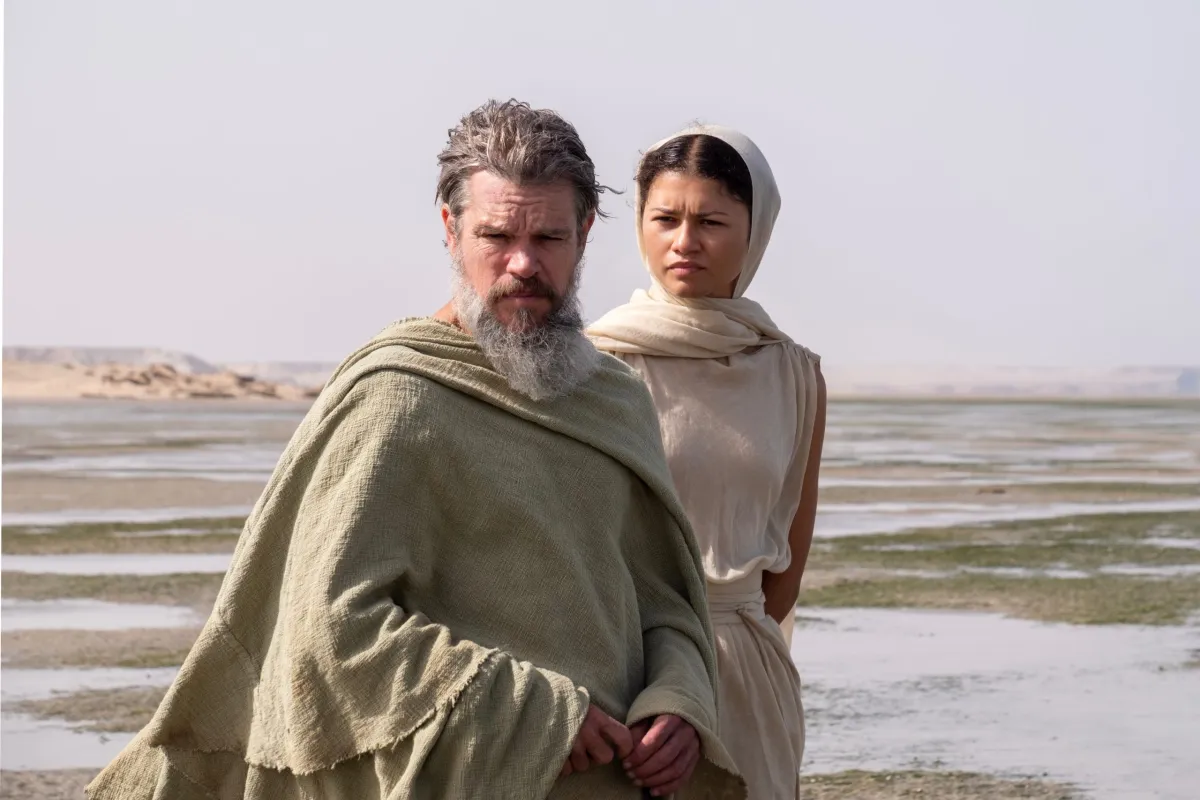
Matt Damon did an excellent job as Odysseus.
He conveyed the emotional turmoil of a man far from home, surrounded by loss, and mourning a life that no longer remained within his reach.
I felt his exhaustion.
Odysseus carried more than physical weariness. He carried grief, guilt, longing, and the knowledge that the world he left may no longer exist in the same form.
Damon communicated that internal conflict through his face, posture, and voice.
He did not play Odysseus as an untouchable hero. Instead, he gave us a damaged man who wanted to return home but often complicated his own journey.
Tom Holland Captures a Son’s Longing
Tom Holland portrayed the longing of a son who grew up without his father.
He felt believable as a teenage boy caught between childhood and adulthood.
His character wanted answers, guidance, and proof that his father still mattered. At the same time, he needed to become his own man.
Holland captured that uncertainty well.
While Odysseus fought to reach home, his son struggled to understand what home meant without him.
Why Lupita Deserved More
I wish the film had given us more of Lupita Nyong’o.
The marketing promoted her heavily, which created the expectation that she would hold a significant role within the story.
Instead, her appearance as Helen of Troy felt limited. The presentation also disappointed me because the film showed her face scarred and marred during those scenes.
Lupita possesses extraordinary beauty and emotional presence. Seeing such a heavily promoted Black actress receive so little meaningful screen time left me wanting more.
Fortunately, we later saw more of her beauty as Cassiopeia.
Those moments reminded me how naturally she commands the screen.
Letting the Story Wander
Some parts of the film moved slowly.
However, this is The Odyssey.
The original story includes wandering, waiting, remembering, temptation, and long periods of uncertainty. A constantly fast pace would erase part of its nature.
Contemporary audiences may struggle with those slower sections.
I enjoyed the pauses.
They gave the characters room to grieve, think, and exist within the world.
As a longtime fan of Homer, I also appreciated the film’s poetic approach, which fits the kind of culturally grounded film coverage I love creating. Poetic storytelling has become a dying art.
The Man Who Returned Was Not the Man Who Left
People often describe The Odyssey as a story about a man trying to get home.
That description tells only part of the truth.
Odysseus wants to return, but the journey changes him. Home also changes while he remains away.
The man who finally arrives cannot simply step back into the life he left.
Matt Damon’s performance captured that realization beautifully.
Watching a Story About Fathers Beside My Son
Seeing the movie with my son added another personal layer.
The story centers heavily on fathers, sons, absence, and reunion.
Sitting beside my own adult son while watching a young man search for his father made those themes feel more immediate.
Movies often become part of our memories because of the person sitting next to us.
Why This Journey Belongs in IMAX
The cinematography alone justifies seeing The Odyssey on the largest screen possible.
However, the film offers more than visual beauty. Strong performances, emotional complexity, poetic storytelling, and careful adaptation allow the ancient epic to feel alive, which is exactly what I look for in thoughtful film reviews.
Some viewers may find the pacing slow in places. Others may wish certain characters received more attention.
I certainly wanted more Lupita.
Still, the film accomplished something extraordinary. It condensed one of literature’s most expansive stories into a single complete cinematic experience.
Homer’s story has survived for centuries because people continue to understand the ache of wanting to return home.
This adaptation never loses sight of that ache.