What the Window Teaches Me About Staying Still
I have been paying attention to windows.
That sounds like a small thing, especially in a world that rewards movement, novelty, and dramatic change. Yet windows have become quiet teachers in my daily life.
They let me look outward without requiring me to leave. At the same time, the glass often turns my attention inward.
A tree shifts in the wind. A neighbor crosses the street. Rain begins, light moves across the floor, and a familiar view becomes slightly different from the one I saw an hour earlier.
Nothing spectacular needs to happen.
Observation changes the moment.
Windows and reflection belong together because a window holds two directions at once. It shows me the world beyond the room while quietly revealing what is happening within me.
The View I Had Stopped Seeing
Familiar views can become invisible.
I may look through the same glass every day without truly seeing what lies beyond it. The tree, parked cars, rooftops, sidewalks, and passing people become part of the background.
Routine teaches the eyes to skip over what they already recognize.
Then something shifts.
A storm changes the sky, new leaves appear, or late sunlight touches a building in a way I have never noticed before. Suddenly, the ordinary scene becomes visible again.
The view did not necessarily become more beautiful.
I became more attentive.
A Window Gives Time a Visible Shape
Clocks divide the day into numbers.
Windows show time through light.
Morning begins with a cooler brightness. By afternoon, shadows move, colors deepen, and the room takes on another character. Evening slowly removes detail from the world outside.
Watching those changes helps me feel the day rather than merely manage it.
Time stops being only a list of appointments and deadlines. It becomes something I can see traveling across the floor.
Morning Light Feels Like an Opening
Morning light enters differently from every other kind.
It can feel tentative on cloudy days and almost demanding when the sun arrives with full force. Either way, it brings the outside world back into view.
A room that felt closed during the night begins to open.
I often experience that light as an invitation rather than an instruction. It does not tell me what I must accomplish. Instead, it reminds me that another day has appeared and that I can decide how I want to enter it.
Afternoon Light Reveals What Has Accumulated
By afternoon, the room tells a different story.
Sunlight may expose dust, scattered papers, a cup left on the table, or the evidence of a busy morning. Light does not only create beauty. It reveals what has gathered.
That honesty can feel uncomfortable.
However, I appreciate the reminder that daily life leaves marks. Rooms get used, bodies get tired, and not every surface remains composed.
The goal does not need to be perfection.
Sometimes, noticing is enough to help me reset.
At Night, the Window Becomes a Mirror
Darkness changes the purpose of the glass.
During the day, I look through it. At night, my own reflection appears.
The outside world remains present, but it becomes harder to see. Instead, the window returns my face, the room behind me, and whatever expression I was not paying attention to before.
That transformation feels symbolic.
When I can no longer see far beyond myself, I must notice what I am carrying inside the room.
Rain Changes the Emotional Weather
Rain on a window alters the mood of a space.
The sound creates a boundary between inside and outside, while water blurs the familiar view. Cars become streaks of color, buildings soften, and the world looks farther away than it is.
Sometimes, rain makes the room feel protected.
On another day, it can intensify loneliness or restlessness. The same weather may bring comfort in one season and heaviness in another.
The window does not determine the feeling.
It gives the feeling a surface.
Looking Out Without Leaving
There are days when I want to go somewhere but cannot.
Work, weather, money, illness, responsibility, or simple exhaustion may keep me home. During those times, the window becomes a small point of contact with movement.
I watch people pass, clouds change, and branches respond to the wind. The world continues even while I remain still.
Looking out is not the same as traveling.
Still, observation keeps me connected to place.
Stillness Does Not Mean Nothing Is Happening
Our culture often treats movement as proof of life.
Progress looks like leaving, arriving, producing, building, and moving toward the next goal. Staying still can feel like falling behind.
A window challenges that assumption.
From one position, I can witness weather, growth, decline, routine, and change. The landscape continues evolving even when I do not move with it.
Stillness can contain attention, and attention is a form of participation.
Presence Begins With What Is Already Here
I often imagine presence as something I will achieve once life becomes quieter.
Perhaps I will pay better attention while traveling, resting in a beautiful room, or standing before an extraordinary view.
Yet presence has to begin somewhere.
This connects with what slow travel has taught me about choosing presence over pace.
The practice does not start only in distant places.
It begins when I look carefully at the world already outside my window.
Travel Has Changed the Way I See Home
Travel trains me to notice details.
In a new place, I pay attention to balconies, streetlights, windows, signs, and the rhythm of people passing below. Everything feels worthy of observation because it is unfamiliar.
Returning home can make the contrast obvious.
I may stop looking because I believe I already know the view.
However, the attention I practice elsewhere can return with me. Home becomes more visible when I approach it with the curiosity I usually reserve for travel.
The Window Can Hold Longing
Not every moment of looking outward feels peaceful.
A window can intensify the desire to leave. The road, sky, movement, and people beyond the glass may remind me of places I want to visit or versions of life that feel just beyond reach.
Longing is not always dissatisfaction.
Sometimes, it shows me what I still want.
The challenge is learning to listen without allowing desire to erase the life that exists inside the room.
Gratitude and Restlessness Can Share the Same View
I can feel grateful for home and still want movement.
Those emotions do not cancel each other.
A safe room, familiar chair, and dependable view may offer comfort. At the same time, the horizon can awaken curiosity.
I do not need to shame either feeling.
Gratitude does not require me to stop wanting more. Longing does not mean I have failed to appreciate what I already have.
The window holds both.
Women Need Spaces Where Nothing Is Required
Women’s attention is often directed outward.
We notice what needs cleaning, who needs help, which task remains unfinished, and how everyone else is feeling. Even moments at home can become filled with invisible labor.
Sitting near a window can create a small interruption.
For a few minutes, I do not need to improve the view or turn the moment into something useful. I can simply watch.
This belongs beside my reflections on women, rest, and why softness is not surrender.
Rest can begin with permission to observe without immediately responding.
A View Can Make Solitude Feel Less Closed
Being alone in a room can feel different when I can see beyond it.
The window reminds me that other lives continue nearby. Someone walks a dog, carries groceries, waits for a ride, or returns home after work.
I may not know those people.
Still, their presence makes the world feel inhabited.
Solitude becomes less like disappearance and more like one position within a larger human landscape.
Windows Also Reveal Distance Between Neighbors
Seeing people does not necessarily mean knowing them.
I may recognize a neighbor’s routine without having spoken to them. Shared streets create proximity, but modern life often keeps people separated behind doors, cars, schedules, and glass.
The window can make that distance visible.
It offers contact without connection.
Sometimes, that feels sufficient. In other moments, it reminds me that community requires more than occupying nearby buildings.
What I See Depends on Where I Stand
Every window frames the world selectively.
It includes one street, one angle, and one portion of the sky while excluding everything outside its borders. Moving a few feet can change what becomes visible.
Perspective works the same way.
I often mistake my view for the whole picture because it is the view available to me. Yet another person stands at a different window, carrying another history and noticing details I cannot see.
Reflection begins when I remember the frame.
Not Every Window Offers the Same View
Windows also reveal inequality.
One person looks onto trees, water, or a quiet street. Someone else faces a brick wall, heavy traffic, unsafe conditions, or a landscape shaped by pollution and neglect.
Access to light, ventilation, privacy, and a restorative view is not distributed equally.
Housing design influences physical and emotional well-being.
A window may seem like a basic feature, but its size, placement, condition, and surroundings affect how a home feels.
Home Is Shaped by What the Window Lets In
Windows bring more than a view.
They allow light, sound, air, heat, and cold to enter. Through them, the outside world becomes part of the interior environment.
A poorly sealed window can make a room uncomfortable and expensive to heat or cool. Heavy traffic may fill a home with noise, while nearby trees can provide shade and privacy.
Home is never completely separate from its surroundings.
The glass only makes the boundary appear cleaner than it is.
A Window Can Become a Creative Practice
When I feel creatively blocked, I sometimes look outside rather than forcing another sentence.
The view gives my attention somewhere gentle to rest. I may notice a color, gesture, or movement that changes the direction of a thought.
Writing often depends on this kind of observation.
Stories begin when ordinary details stop being invisible.
A passing car may not become the subject. However, the act of noticing it can return me to the part of myself that knows how to look.
Quiet Tools Can Support the Practice
Sometimes, I sit near the window with a notebook and write down what catches my attention.
I may record the weather, describe the light, or note the thought that appeared while I was watching. Simple journals and home tools from my Amazon shop can support that habit.
A short meditation through Calm may also help settle the noise before I begin.
Still, the tools remain secondary.
The real practice involves stopping long enough to notice.
I Do Not Need to Turn Every Moment Into Content
Observation can quickly become production.
I see beautiful light and reach for the camera. A quiet thought appears, and I begin considering how to package it for other people.
Creative work matters to me, but not every meaningful moment needs to become public.
Some views can remain unrecorded.
They can belong only to the person standing there, watching the day move through the glass.
The Same View Can Meet Different Versions of Me
A familiar window does not always show me the same thing because I do not approach it as the same person.
On a hopeful day, the street may feel full of possibility. During grief, the same scene can look distant and strangely unchanged.
The view becomes part of my emotional history.
Later, I may remember where I stood when I made a decision, received difficult news, or recognized that something inside me had shifted.
The window becomes a witness.
Cleaning the Glass Changes the Lesson
Sometimes, the view looks dull because the window needs cleaning.
That practical truth carries an easy metaphor, but it also reminds me not to overcomplicate every feeling. A problem may require reflection, while another simply needs direct action.
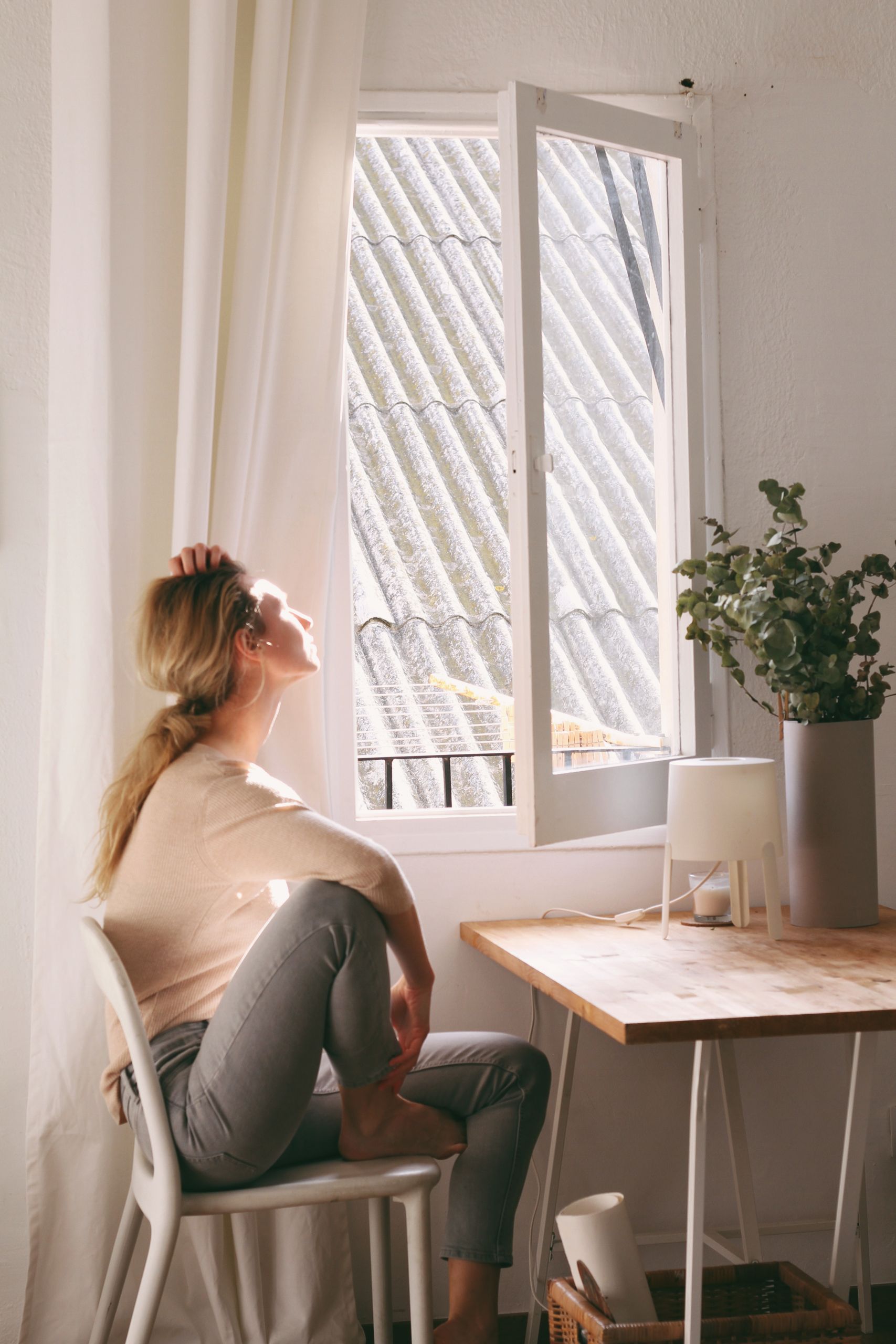
I can wipe the glass, open the curtain, or move the chair.
Mindfulness should not make ordinary solutions invisible.
Attention helps me understand whether I need a deeper insight or a clean window.
Opening the Window Changes Observation Into Contact
Looking through glass keeps the world at a distance.
Opening the window changes the relationship.
Air enters. Sound becomes clearer, and the weather reaches the room. The boundary between inside and outside grows less complete.
Sometimes, that is what I need.
Observation has value, but life also asks for contact. Eventually, I may need to step outside, speak to the neighbor, take the walk, or enter the day I have been watching.
What the Window Holds
Windows and reflection belong together because glass creates both a view and a boundary.
From inside, I can watch weather, light, people, and the gradual movement of time. At night, the window returns my reflection and reminds me that observation always includes the person doing the looking.
The window holds longing and gratitude.
It allows me to want the wider world while recognizing the value of where I am. It teaches me that stillness does not mean nothing is happening and that familiar views can become new when I bring fresh attention to them.
Most importantly, the window asks a simple question.
What can I see from here?
The answer may include trees, traffic, rain, neighbors, or changing light. It may also include exhaustion, hope, restlessness, and a desire I have not yet named.
The world remains outside.
At the same time, the window helps me understand what I am carrying within it.
Explore more reflections on mindful living, women, rest, home, public space, and the meaning hidden inside ordinary moments through DG Speaks Culture. You can also discover how observation and presence shape the way I experience destinations through DG Speaks Travel, or read more about the meals and daily rituals that help a place feel like home through DG Speaks Food.