The Last Bite Tells Me Everything
I remember sitting at a table where everyone insisted they were too full for dessert. Plates had already been cleared, coffee had arrived, and the meal seemed finished.
Then someone ordered one slice of cake for the table.
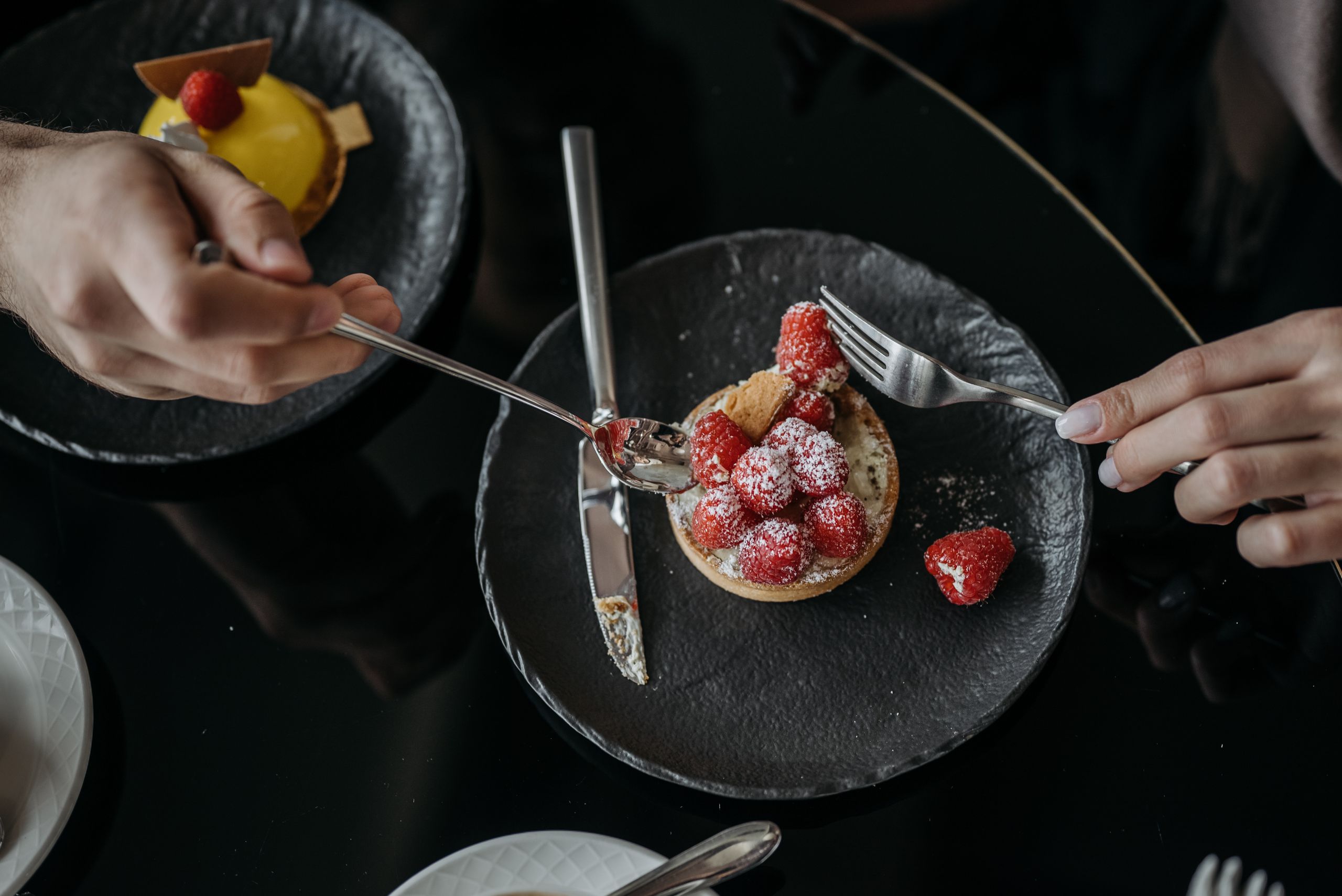
Within minutes, every spoon had found its way toward the plate. The person who claimed she wanted only a taste went back twice. Someone carefully divided the final piece, while another guest pushed the last bite toward the person being celebrated.
The dessert did not simply end the meal. It changed the room.
A shared dessert can tell me plenty about people. Who offers the first bite? Who claims not to want any and then keeps reaching across the table? Who protects the last spoonful for somebody else?
The Spoon That Crosses the Table
Sharing dessert creates a different kind of intimacy from sharing the main meal.
Everyone may have ordered separate entrées, made individual choices, and protected the boundaries of personal plates. Dessert often interrupts that order.
A spoon crosses the table. Someone turns the plate so another person can reach the sauce, while a friend points out the best corner before taking her own bite.
These small gestures create trust. We accept that someone else may take more than expected, leave crumbs behind, or choose the piece we were quietly watching.
The rules become less formal. Dessert loosens the room.
Sweetness Gives People a Reason to Linger
The main meal often follows a clear rhythm. People order, eat, and begin considering what comes next.
Dessert slows the ending.
Cake, flan, pie, ice cream, pastries, or fruit arrive after hunger has mostly disappeared. Nobody needs to rush through the plate, so conversation stretches.
A story that might have remained unfinished gets another few minutes. Someone asks a more personal question, while another person remembers something funny that happened years ago.
Sweetness does not automatically make people kinder. Still, it often gives them enough time to soften.
The table becomes less about completing the meal and more about staying together.
The Person Who Says She Does Not Want Any
Almost every shared dessert has one person who declines before it arrives.
She may genuinely feel full. Perhaps she avoids sweets, wants only coffee, or does not like the dessert everyone else selected.
Sometimes she wants to participate without claiming too much.
Women often learn to minimize appetite in public. We say we need only a taste, insist that someone else take the larger piece, or wait until everyone has served themselves before reaching for what remains.
Those habits can look polite while carrying deeper lessons about restraint, desirability, and who feels entitled to pleasure.
I appreciate generosity, but I do not want women to confuse self-denial with virtue.
Wanting dessert does not require an apology.
Food Memory Lives in the Small Gestures
I rarely remember every detail of a long meal.
The gestures return more easily. Someone placed a bite on my plate because she knew I wanted to try it. A child licked frosting from a finger, while an older relative insisted that everyone take more before she served herself.
Those moments connect with how food memories continue following us home. Flavor matters, but memory often attaches itself to the people surrounding the plate.
A dessert can carry birthdays, holidays, childhood kitchens, restaurant traditions, and the person who always made one particular recipe.
Years later, a familiar sweetness may return me to a table that no longer exists in the same form.
Local Sweets Tell Stories About Place
Dessert can reveal a place through ingredients, technique, and history.
Milk, eggs, sugar, fruit, nuts, spices, grains, and preserved foods take different forms depending on climate, agriculture, trade, religion, migration, and access.
A custard may reflect colonial movement. A pastry can carry centuries of adaptation, while a fruit dessert often reveals what grows nearby and when people expect to eat it.
This is one reason local restaurants teach me how a city feels. The dessert menu may show whether the room favors tradition, reinvention, abundance, restraint, or a combination of all four.
Local sweets also challenge the idea that dessert serves only as decoration. Recipes often hold family memory, regional pride, and histories far more complicated than the plate suggests.
A Food Tour Can Introduce the Story Behind the Sweet
Travelers often encounter desserts without enough context to understand why they matter.
A guide can explain when people usually eat a sweet, which holidays feature it, or how one bakery became important to a neighborhood. That knowledge changes the experience from a quick tasting into a cultural introduction.
Food tours available through GetYourGuide can offer that context when local guides connect recipes to community history rather than presenting every bite as a novelty.
One tasting does not make me an expert. It gives me a starting point.
The best experiences leave enough room for complexity. Families may prepare the same dessert differently, while regional traditions shift across class, generation, and migration.
No single slice can represent an entire culture.
The Last Bite Reveals the Shape of the Table
The final bite creates a small decision.
Someone can claim it, divide it, offer it, or leave it untouched because everyone feels too polite to reach first.
That hesitation often reveals the relationships around the table.
Close friends may argue playfully over who deserves it. A parent saves it for a child, while a partner quietly pushes the plate toward the person whose favorite dessert everyone ordered.
Generosity sometimes lives in that final spoonful.
Offering the last bite can express affection, but accepting it matters too. Care needs someone willing to receive.
Sharing Should Not Become Pressure
Shared food can feel warm and communal, but not everyone enjoys eating from the same plate.
Allergies, dietary restrictions, health concerns, sensory preferences, religious practices, and personal boundaries shape how people participate. Some guests may prefer their own portion or decline completely.
Hospitality should make room for those choices.
Nobody needs to prove closeness by sharing utensils. A separate plate does not weaken the relationship, and declining dessert does not insult the host.
Good gathering practices allow people to participate without explaining private details.
The sweetness matters less than whether everyone retains dignity at the table.

A DG Speaks Recommendation
I want more years of long meals, shared sweetness, and conversations that keep everyone at the table
I partnered with Happy Aging to share products that support energy, vitality, and a life filled with connection, pleasure, and meaningful moments together.
The Meal Before Dessert Still Matters
Dessert often receives the emotional attention, but the meal before it made the gathering possible.
Someone planned the menu, bought ingredients, cooked, served, and created enough time for people to reach the final course without rushing away.
At home, dinner may include market vegetables, grains, seafood, or meat chosen around the occasion. When meat fits the menu, selections from ButcherBox can support the meal before dessert enters the room.
Convenience can reduce part of the planning, but it cannot replace care.
The evening becomes meaningful through attention to the people gathering, the labor required, and whether everyone can enjoy the meal without one person carrying the entire burden.
Dessert Can Turn Hospitality Into Performance
Social media encourages increasingly elaborate sweets.
Cakes grow taller, tables become more styled, and desserts must look impressive from every angle. Beauty can add pleasure to a celebration, but presentation should not overshadow the people eating.
A homemade pie with an uneven crust may hold more memory than a perfect dessert designed mainly for photographs.
Hosts also deserve relief from impossible expectations.
Buying the cake, serving ice cream, or placing cookies on a plate can create just as much warmth as spending hours preparing something from scratch.
Hospitality succeeds when people feel welcome. Perfection does not feed the room emotionally.
The Antidote Is Enough Sweetness to Share
Abundance can become waste when hosts feel responsible for offering more than anyone can eat.
Several desserts may look generous, yet they also require money, labor, storage, and cleanup. A single well-chosen sweet can give the table everything it needs.
The antidote to excess is not removing pleasure.
It means choosing enough sweetness to invite sharing without turning the occasion into a display of consumption.
A small dessert can still create a long conversation. One plate placed at the center may encourage more interaction than individual servings ever could.
The size of the sweet does not determine the size of the memory.
Why Dessert Is Never Small
When I think back to that shared slice of cake, I do not remember who ordered it. I remember the movement around the plate.
Spoons crossed. People laughed at the friend who insisted she did not want any, and the final bite traveled toward someone else before disappearing.
The dessert gave us a reason to remain seated.
A shared dessert may look like a small ending to the meal, but it often protects the part of the evening that matters most. Conversation relaxes after the hunger has passed, and people reveal more when nobody feels rushed toward the door.
Sweetness can carry memory, hospitality, culture, and desire. It can expose who gives easily, who struggles to receive, and who quietly watches to make sure everyone else has enough.
I want tables where pleasure does not require apology. Women can take the bite they want, guests can decline without pressure, and nobody mistakes self-denial for good manners.
Sometimes the final spoonful becomes an offering. Other times, someone claims it with confidence and makes the whole table laugh.
Both moments belong.
Dessert is never small when it keeps people together a little longer.
Sometimes the sweetest part is not the sugar.
It is the conversation the plate protects.
Continue exploring stories about food, hospitality, memory, and the small rituals that shape life around the table through DG Speaks Food.