The Travel Day That Starts With Clean Socks
I once changed my socks in an airport bathroom after a travel day had already begun to unravel.
My first flight left late. The terminal felt too warm, my gate changed twice, and the sandwich I bought cost far more than it deserved. By the time I reached the restroom, my feet felt damp, swollen, and deeply offended by every decision I had made.
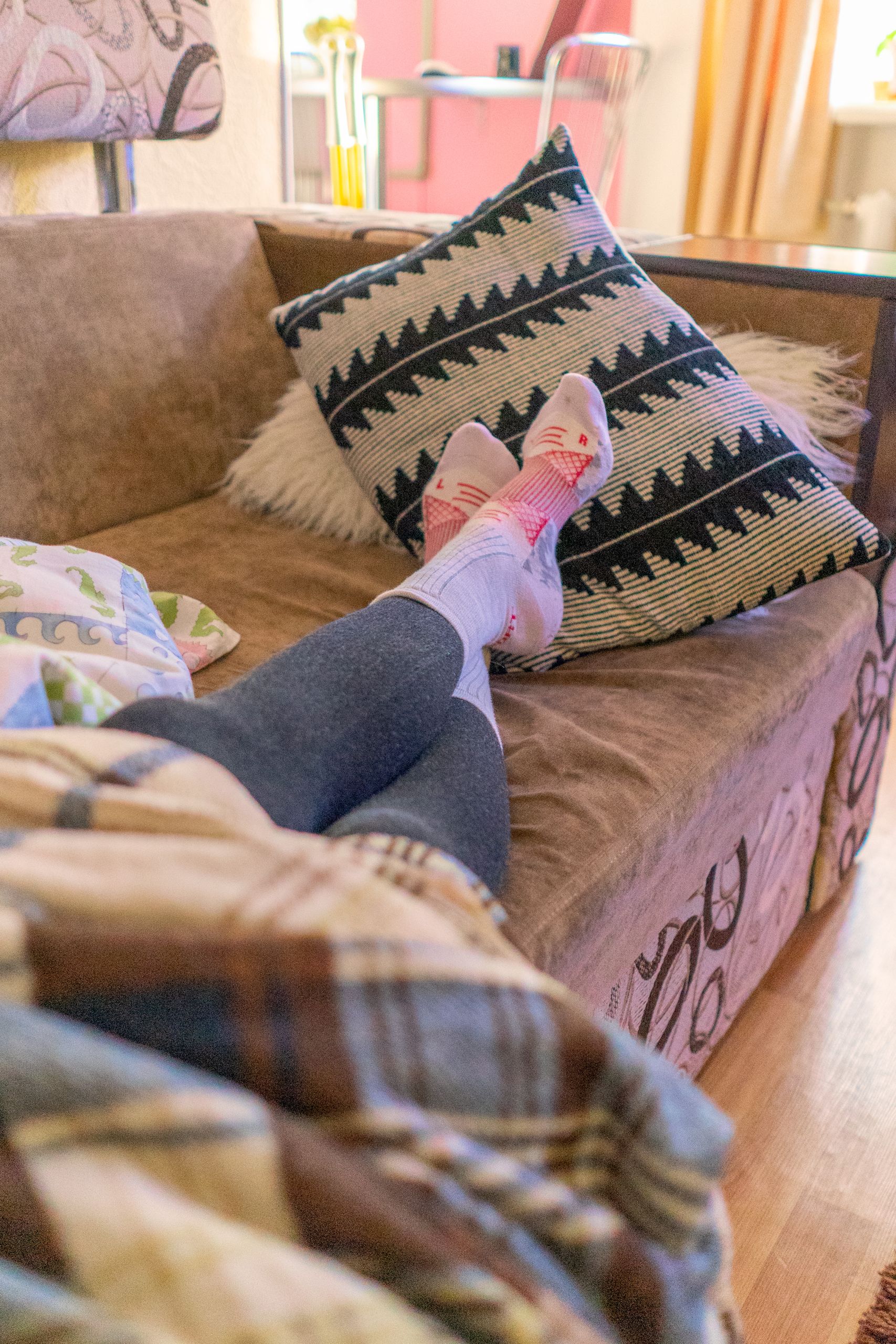
Then, I pulled a clean pair of socks from my bag.
That tiny act did not fix the delay. It did not improve the food or make the next flight arrive faster. Still, slipping my feet into something fresh gave me an unexpected sense of control.
I walked back into the terminal feeling like a slightly restored version of myself.
That is the thing about travel day comfort. It rarely begins with luxury. More often, it comes from a charged phone, enough water, a soft shirt, a useful snack, and one clean item waiting when the day stops cooperating.
The Airport Bathroom Reset
Travel days have a way of separating me from my normal routines.
I wake earlier than usual, eat at strange times, and move through spaces designed for efficiency rather than ease. My belongings remain packed around me, while every basic need becomes slightly more complicated.
Even washing my face can require planning.
That is why I have developed small reset rituals. I brush my teeth, change my socks, apply moisturizer, refill my water bottle, and reorganize the items that have migrated to the bottom of my bag.
None of these actions feels dramatic.
Together, however, they help me return to my body.
Travel can make me feel like luggage with a boarding pass. A few minutes of care remind me that I am still a person moving through the day.
Clean Socks Have More Power Than They Should
Fresh socks should not feel revolutionary.
Yet, after hours of walking through terminals, sitting in transit, and carrying bags, they can change my entire mood.
Feet absorb the reality of travel.
They swell, sweat, ache, and endure shoes that felt perfectly comfortable at home. Even a short connection can become a long walk once the departure gate moves to the opposite end of the airport.
A clean pair of socks offers relief without requiring much space.
I keep them where I can reach them easily rather than burying them beneath everything else. If my luggage disappears, my feet still deserve mercy.
That small preparation reflects a larger truth. Comfort often depends less on how much I pack and more on whether I can access the right thing at the right moment.
The Shirt That Does Not Fight Back
Travel clothes need to cooperate with the body.
I have worn outfits that looked wonderful when I left home but became increasingly irritating as the day continued. A waistband pressed into my stomach. Fabric held heat, while a shirt required constant adjustment.
By the third hour, style had become a negotiation.
Now, I choose travel clothing according to how it behaves while I sit, bend, walk, sweat, and carry bags.
A soft layer matters because temperatures change quickly. Airports may feel cold, while boarding areas become hot and crowded. Trains can alternate between powerful air conditioning and no ventilation at all.
I want clothing that moves with me rather than demanding attention.
Looking put together still matters to me. However, no outfit deserves to punish me for crossing a time zone.
My Body Notices Every Bad Decision
The mind may stay focused on the destination, but the body records the journey.
It notices when I skip breakfast, forget water, carry too much weight, or remain seated for hours. My body also notices heat, cold, noise, and the emotional stress of navigating unfamiliar systems.
Travel care is body care.
This lesson connects with my reflections on women, rest, and why softness is not surrender. Rest does not become unnecessary simply because I am excited.
In fact, enthusiasm can make me overlook fatigue until it becomes impossible to ignore.
I am learning to check in before my body begins shouting. Am I thirsty? Have I eaten enough? Do I need to sit down, stretch, or remove one layer?
Attention prevents small discomforts from taking over the entire day.
The Snack I Pack for the Woman I Will Become at 3:00 P.M.
Morning me often feels optimistic.
She believes the flight will leave on time and that suitable food will appear exactly when needed. She assumes the airport restaurant will be open and the train station will offer something besides vending-machine candy.
Afternoon me knows better.
By 3:00 p.m., I may be hungry, tired, and less patient than I imagined. That woman needs something practical, not another promise that dinner will happen later.
I pack snacks for her.
Nuts, crackers, a protein bar, fruit, or a simple sandwich can prevent hunger from turning every inconvenience into a crisis. I choose foods that travel well and do not require complicated preparation.
Eating does not solve a canceled flight.
Still, it makes me far more capable of handling one.
Water Should Not Become an Afterthought
Travel disrupts hydration easily.
I may avoid drinking because I do not want repeated bathroom stops. Security rules require me to empty a bottle before entering the terminal, and coffee can feel more appealing than plain water during an early departure.
Eventually, dehydration announces itself.
A headache begins. My mouth feels dry, concentration drops, and fatigue grows heavier.
I carry a reusable bottle and refill it after security when possible. During train or bus travel, I buy water before boarding rather than assuming someone will sell it later.
This habit sounds obvious.
Still, basic needs become surprisingly easy to neglect when schedules, documents, and luggage compete for attention.
A bottle of water may be one of the least glamorous items in my bag. It is also one of the most useful.
The Charged Phone Is Carrying Half the Journey
My phone serves as ticket, map, translator, camera, wallet, reservation folder, and emergency contact.
That amount of responsibility makes a low battery feel personal.
I have watched the percentage drop while trying to locate a platform, contact a host, and pull up a booking confirmation. Suddenly, every unnecessary notification feels like theft.
Now, I charge devices fully before leaving and carry a portable power bank.
I also save essential information offline.
Addresses, tickets, reservation numbers, and transportation directions should not disappear when service becomes weak. A screenshot can become more valuable than a beautifully organized app that refuses to load.
Technology makes travel easier, but only when I prepare for the moment it stops cooperating.
The Document Pocket Is Sacred
There is one part of my bag I check more than any other.
Passport. Wallet. Ticket. Phone.
I repeat the list before leaving home, after security, before boarding, and whenever anxiety decides that one of those items has vanished.
Keeping documents in one secure place reduces the panic.
I want the pocket easy for me to reach but difficult for anyone else to access. Important papers should remain protected from spills, and backup copies need to live separately.
For trips involving visas or entry documents, travelers can explore application support through iVisa. I also verify requirements through official government sources because entry rules can change.
Documents may feel like the least romantic part of travel.
Without them, however, the journey may end before it begins.
Packing Like I Expect to Meet a Human Body
I used to pack for an ideal traveler.
She never got hungry at inconvenient times. Her feet did not swell, and she remained comfortable in the same outfit for twenty hours. Delays did not affect her mood.
I have never met that woman.
Now, I pack for the person I actually am.
She may feel cold, need medication, spill something, or develop a headache. She wants lip balm, tissues, and access to her reading glasses without emptying the entire backpack.
This approach does not require packing everything.
Instead, I focus on high-value items that address predictable needs.
Packing like I care about myself means accepting that I am human before the travel day proves it.
The Personal Item Is My Survival Kit
Checked luggage may hold most of my clothing, but the personal item holds the trip together.
I pack anything I cannot comfortably lose for a day.
Medication, documents, chargers, basic toiletries, a change of underwear, and clean socks stay close to me. When space allows, I add a lightweight shirt.
This preparation matters because bags get delayed.
A missed connection can also separate me from luggage longer than expected. Having a few essentials allows me to reach the first night without immediately shopping for replacements.
I think of the personal item as a bridge.
It does not need to support the entire trip. It only needs to carry me through the gap between what I planned and what actually happens.
The Bag Should Not Punish Me for Bringing It
Weight changes everything.
A bag that feels manageable in the bedroom can become unbearable after stairs, long corridors, and crowded public transportation.
I have carried items I barely used while resenting every ounce.
Overpacking often begins with imagined emergencies. I bring several versions of the same solution because I do not yet trust the trip.
However, too much preparation creates its own problem.
A heavy bag limits mobility, increases fatigue, and makes every transfer harder. The traveler must carry the comfort items before she can enjoy them.
I now ask whether each item earns its place.
Does it solve a likely problem? Can something else perform the same function? Would replacing it cost less than carrying it across several cities?
A lighter bag gives my body more freedom.
Compression Is Helpful Until It Becomes Denial
Packing cubes and compression bags can create useful organization.
They separate clothing, reduce visual chaos, and make it easier to find one item without unpacking everything. I keep travel organizers and other practical gear in my Amazon travel shop.
Still, compression has limits.
Squeezing clothing smaller does not make it weigh less. It may simply create room for more things I do not need.
I have to resist treating every open inch as an invitation.
Good packing leaves breathing room.
That space helps me repack quickly and allows for something I may need to add later.
The Scarf That Keeps Proving Its Worth
A versatile scarf has saved me from more discomfort than many expensive travel accessories.
It becomes warmth on a cold plane, shade in strong sun, a pillow against a window, or a light cover when I want more privacy.
Unlike highly specialized gear, it adapts.
Travel days reward items that can solve several problems without taking much space.
A lightweight layer works the same way. Comfortable shoes that match more than one outfit also reduce the need for backup pairs.
Versatility protects both my body and my luggage allowance.
I want each item to participate fully.
Shoes Can Make the Entire Day Feel Hostile
A beautiful shoe becomes an enemy when the walk to the gate lasts twenty minutes.
Travel involves more standing and walking than many itineraries admit. Even trips centered on flights may require train transfers, shuttle stops, and long lines.
I choose shoes that I have already tested.
A travel day is not the right time to discover that a seam rubs or the sole lacks support.
I also consider swelling.
Feet may expand during long periods of sitting, heat, and extensive walking. Shoes that begin snug can become painful later.
Comfortable footwear does not mean giving up style.
It means choosing style that survives movement.
The Airport Floor Is Not Where I Want to Learn About My Back
Sometimes, every seat is taken.
People sit on the floor beside outlets or lean against luggage while waiting for an update. Those moments reveal the value of physical preparation.
A backpack needs supportive straps. The weight should sit close to the body rather than pulling backward.
When possible, I alternate standing and sitting.
Small stretches can reduce stiffness, especially during long delays. I roll my shoulders, move my ankles, and walk through the terminal when I have enough time.
The body needs circulation, not only patience.
Ignoring discomfort may feel easier in the moment. Later, it can turn the first day of a trip into a recovery day.
A Delay Is Easier When I Planned for Boredom
Travel contains waiting.
Even a smooth journey includes boarding time, security lines, and gaps between connections. A disruption can add several unexpected hours.
I carry something that does not depend entirely on internet access.
A downloaded audiobook, ebook, journal, or offline playlist can change the emotional tone of a delay. Entertainment does not remove uncertainty, but it keeps me from staring at the departure board every thirty seconds.
I also use the time to reorganize, write, or simply rest.
Not every empty hour needs productivity.
Sometimes, making the wait gentler is enough.
Insurance Is Comfort I Hope Not to Use
Some travel comfort comes from knowing I considered the harder possibilities.
Illness, injury, lost belongings, and disruptions can create financial and emotional stress. Insurance does not prevent those events, but it may provide support when they occur.
For extended or international travel, I may review coverage through SafetyWing.
I read policy terms closely because exclusions, limits, and claims processes matter.
Buying coverage does not guarantee that every problem will be resolved easily.
Still, preparation helps me leave with fewer unanswered questions.
Solo Travel Confidence Often Looks Very Ordinary
People imagine confidence as walking boldly through an unfamiliar city.
Sometimes, it looks like that.
More often, confidence appears through small practical choices.
I know where my documents are. My phone has power, and I have enough water to reach the next stop. If the plan changes, I can pause and decide what to do.
This connects with my reflections on finding my own rhythm through solo travel confidence.
Confidence grows when I repeatedly prove that I can care for myself.
It does not require knowing every answer before I leave. Instead, it rests on trusting that I can respond when the journey asks a new question.
The Women’s Bathroom Becomes a Temporary Dressing Room
Women transform public restrooms during travel.
Someone changes clothes in a stall. Another woman brushes her teeth, reapplies makeup, or attempts to wash a stain from her shirt beneath a tiny faucet.
We exchange silent understanding.
Everyone is trying to restore some sense of order before continuing.
Occasionally, a stranger offers a tissue, watches a bag, or tells another woman that a tag is showing.
These small gestures create temporary community.
The restroom may not feel glamorous, but it gives us a place to reset.
A Fresh Face Can Shift the Whole Journey
After a long flight, washing my face feels like crossing a border between exhaustion and arrival.
I remove the dry air, makeup, sweat, and strange feeling that settles after hours in transit.
A small moisturizer, toothbrush, and lip balm make a surprising difference.
I do not need a complete beauty routine.
Travel-size basics help me feel presentable enough to meet a host, enter a hotel, or continue through another connection.
The goal is not perfection.
I simply want to recognize myself when I look in the mirror.
Comfort Includes Knowing Where I Will Sleep
A long travel day feels easier when the first night is settled.
I want the address saved, check-in instructions available, and transportation route understood before arrival.
Uncertainty becomes harder after dark or when fatigue has reduced my ability to problem-solve.
I also pay attention to the distance between the station, airport, and accommodation.
A property may look nearby on a map while requiring stairs, hills, or multiple connections.
Comfort begins before I enter the room.
It starts with a realistic plan for reaching it.
The Arrival Outfit Needs One Final Act
I like having one small item that helps me transition from transit to destination.
It may be a scarf, fresh shirt, or earrings packed where I can reach them. After changing or adjusting one detail, I feel less like I have been living inside an airport.
This ritual matters when I cannot check in immediately.
I may need to meet someone, attend an event, or walk through the city before reaching a shower.
A complete transformation is unnecessary.
One fresh element can help me step into the next part of the day.
Travel Comfort Is Not the Same as Avoiding Discomfort
No amount of preparation can make every journey easy.
Flights will still be delayed. Seats may feel cramped, and the weather can ignore every forecast.
Comfort does not mean removing all difficulty.
It means giving myself tools to move through difficulty with less damage.
A snack will not reopen a closed airport. Clean socks cannot repair a missed connection.
Still, those small supports preserve energy for the decisions that matter.
Resilience becomes easier when the body does not feel entirely neglected.
I Pack Care Alongside the Itinerary
Travel planning often focuses on movement.
I consider flights, routes, attractions, and arrival times. However, the person completing that itinerary needs her own plan.
When will I eat? How will I stay warm, hydrated, and connected? What will help if the journey becomes longer than expected?
These questions are not signs of weakness.
They reflect respect for the body carrying the dream.
Packing like I care about myself means anticipating ordinary human needs before they become emergencies.
The Road Starts Better When I Do
A better travel day does not always begin in a lounge or premium seat.
It may begin with enough sleep, a packed snack, and clothing that does not irritate me. The phone is charged, documents remain organized, and a clean pair of socks waits in the bag.
These choices seem small because they are small.
That is exactly why they work.
Travel day comfort grows through details repeated with care. No single item controls the journey, but each one gives me a little more capacity to meet what happens.
I want to arrive with some energy left for the destination.
Therefore, I no longer pack only for the trip I hope to have. I prepare for delays, hunger, changing temperatures, tired feet, and the woman I will become after several hours on the road.
She deserves attention too.
Sometimes, all she needs is water, a snack, and ten quiet minutes.
Other times, clean socks are enough to make her believe she still has authority over the situation.
Explore more practical planning, solo journeys, and lessons from the road through DG Speaks Travel. You can also read more reflections on rest, womanhood, and caring for the body through DG Speaks Culture and find nourishing travel food stories in DG Speaks Food.