The Morning Market That Makes a City Feel Real
A morning market makes a city feel real to me.
Before the day has fully arranged itself for visitors, vendors are lifting crates, washing counters, stacking fruit, sharpening knives, and checking prices. Regular customers arrive with specific questions and little interest in turning the moment into an attraction.
Food is already moving.
I can learn a great deal about a city by watching how it feeds itself before the streets become crowded and the tourism day begins. A morning market is not simply a beautiful collection of ingredients. It is a workplace, a supply chain, a neighborhood meeting point, and a daily negotiation between appetite, price, culture, and labor.
That is always worth waking up early enough to witness.
Before the Display Comes the Work
Markets can look effortless once everything is in place.
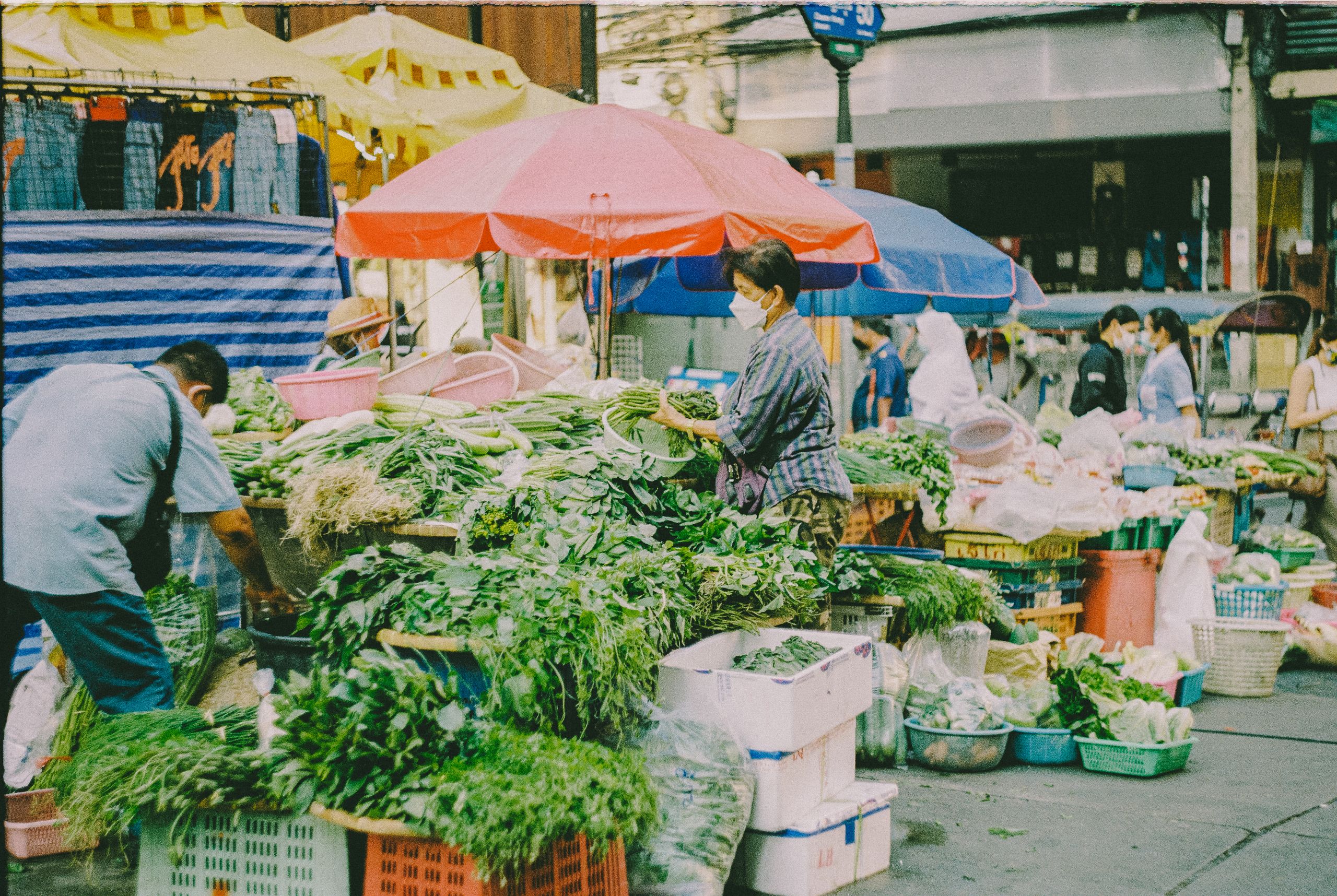
Fruit sits in careful rows. Fish rests over ice. Bread fills baskets, and prepared foods begin releasing their aromas into the aisles. The colors feel almost designed for photographs.
Yet the display arrives after physical work.
Someone transported the food before sunrise. Vendors carried boxes, cleaned surfaces, weighed products, arranged signs, prepared change, checked equipment, and made dozens of decisions before the first customer arrived.
The market does not wake naturally. People wake it.
Arriving early allows me to see parts of the process that disappear later. One vendor borrows a tool from another. Deliveries block an aisle for a few minutes. Covers come off, water runs across the floor, and empty tables begin turning into places of business.
What looks like atmosphere to a visitor may be repetitive, demanding work to the person creating it.
This is part of why farmers markets hold food stories worth slowing down for. The story begins before the food reaches the display.
The Market Has a Clock of Its Own
Morning markets move according to a rhythm that regular customers understand.
The best fish may disappear early. A particular baker arrives only on certain days. Some prepared foods sell out before lunch, while vendors may lower prices later rather than carry perishable food home.
Visitors often observe products. Regular customers observe time.
They know when to arrive, which stall to approach first, and how long they can wait before a favorite ingredient disappears. They greet vendors by name, ask about family, and continue conversations that began days or years earlier.
Their purchases may be quick, but the familiarity is visible.
A customer does not always need to explain what she wants. The vendor may already know the amount, cut, ripeness, or preparation she prefers.
Commerce becomes part of community life.
That relationship cannot be understood through one visit alone. A single morning gives me an impression. Returning begins to reveal patterns.
Breakfast Tells Me How the City Begins
Morning markets often show me what people eat before the day becomes busy.
Breakfast may be bread, soup, eggs, fruit, porridge, pastries, grilled meat, coffee, tea, or a dish I would associate with another hour.
Travel reminds me that breakfast is cultural rather than universal.
The meal tells me what is portable, affordable, comforting, and available early. It may also reveal how people structure work, school, and family routines.
A breakfast counter can teach me as much about a city as a formal restaurant.
Prepared food also changes the market from a shopping space into a social one. Counters, stools, and shared tables encourage people to stay. Workers take short breaks. Friends meet before errands, and travelers encounter ingredients through finished dishes rather than labels alone.
The speed can look casual because the workers know the routine.
Someone is cooking, plating, serving, washing, clearing, collecting money, and watching several orders at once. Skill often appears effortless only after years of repetition.
Price Is One of the Market’s Most Honest Languages
Markets are often photographed as places of abundance.
Price tells another part of the story.
Customers compare stalls, ask for smaller quantities, choose less expensive cuts, and revise meals according to what the household can afford. A woman may buy only enough for that day because she lacks refrigeration, storage, or money to purchase more.
The transaction reveals economic life in ways a beautiful display cannot.
Bargaining may be expected in one market and disrespectful in another. I try not to assume that every informal setting invites negotiation.
Travelers sometimes take pride in pushing a price as low as possible. Yet the amount saved may feel trivial to the buyer and meaningful to the seller.
I do not want the transaction to become a contest I must win.
The vendor may be accounting for transport, spoilage, rent, permits, ice, fuel, packaging, and the possibility that some food will remain unsold. A fair price recognizes that reality.
A Market Makes the Food System Visible
Supermarkets often separate food from its movement.
Products arrive cleaned, labeled, portioned, and wrapped. The person shopping may never see the whole fish, the untrimmed vegetable, the sack of grain, or the hands that carried the food into the city.
A market can make parts of that supply chain public.
I see ingredients in forms that reflect local cooking. I notice which foods are abundant, which are expensive, and which are absent. Seasonality becomes physical rather than theoretical.
Certain fruits appear briefly. Greens change in size and texture. One fish becomes plentiful at a particular time, while another disappears.
These changes reflect more than taste.
Weather, harvests, water, fuel costs, environmental pressure, transportation, and labor all influence what reaches the table.
When an expected ingredient is missing, that absence may be as informative as abundance.
Women Often Carry the Market’s Intelligence
In many places, women dominate small-scale selling, sorting, preparing, and trading.
They may manage stock, negotiate with suppliers, extend informal credit, remember customer preferences, and prepare food while also carrying responsibilities at home.
Their work is sometimes described as simple or informal because it takes place in an open stall rather than an office.
There is nothing simple about it.
A vendor understands demand, seasonality, spoilage, purchasing behavior, and the amount a customer may buy before a holiday, payday, or difficult week. She knows which products must sell quickly and which can wait.
That is business intelligence.
The market may look casual while depending on highly developed knowledge acquired through years of repetition.
Seeing that labor changes the way I understand the display. The beauty does not disappear, but it gains context.
The Market Reaches Me Through More Than Sight
I often understand a market through smell before I understand its layout.
Bread pulls me in one direction. Coffee, citrus, herbs, smoke, spices, fish, meat, fermentation, and cleaning water create overlapping signals.
Some smells invite. Others challenge.
A working food market will not always smell pleasant according to tourist expectations. Food systems involve blood, waste, water, decay, smoke, and the management of perishable products.
Sanitation matters, but sterility is not the same as safety.
The sounds matter too.
Vendors call across aisles. Knives strike boards. Scales move. Coins change hands, and customers ask questions in a rhythm I may not fully understand.
This sensory density is part of what makes the market memorable. It cannot be reduced to a photograph of stacked produce.
A Camera Can Change the Relationship
Markets are visually generous, which makes them tempting places to photograph.
Still, vendors are working.
Their faces, children, customers, and products should not be treated as available content simply because the space is public.
I try to ask before taking close photographs of people. When language makes permission difficult, I can photograph wider scenes, signs, architecture, or food I have purchased.
A beautiful image is not worth making someone feel observed, exposed, or interrupted.
There is also a difference between looking through a market and participating in it.
Buying breakfast, fruit, spices, bread, or a small ingredient creates an exchange. It supports the space and gives me a more direct relationship with the food.
I do not need to buy from every stall, but repeatedly photographing and sampling without purchasing anything can turn the market into a free performance for visitors.
Respect often includes becoming a customer.
A Guide Can Help Me See What I Might Misread
Markets can be difficult to interpret without local knowledge.
A traveler may not understand pricing, etiquette, seasonality, food safety, migration, or the history of the building and neighborhood.
A knowledgeable guide can provide context.
Food experiences available through GetYourGuide may help travelers explore markets more thoughtfully, especially when guides center the vendors and communities rather than treating the space as a tasting stage.
The best guide does not make the market feel conquered or decoded.
They help me notice what I would otherwise miss and understand the limits of what one visit can teach.
Not Every Market Benefits From Becoming an Attraction
Tourism can bring customers and income.
It can also change what the market is for.
Prices rise. Souvenirs replace household staples. Vendors begin creating displays for photography, while regular customers find the aisles crowded or the food less affordable.
A place that once fed a neighborhood may gradually become a destination residents no longer use comfortably.
Travelers are not solely responsible for these changes, but we participate in them.
Where we spend, photograph, review, gather, and expect access matters.
This is one reason I resist describing a market as an undiscovered gem. The market did not need a traveler to discover it. It was already serving people.
The Restaurant Continues the Market’s Story
The relationship between markets and restaurants can reveal how a city cooks.
Chefs and small restaurant owners may arrive early, purchase from trusted vendors, and shape menus around what is available that day.
This connects with the way local restaurants teach me how a city feels.
The market shows ingredients in motion. The restaurant shows how someone interprets them.
A vegetable becomes a familiar side dish. A fish appears in a preparation tied to region, religion, migration, or family habit. A spice blend carries a history that the ingredient alone cannot explain.
Together, markets and restaurants reveal a food culture in conversation with itself.
The Market Is Infrastructure, Even When Visitors See Culture
A market is not only a cultural experience.
It may be one of the most practical places for residents to buy food, earn income, access prepared meals, and maintain social relationships.
Its success depends on systems that are easy to overlook.
Transportation determines whether vendors and customers can arrive. Water, refrigeration, sanitation, waste collection, electricity, storage, operating hours, permits, and security affect whether the market functions.
When those systems fail, vendors and customers carry the consequences.
By the end of the morning, waste becomes more visible. Leaves, boxes, ice, water, packaging, trimmings, and spoiled food begin accumulating.
Someone must collect and manage it.
The cleanliness visitors admire may depend on workers whose labor receives little attention.
Abundance and waste can exist in the same aisle.
Access Determines Who Can Participate
A vibrant market may still exclude people.
Narrow aisles, stairs, uneven ground, crowds, heat, limited seating, and the absence of restrooms can make the space difficult for elders, disabled people, pregnant women, and anyone managing pain or limited mobility.
Cash-only systems create other barriers. Rising prices may push residents away from foods once considered ordinary.
Access belongs inside any honest description of the market.
So does food safety.
Travelers sometimes judge safety according to visual familiarity. A modern stall can still handle food poorly, while a simple stall may follow reliable practices developed through experience.
I look for turnover, clean utensils, protected food, temperature control, and separation between raw and cooked products.
Curiosity should not require me to abandon reasonable caution.
Language Makes Humility Practical
A market is one of the places where I feel the limits of my language most clearly.
A few words for greetings, quantities, numbers, and thanks can make a transaction smoother. Gestures, calculators, pointing, and patience often fill the remaining gaps.
I do not need fluency to communicate respectfully.
I do need to avoid treating misunderstanding as the vendor’s failure.
The person working should not carry the entire burden of making the exchange comfortable for me.
Sometimes I will receive something slightly different from what I intended. That small uncertainty is part of entering a space where my habits are not central.
Returning Changes What I Am Able to See
The first visit to a market can feel overwhelming.
Color, sound, movement, and unfamiliar ingredients compete for attention. I may leave with strong impressions but little understanding.
Several visits begin to reveal patterns.
I notice which stalls remain busy, when deliveries arrive, how prices shift, and what regular customers choose. A vendor may recognize me, even if our conversations remain brief.
Returning changes the market from a spectacle into part of my temporary routine.
That repetition is one of the pleasures of slow travel.
I do not become local because I visit several times. Familiarity does not give me ownership.
It does give me the opportunity to observe with greater patience.
What the Market Lets Me Witness
A morning market lets me witness a city feeding itself.
I see labor before display, regular customers before tour groups, and breakfast before the day becomes fully arranged. Food moves through hands, scales, knives, baskets, kitchens, and conversations.
The market tells the truth, but not a simple truth.
It can show abundance and inequality, tradition and adaptation, community and difficult working conditions. It can offer travelers meaningful access while also becoming vulnerable to the pressures of tourism.
I want to enter with curiosity, spend fairly, ask before photographing, and remember that the people around me are working.
A market is not scenery waiting for my arrival.
It is already alive, already necessary, and already part of the city’s daily story.
That is why I wake up for it.
For more stories about food travel, markets, local restaurants, and the cultural systems that shape how cities eat, explore DG Speaks Food.