What the Porch Knows About Community
A porch knows things.
It notices who leaves early, who comes home late, which child has grown taller, and when a neighbor has not been seen for several days. It hears laughter, arguments, family updates, music, traffic, and the quiet sounds of an evening settling over the street.
The porch sits halfway between home and the world.
It feels private enough for bare feet, old clothes, and unguarded conversation. At the same time, it remains public enough for a wave, a greeting, or a question called across the yard.
That in-between position gives the porch its social power.
Porch community is real because people need places where they can be visible without making a formal appearance. The porch allows someone to participate in neighborhood life without hosting an event, spending money, or announcing that community-building is taking place.
A Room That Faces the Street
Most rooms turn inward.
The porch faces outward.
From that position, home life touches public life. A person can remain close to the kitchen, family, and familiar surroundings while still noticing what happens beyond the front door.
This design creates a gentle form of participation.
Someone sitting outside may greet a neighbor, answer a child’s question, receive a package, or notice that an older resident needs help carrying something. None of those interactions requires advance planning.
The architecture makes attention easier.
Conversation Without an Appointment
Modern life often requires scheduling even simple connection.
Friends compare calendars. Families coordinate calls, while professional conversations arrive through invitations, links, and reminders.
Porch conversation follows another rhythm.
Someone walks past. Another person slows down. A greeting becomes a question, and the question becomes a story.
The conversation may last two minutes or most of the evening. Either way, it begins because people occupy the same social space long enough to notice one another.
That kind of unplanned contact helps relationships remain alive between major events.
The Porch Makes Everyday Life Visible
Community does not grow only through festivals, meetings, and organized programs.
It also develops through repeated, ordinary recognition.
A person becomes familiar because neighbors see her watering plants, watching children, reading, drinking coffee, or sitting outside after work. Over time, those small sightings create a sense of continuity.
People begin to know who belongs to the street.
This connects with my reflections on why community resilience must begin before a crisis.
During emergencies, relationships matter. Yet those relationships usually form earlier through greetings, shared observations, and everyday acts of concern.
Watching Is Not Always the Same as Policing
Neighborhood watching can take different forms.
At its best, people notice one another with care. They recognize when a child needs help, a package should be brought inside, or someone who usually sits outside has disappeared from view.
However, observation can also become judgment or surveillance.
Residents may monitor who visits, how someone dresses, or whether a household behaves according to narrow expectations. The same visibility that creates safety for one person can make another feel controlled.
Therefore, porch community requires boundaries.
Care notices without assuming ownership over another person’s life.
The Chair Becomes an Archive
A porch chair can hold memory.
Its surface may carry years of sun, rain, movement, and repair. More importantly, the chair remembers the people who used it.
Someone sat there while shelling peas, talking on the phone, watching children play, or waiting for a family member to arrive. Another person used the same chair during illness, grief, celebration, or an evening when nobody needed to say much.
Objects become meaningful through repetition.
The chair may appear ordinary to a visitor, but a family can see the people and seasons attached to it.
Southern Porch Culture Holds More Than Nostalgia
Porches often appear in romantic images of Southern life.
Those images include rocking chairs, sweet tea, slow evenings, and conversations drifting through warm air. Some of that beauty is real.
Still, nostalgia can simplify the story.
Southern porches existed within communities shaped by racial segregation, economic inequality, agricultural labor, migration, and limited access to public gathering places. For many Black families, the porch offered a space for social life in a society that restricted where they could safely gather.
That history gives porch culture greater depth.
The porch was not merely picturesque. It could offer visibility, protection, information, and connection.
Women Often Made the Porch Social
Women frequently shaped the emotional life of the porch.
They watched children, prepared food, greeted relatives, exchanged news, and made room for neighbors who needed to sit. Sometimes, they completed household tasks while remaining connected to the street.
This work could look effortless because it happened informally.
Yet someone maintained the relationships, remembered the family news, noticed tension, and understood when a visitor needed company rather than questions.
Community care often depends on that kind of social intelligence.
Women should receive recognition for it rather than being treated as naturally available caretakers.
Food Often Finds Its Way Outside
Porch life and food frequently meet.
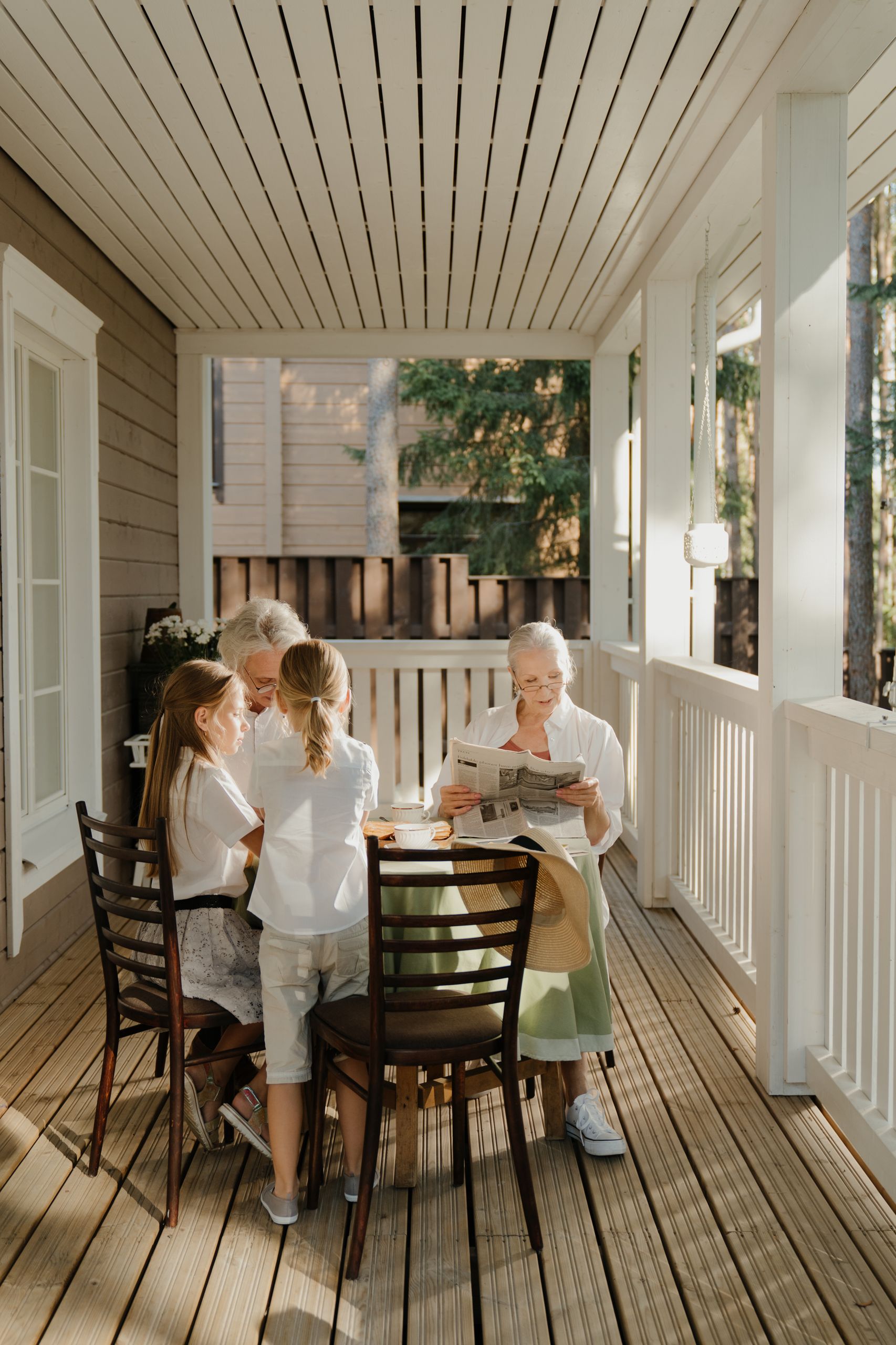
A bowl of fruit, a cold drink, a plate carried outside, or something shared across the railing can turn sitting into gathering. During warmer months, the porch may become an informal dining room.
Food also gives conversation a reason to continue.
Someone brings another chair. A neighbor receives a plate, or children move in and out while adults talk.
The meal may be simple, but the setting changes its meaning.
Eating outside places nourishment inside the life of the neighborhood rather than behind a closed door.
The Porch Offers Connection Without Constant Performance
Many social settings require preparation.
People dress, travel, purchase something, or present a polished version of themselves. The porch can reduce those demands.
A person may sit outside in work clothes, house shoes, or whatever the day has left on her body. She does not need to entertain everyone who passes.
Presence is enough.
That matters because community should include spaces where people can be known without always being impressive, productive, or cheerful.
Children Learn Community From the Porch
Children absorb social rules by watching adults.
From the porch, they may learn which neighbors receive greetings, when to offer help, how long to listen to an elder, and what kinds of behavior the community considers acceptable.
They also experience a wider circle of adults who know their names.
That visibility can create care and accountability when handled respectfully. A child understands that home extends beyond one building because familiar people exist along the street.
However, children also need privacy and freedom from excessive monitoring.
A healthy community protects young people without treating every movement as public property.
Porches Can Reduce Social Isolation
Loneliness does not always look dramatic.
It may appear as days spent indoors without meaningful conversation or the feeling that nobody would notice an absence. A porch can create a lower-pressure route back into contact.
Someone does not need to attend a large event or initiate a serious conversation.
Sitting outside may be enough to exchange a few words and feel connected to the movement of the neighborhood.
Those brief interactions do not replace close relationships. Still, they remind people that they remain part of a social world.
Not Everyone Has Equal Access to Outdoor Belonging
Porch culture depends on housing design, safety, climate, and ownership.
Many people live in apartments without balconies, buildings with no shared outdoor space, or neighborhoods where sitting outside does not feel safe. Others face extreme heat, pollution, noise, or physical barriers that make outdoor time difficult.
Housing policy shapes community life.
When developments remove porches, stoops, courtyards, benches, and shaded gathering areas, they also remove opportunities for casual connection.
Public and private spaces should support people’s need to see and be seen.
Travel Teaches Me to Notice the Threshold
When I travel, I pay attention to the spaces between buildings and streets.
Balconies, stoops, courtyards, cafés, front steps, and porches reveal how people negotiate privacy and community. Some places encourage public life directly outside the home, while others separate domestic space more sharply from the street.
This connects with my writing about cultural travel shaped by respectful curiosity.
I can observe how people use a space without assuming that one block explains an entire culture. Architecture provides clues, but residents give those spaces meaning.
New Development Can Change the Social Life of a Street
When neighborhoods change, porches often change too.
Older homes may be replaced by buildings with garages, fences, blank walls, or entrances designed for quick movement from car to interior. Even when the new structure offers more square footage, it may create less contact with the street.
Design choices influence social habits.
If residents rarely see one another, conversation becomes less likely. Relationships then require more intention because architecture no longer supports casual contact.
Progress should consider social infrastructure as well as property value.
A Porch Cannot Create Community by Itself
Architecture can invite connection, but people still decide how to use the space.
A porch may remain empty. Neighbors can sit within sight of one another without speaking, while conflict and distrust may prevent easy interaction.
Community requires more than physical proximity.
Respect, consistency, and reciprocal care give the space meaning.
The porch supports those relationships. It cannot replace them.
Why Sitting Outside Still Matters
I value the porch because it allows people to exist between isolation and exposure.
Someone can remain close to home while still participating in the life around it. She can speak or remain quiet, wave or simply watch the evening arrive.
That kind of choice has become increasingly rare.
So many spaces require consumption, formal participation, or a reason for being there. A porch asks much less.
It says a person may sit.
She may take up space without purchasing anything, achieving anything, or turning the moment into content.
What the Porch Still Knows
Porch community grows through small acts of recognition.
A chair gets moved. Someone waves from the sidewalk, or a conversation begins without anyone checking a calendar. News travels, children play, food appears, and people keep track of one another through ordinary presence.
The porch does not need to call itself culture in order to carry culture.
It holds family memory, neighborhood history, social rules, labor, laughter, and the quiet knowledge of who has passed through the space.
At the same time, I do not want to romanticize every version of porch life. Visibility can become surveillance, and community expectations can become restrictive. Good neighborliness requires care without control.
Still, the porch offers something worth protecting.
Communities need spaces where people can be visible without performing and connected without being crowded. They need places where conversation can happen accidentally and where an ordinary chair can become part of a family archive.
A porch sits halfway between home and the world.
Perhaps that is why it understands belonging so well.
Explore more reflections on neighborhood life, public space, memory, and the everyday practices that hold communities together through DG Speaks Culture. You can also discover how porches, streets, courtyards, and gathering spaces shape a traveler’s understanding of place through DG Speaks Travel, or read more about the food, drinks, and shared tables that bring people into conversation through DG Speaks Food.