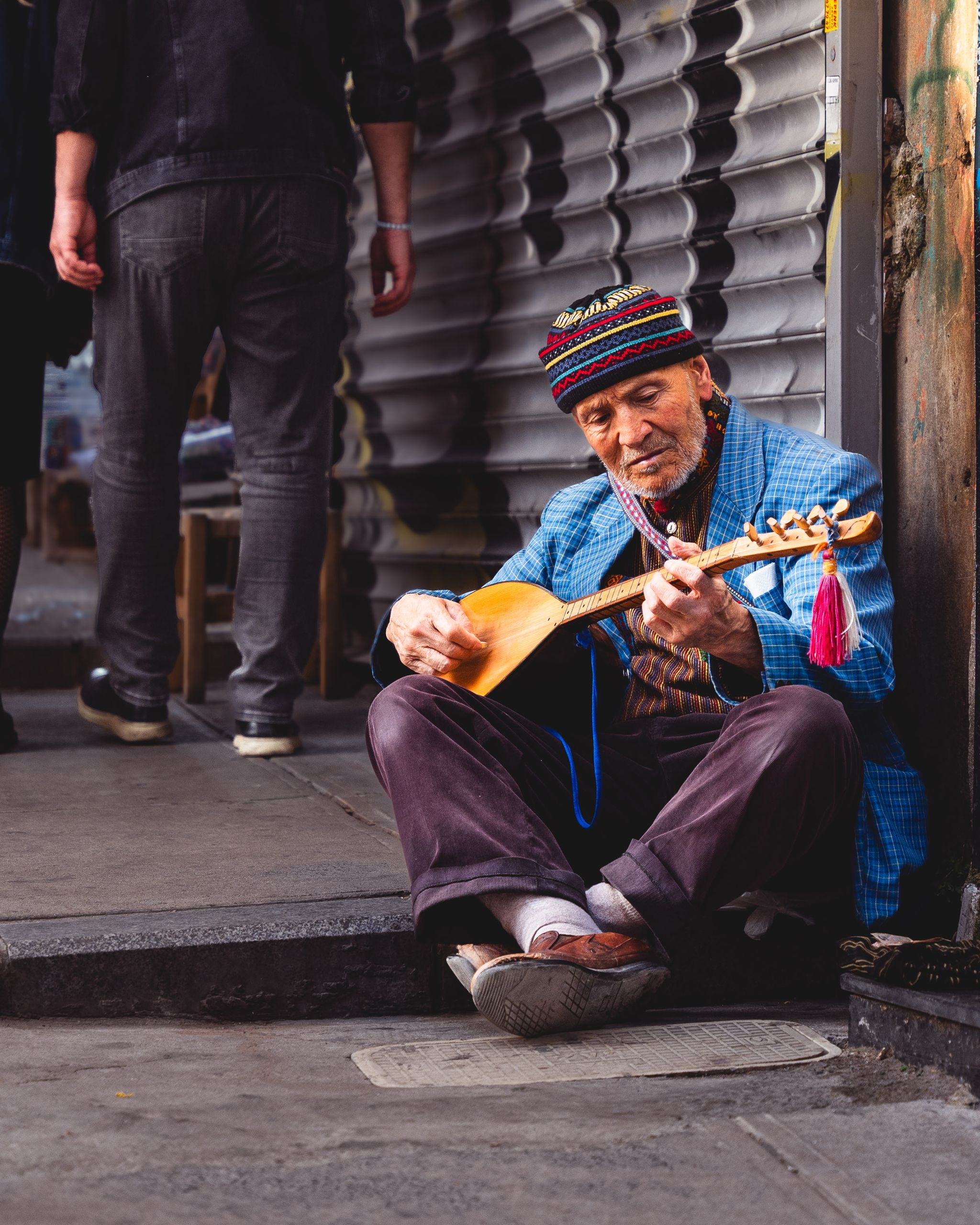
What Street Music Teaches Me About Place
I remember turning a corner in a city I was still learning when music reached me before the street itself came fully into view. The melody floated between the buildings, growing clearer as I walked toward it.
A musician stood near the edge of a small square, playing for a loose circle of people who had stopped without planning to. Some listened closely. Others kept walking, slowing only for a few seconds before returning to wherever they had been going.
I stayed longer than I expected.
Later, I photographed the architecture and visited the places marked on my map. Still, when I thought about that afternoon, the music returned first.
Sometimes I remember the song before I remember the landmark. Street music can turn a corner into a memory before I even understand what I am hearing.
The Song Before the Landmark
Travel often begins with a visual plan. I save photographs, locate buildings, identify viewpoints, and create lists of places I hope to see.
Sound interrupts that preparation.
A song does not wait for me to reach the official attraction. It can find me outside a train station, beside a market, or along a street I chose only because it looked interesting.
The interruption changes the moment. Instead of continuing through the city as though the route belongs entirely to me, I become part of something already happening.
For a few minutes, the destination stops feeling like a collection of sights. It becomes a lived environment with rhythm, mood, and public expression.
A Soundtrack Nobody Scheduled
Street music rarely appears on my itinerary.
I may know that a city has a strong musical tradition, but I cannot predict which song will be playing when I arrive or whether anyone will be performing at all.
That uncertainty is part of what makes the experience memorable. The music feels discovered rather than delivered.
It also resists the polished structure of formal tourism. There is no assigned seat, curtain time, or guarantee that the performance will continue long enough for me to understand it.
A child may begin dancing. A delivery truck can interrupt the sound, while a passing crowd changes the shape of the audience without anyone announcing an intermission.
The performance belongs to public life, which means public life keeps moving through it.
Public Culture Often Lives Outside Formal Rooms
Museums, theaters, and concert halls preserve and present culture in important ways. They provide context, protect artistic work, and create conditions for audiences to pay close attention.
Culture also appears beyond those walls.
It lives in parks, sidewalks, subway platforms, markets, courtyards, and neighborhood festivals. People create, perform, and respond without waiting for an institution to declare the moment significant.
This connects with my approach to respectful curiosity in cultural travel writing. Public expression can offer a meaningful glimpse into a place, but one performance does not explain the entire culture.
I can listen without assuming I now understand every history behind the music. Curiosity should open the experience, not turn a brief encounter into false expertise.
The Street Is Part of the Instrument
Street music sounds different because the city participates in it.
Stone walls create an echo. Traffic adds percussion, and the voices of people passing through become part of the atmosphere.
Weather changes the performance too. Wind can carry the sound down a narrow street, while rain sends the audience under awnings without necessarily ending the song.
A musician adapts to all of it.
That responsiveness gives street performance its particular energy. The artist does not control the room because there is no room to control.
Instead, the performance enters into conversation with the surroundings.
Listening Is Not the Same as Consuming
It is easy to treat street performers as part of a destination’s atmosphere.
Visitors photograph them, record a few seconds, and continue walking as though the music appeared naturally with the architecture. The performer becomes another feature of the street rather than a person doing skilled work.
I try to remember that listening creates a relationship, however brief.
If I stop for more than a passing moment, tipping matters when it is possible and culturally appropriate. So does respecting signs or requests about filming.
A public performance is visible, but visibility does not erase the artist’s right to boundaries.
Attention should include recognition that someone practiced, carried equipment, claimed space, and accepted the uncertainty of performing for people who may or may not stop.
The Crowd Helps Create the Performance
Street music has a pulse because the audience keeps changing.
One person listens with complete focus. Another drops money into a case without slowing, while someone else begins dancing without seeming concerned about who might be watching.
Children often respond most freely. They move toward the sound before adults decide whether stopping fits the schedule.
The musician reads those reactions. A song may extend because the crowd has gathered, or the energy may change when people begin clapping along.
No two performances unfold in exactly the same way because the audience is never the same.
The moment becomes collaborative, even when most people never speak to one another.
Music Can Reveal a City’s Mood
A walking tour can explain when a district was built, why a monument matters, or how a neighborhood changed over time. That knowledge gives the city structure.
Music offers something less fixed.
It can reveal how the street feels at that particular hour. A slow song in the early evening creates one mood, while drumming in a crowded square produces another.
Guided experiences through GetYourGuide can provide valuable historical and cultural context, especially when local guides connect public spaces to the people who shaped them.
Street music gives me the present tense.
The guide may explain what the city has been. The musician helps me feel what the city is doing right now.
Public Art Depends on Public Space
Street performers need places where gathering remains possible.
That may sound obvious, but public space is constantly shaped by policy, development, policing, noise regulations, licensing requirements, and commercial priorities.
A square may look open while limiting who can remain there and what kinds of expression are permitted. A neighborhood can celebrate artistic identity while making it increasingly difficult for local artists to afford housing or workspace.
Public culture does not survive through admiration alone.
It depends on whether cities protect accessible places for people to perform, gather, and participate without purchasing entry.
This relates to how community resilience begins before a crisis. Shared spaces help people build recognition, trust, and collective memory during ordinary times.
A musician on a corner may not appear to be part of public infrastructure. Still, the gathering around that music can strengthen a sense that the city belongs to more than traffic and commerce.

A DG Speaks Recommendation
I want more years to wander through cities, follow the music, and remain open to unscheduled moments
I partnered with Happy Aging to share products that support energy, vitality, and a life that stays active, curious, and connected to the world around me.
Filming Can Change the Moment
My instinct as a storyteller is often to record what moves me.
A few seconds of music can help me preserve the atmosphere of a place in a way that a photograph cannot. Sound brings movement back into the memory.
Still, the phone changes how I listen.
Once I begin framing the shot, checking the light, and deciding how long to record, part of my attention leaves the performance. The moment becomes potential content before it has fully become an experience.
I am learning to pause before filming.
Sometimes I record after listening for a while. Other times, I let the song remain undocumented because the memory feels stronger when I receive it without immediately turning it into material.
Not every beautiful moment needs proof.
The Music May Carry Histories I Cannot Hear
A song can sound joyful while carrying a complicated history.
Musical traditions move through migration, colonization, resistance, religion, work, celebration, and grief. Instruments and rhythms may reflect encounters between communities whose relationships were not always equal.
Without context, I may respond only to the surface.
That response is not meaningless, but it is incomplete.
When possible, I want to learn the name of the style, where it developed, and how local people understand it. I also want to avoid turning every sound into a romantic symbol of cultural authenticity.
A performer may be continuing a family tradition. Another may simply be playing a song she loves because it draws a crowd.
Respect includes allowing the artist to be contemporary, experimental, practical, and individual rather than forcing her to represent an entire culture.
The Antidote Is Attention Without Ownership
Travel can encourage the idea that every meaningful encounter belongs to the traveler’s story.
I hear a musician, feel moved, and begin describing the moment through what it meant to me. That perspective is honest, but it should not become the only one that matters.
The antidote is attention without ownership.
I can write about how the music changed my experience while recognizing that the performer has a life, purpose, and audience beyond my memory of the day.
The street existed before I arrived. The song continues carrying meanings I may never fully understand.
My role is not to claim the moment. It is to receive it with enough humility to know that I witnessed only one small part.
Why I Stop to Listen
When I think about that city now, I can still picture the square. The landmarks return after a moment, but the music arrives first.
I remember the sound moving between the buildings, the people forming a loose circle, and the way the afternoon briefly stopped feeling scheduled.
Street music reminds me that a place is never only what it looks like.
A city is also footsteps, conversation, traffic, bells, vendors, laughter, protest, silence, and songs that reach me before I know where they are coming from.
I stop because sound creates another way of knowing the place.
The music may not explain the city’s history or resolve the contradictions held inside its streets. It can still reveal mood, presence, labor, and the human need to make something public.
Sometimes the most memorable travel moments are the ones nobody scheduled for me.
I turn a corner. Someone begins another song, and for a few minutes, the city lets me hear it breathing.
Continue exploring stories about cultural travel, public life, and the moments that reveal how a city feels through DG Speaks Travel.