What the Key Bridge Collapse Teaches Us About Bridge Safety
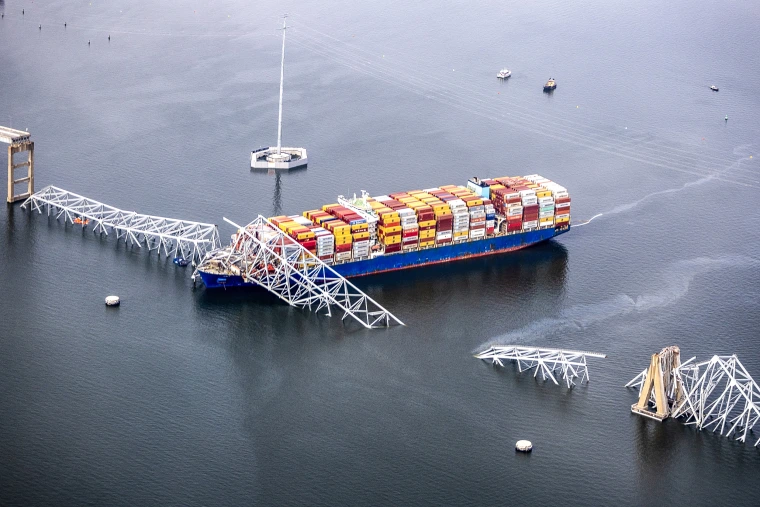
The collapse of Baltimore’s Francis Scott Key Bridge on March 26, 2024, was one of the most devastating infrastructure disasters in recent American history. The tragedy began when the container ship Dali lost electrical power and propulsion while leaving the Port of Baltimore. Moments later, the vessel struck a critical bridge support pier, causing much of the central span to collapse into the Patapsco River.
Six highway construction workers lost their lives. Their deaths should remain at the center of every conversation about the disaster. However, the collapse also raised urgent questions about bridge safety, vessel collision risks, emergency communication, infrastructure resilience, and the protection of workers performing essential jobs.
The disaster did not simply reveal a problem with one type of bridge. Instead, it showed what can happen when a massive modern vessel strikes a critical structural component that was never designed to absorb such an extreme impact.
The Francis Scott Key Bridge Was a Truss Bridge
The Francis Scott Key Bridge was a continuous steel truss bridge. Truss bridges use interconnected steel members arranged in triangular patterns. Together, those components distribute weight and help support the bridge deck.
This design has supported transportation networks around the world for generations. Therefore, the Baltimore collapse should not be interpreted as proof that all truss bridges are unsafe. Every bridge design has strengths, limitations, and specific maintenance requirements.
However, continuous truss bridges may depend heavily on certain structural supports. When the Dali struck one of the Key Bridge’s primary piers, the resulting damage disrupted the system that supported the central spans. The force of the collision overwhelmed the pier, and the bridge collapsed within seconds.
The Real Vulnerabilities Exposed in Baltimore
The disaster exposed several broader infrastructure concerns. These issues extend beyond the Francis Scott Key Bridge and deserve attention wherever major bridges cross active shipping channels.
- Insufficient protection around critical piers: Protective structures called dolphins or fender systems can redirect vessels or absorb part of a collision’s force. However, those systems must match the size, speed, and weight of the ships using the waterway. Protection designed decades ago may not offer enough defense against today’s much larger vessels.
- Dependence on critical structural components: Some bridges contain supports whose failure can trigger a wider collapse. Engineers must identify these components and determine whether additional protection, reinforcement, or redundancy can reduce the risk of catastrophic failure.
- Changing vessel traffic: Cargo ships have grown significantly larger over the past several decades. Meanwhile, many American bridges were designed when ships were smaller and port traffic looked very different. Risk assessments must reflect the vessels using waterways today rather than the conditions that existed when a bridge opened.
- Aging infrastructure: Older bridges require regular inspection, maintenance, and modernization. Corrosion, fatigue, heavier traffic, changing environmental conditions, and evolving transportation patterns can all affect long-term resilience.
Bridge Inspection Alone Cannot Prevent Every Disaster
Bridge inspections remain essential. They help engineers identify corrosion, cracking, damaged components, foundation problems, and other signs of deterioration. Yet an inspection program cannot guarantee that a bridge will survive every possible collision.
A bridge may meet inspection requirements and still remain vulnerable to an extreme event beyond its original design assumptions. Consequently, bridge safety must include more than checking the condition of steel and concrete.
Authorities must also evaluate the surrounding transportation environment. That process includes examining vessel size, shipping frequency, channel design, current patterns, wind conditions, navigational hazards, pier placement, emergency response procedures, and the potential consequences of a collision.
Lessons from the Francis Scott Key Bridge Collapse
The collapse offers several critical lessons for transportation agencies, port authorities, engineers, shipping companies, and government leaders.
- Reevaluate vessel collision risks: Bridges crossing navigable waterways need updated risk assessments based on modern shipping conditions. Reviews should consider vessel size, cargo weight, traffic frequency, navigation patterns, and the possible consequences of losing a major support pier.
- Strengthen pier protection: Some bridges may need larger dolphins, stronger fender systems, artificial islands, reinforced barriers, or other structures capable of redirecting ships before they reach critical supports.
- Improve shipboard reliability: Shipping companies must maintain electrical, propulsion, steering, fuel, and backup systems. A failure aboard a large vessel can quickly become a threat to workers, communities, infrastructure, and regional economies.
- Modernize emergency communication: The Dali issued a distress call before striking the bridge. Police officers stopped vehicle traffic, which likely prevented additional deaths. However, emergency systems must also reach construction crews, inspectors, maintenance workers, and others who may already be on a bridge.
- Protect workers during overnight construction: Road workers often perform dangerous jobs while the public sleeps. Emergency plans should account for their locations, transportation options, supervisors, communication equipment, and evacuation routes.
- Invest before disaster strikes: Infrastructure spending often follows a tragedy. Yet prevention usually costs less than rebuilding a bridge, restoring a port, supporting displaced workers, and repairing regional supply chains after a catastrophic collapse.
What the Golden Gate Bridge Can Teach Us
The Golden Gate Bridge offers a useful comparison because it uses a different structural system. Rather than relying on a truss as its primary support system, the bridge uses enormous suspension cables draped over towers and anchored at both ends.
Suspension bridges can cross wider stretches of water while limiting the number of piers placed within a navigation channel. That feature may reduce certain vessel collision risks. Still, it does not make suspension bridges immune to structural threats.
The Golden Gate Bridge faces high winds, saltwater corrosion, earthquakes, heavy traffic, and constant exposure to the marine environment. As a result, the bridge has required continuous maintenance and major upgrades throughout its life.
- Long-span engineering: The suspension design allows the bridge to cross the Golden Gate Strait with fewer supports in the water than many shorter-span bridge systems would require.
- Flexible structural movement: Suspension bridges can move in response to wind, traffic, and changing temperatures. However, engineers must carefully control that movement to prevent excessive twisting or instability.
- Wind retrofits: Engineers strengthened the Golden Gate Bridge’s deck after observing significant movement during periods of high wind. The upgrades demonstrate how bridge designs must evolve as engineers learn more about structural behavior.
- Seismic reinforcement: The bridge has undergone a multiphase seismic retrofit program designed to strengthen its towers, approaches, foundations, anchorages, and other critical components.
- Ongoing maintenance: Corrosion prevention, painting, inspections, repairs, and structural monitoring remain essential. Even an iconic engineering achievement requires constant care.
The better lesson, therefore, is not that suspension bridges are universally safer than truss bridges. Instead, the Golden Gate Bridge demonstrates the value of ongoing assessment, adaptation, maintenance, and investment.
Building Infrastructure for the World We Have Now
Many bridges in the United States were designed for a different era. The ships were smaller. Traffic patterns were different. Climate risks received less attention. Engineers also had fewer tools for modeling collisions, earthquakes, wind, corrosion, and structural failure.
Today, infrastructure planning must respond to present-day realities. That means reassessing older bridges near busy ports, strengthening critical supports, improving emergency systems, and developing realistic plans for low-probability but high-consequence events.
Technology can support this work. Sensors can track structural movement, corrosion, vibration, and unusual stress. Vessel monitoring systems can identify ships moving outside expected routes. Meanwhile, automated warnings can alert bridge operators and emergency responders when a collision becomes likely.
Nevertheless, technology cannot replace sound policy, responsible maintenance, trained workers, and long-term public investment. Resilient infrastructure requires all of those elements working together.
Honoring the Lives Lost Through Action
The Francis Scott Key Bridge collapse disrupted transportation, shipping, employment, and daily life throughout the Baltimore region. More importantly, it took the lives of six men who were working on the bridge that night.
Remembering them requires more than discussing steel, ships, engineering, and economics. It requires protecting the people who build, inspect, repair, and maintain the infrastructure that keeps our communities moving.
The tragedy should lead to stronger vessel safeguards, better worker communication, modernized emergency procedures, updated collision assessments, and serious investment in aging bridges. We cannot eliminate every risk. However, we can learn from disaster and refuse to accept preventable vulnerabilities as the cost of doing business.
Bridge safety is not merely an engineering concern. It is a public safety commitment. It is also a promise to workers, travelers, families, and communities that the systems they depend on will receive the vigilance and investment they deserve.