Walking Is One of the Ways I Return to Myself
Sitting still is not always the easiest way for me to find quiet. Sometimes my mind becomes louder the moment my body stops moving.
Walking changes that relationship. My thoughts do not disappear, but they have somewhere to go. The movement gives them space to stretch, settle, and sometimes rearrange themselves into something I can understand more clearly.
That is why walking meditation for mental wellness has become such an important part of my life. I do not need an empty mind or a perfectly peaceful setting. I need movement, breath, attention, and enough time for my nervous system to find a steadier rhythm.
Walking gives my thoughts somewhere to move
When I remain in one place, a difficult thought can feel trapped. It circles the same questions, repeats the same fears, and grows heavier because nothing around it changes.
Walking introduces motion. The scenery shifts. My breathing changes. The body has a task, and the mind no longer has complete control of my attention.
A problem may still follow me, but it often begins to feel less permanent. Movement reminds me that I am not stuck, even when I do not yet have an answer.
Repetition can create calm
Step after step, the body settles into repetition. My breathing becomes more regular. The urgency surrounding a problem may begin to soften.
A difficult thought can move through several emotional shapes over the course of a walk. Anger may become clarity. Fear may become a practical question. Grief may remain grief, but it can feel less trapped inside me.
This does not happen on every walk. Sometimes I remain frustrated, sad, or uncertain. Still, movement often changes the condition in which I meet those feelings.
The environment brings me back to the present
Uneven ground, changing weather, traffic, birds, trees, and other people all require attention. That attention interrupts the loop of internal worry.
I have to notice where I place my feet. I need to hear approaching cars, observe a change in the trail, or adjust when the wind shifts. The physical world keeps asking me to return.
I cannot remain completely lost in thought while navigating my surroundings. The body brings me back to where I am.
The Camino made this practice impossible to ignore
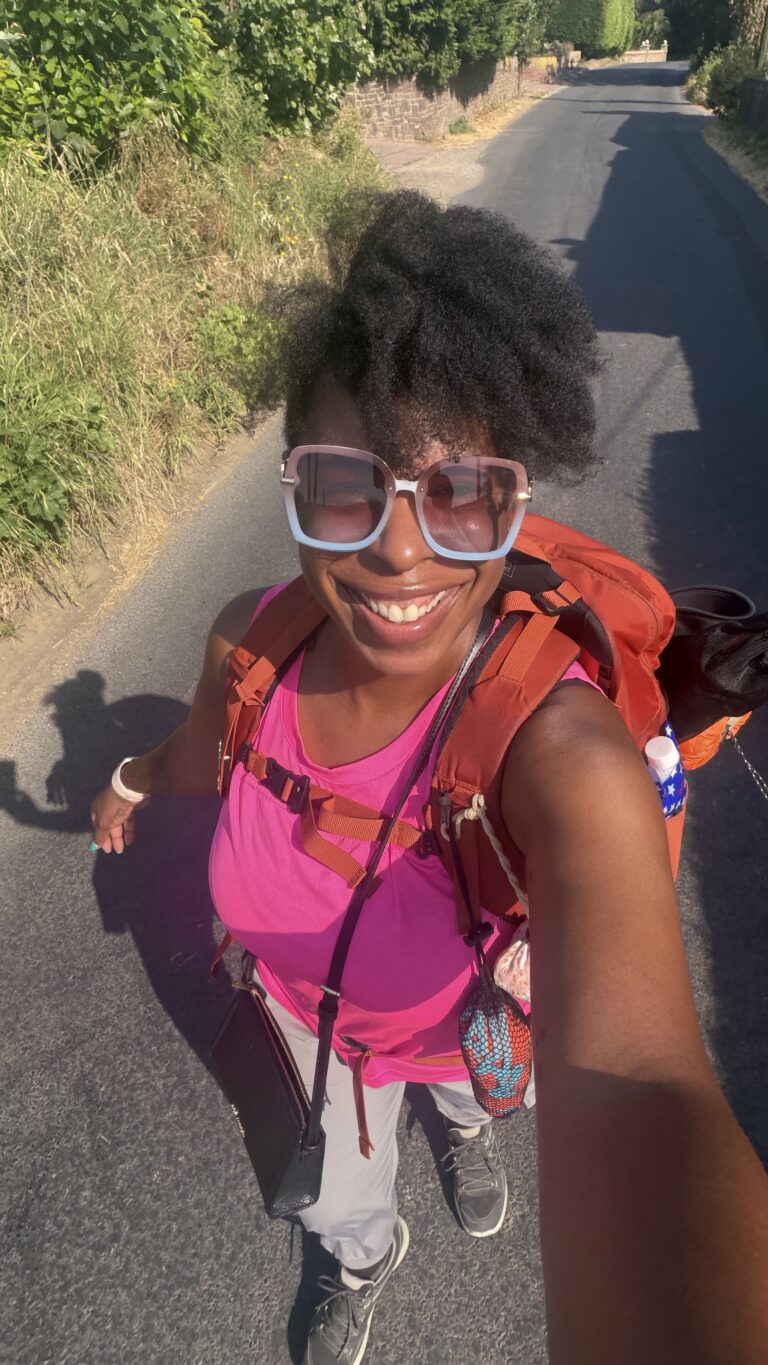
During the Camino de Santiago, walking became more than transportation. It shaped the way I processed pain, uncertainty, fear, fatigue, beauty, and the constant question of whether I could continue.
Some days, the physical challenge overwhelmed everything else. During my first week, pain in my back, hips, and knees brought me to tears. I had to rest, send my backpack ahead, and accept help when my original plan became too much for my body.
Even then, walking created space for reflection. The road taught me that adaptation was not failure. I could slow down, shorten a day, or change the way I carried my belongings without abandoning the journey.
I explore that physical lesson more fully in The Camino Brought Me to Tears: How I Am Preparing My Body Differently at 50.
The Camino also showed me that mental wellness does not always arrive through comfort. Sometimes it grows through movement, repetition, honest limits, and the discovery that I can continue without treating suffering as proof of worth.
Walking helps me think more deeply
My work depends on ideas, but constant digital input can make thought feel shallow. Messages, videos, notifications, and unfinished tasks break attention into small pieces.
Walking creates longer thought.
I can stay with one question, dictate a note, reconsider a decision, or allow an idea to remain unfinished until it becomes more honest. Some of my best insights arrive after I have stopped trying to force them.
The rhythm of walking often helps me connect ideas that appeared unrelated while I was sitting at a screen. My body moves forward, and my thinking begins to move with it.
Some walks need silence
I enjoy audiobooks, language lessons, podcasts, and music. They can make a long walk entertaining, educational, or emotionally powerful.
Still, not every mile needs a soundtrack.
Silence allows me to hear my surroundings and notice what rises when I stop filling every empty space. It can reveal thoughts I have been avoiding, but it can also create relief from the constant demand to consume something.
I do not need to choose between stimulation and silence forever. I can decide what a particular walk requires.
Walking meditation does not require a perfect setting
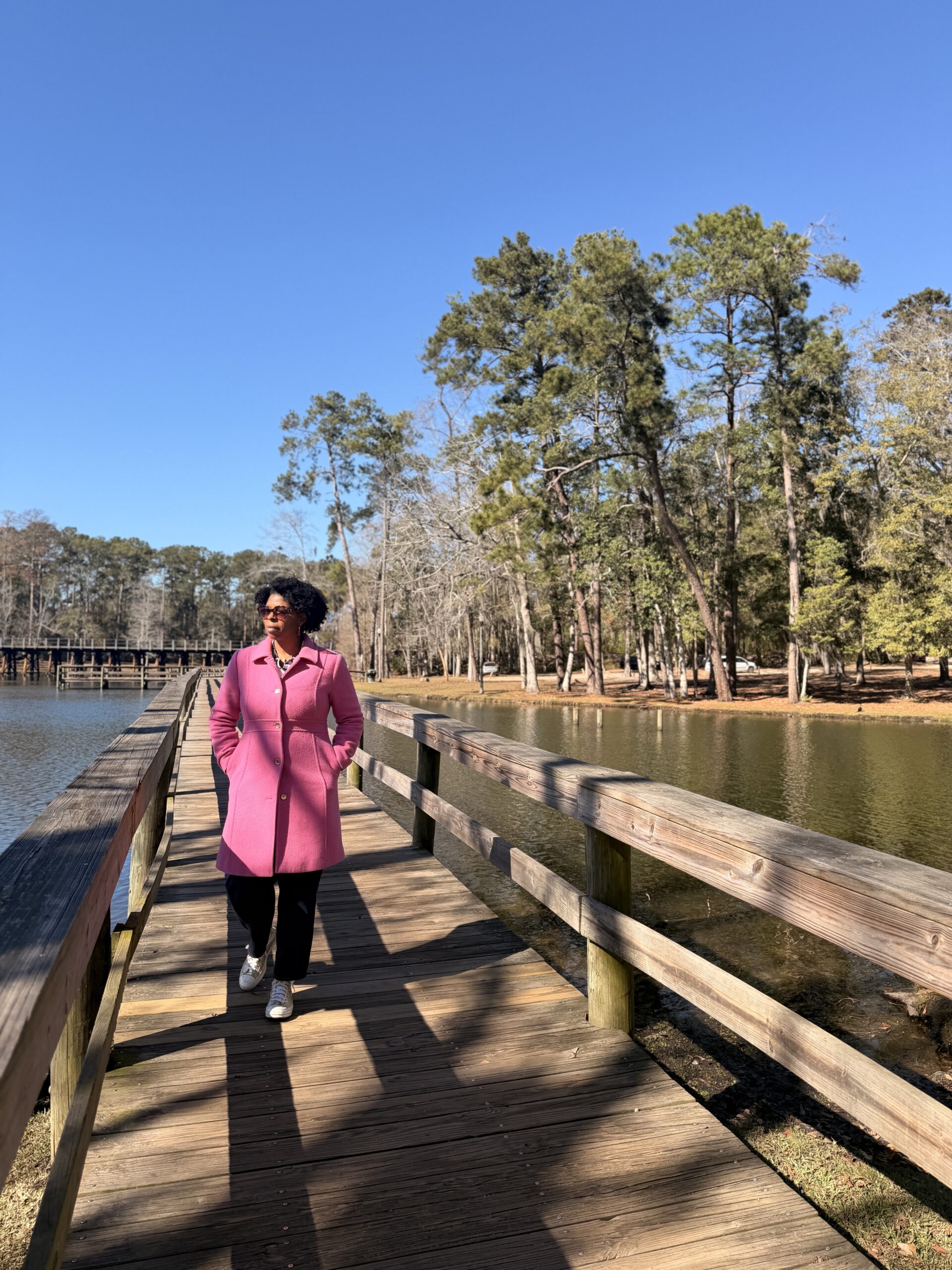
A forest trail may feel peaceful, but mindful walking can happen on a city sidewalk, through an airport, around a neighborhood, or along a path beside a busy road.
The practice begins with attention. I can notice the contact between my feet and the ground, the pace of my breath, the movement of my arms, or the temperature of the air.
When my thoughts wander, I do not need to judge myself. I can return to the next step.
That simple return is the practice.
Formal meditation still supports the practice
Sitting meditation helps me strengthen many of the same skills I use while walking: noticing, breathing, returning, and allowing a thought to pass without chasing it.
It also gives me a way to settle when movement is not available. A few quiet minutes can create distance between what I feel and how I respond.
Readers can use my Calm guest pass to explore guided meditation, relaxation, and sleep support.
Walking supports my physical wellness too
The mental benefits matter deeply to me, but walking also supports the physical life I want to maintain at 50.
Regular walking helps me spend more time on my feet, build endurance, support mobility, and prepare for the travel experiences I still want to have.
It does not replace strength work, sleep, nourishment, or recovery. Instead, it becomes one part of a broader approach to wellness.
I explore the wider physical and emotional benefits in The Benefits of Hiking for Women and Wellness Beyond Weight Loss.
Walking helps regulate stress without pretending it disappears
I do not want to romanticize walking as a cure for every emotional or mental-health concern. A walk cannot replace therapy, medical care, medication, community, or the practical changes a difficult situation may require.
What walking can do is help me meet stress from a more regulated place. It gives my body an outlet for tension and creates a pause before I make decisions from fear, frustration, or exhaustion.
Sometimes I return with an answer. Other times, I return with enough calm to accept that an answer has not arrived yet.
Movement helps me return to myself
Walking does not solve every problem. It changes the condition in which I meet the problem.
After enough time on my feet, I often feel less crowded inside. My body has worked. My mind has stretched. The world feels larger than the issue that followed me out the door.
That is why walking remains central to my wellness. It strengthens my body while giving my inner life room to breathe.
At 50, I am not walking only to burn calories or reach a destination. I am walking to stay connected to my body, protect my mobility, create space for ideas, and remember that I can move through difficult moments one step at a time.
Some days, the walk leads me toward clarity. On others, it simply carries me back to myself.