
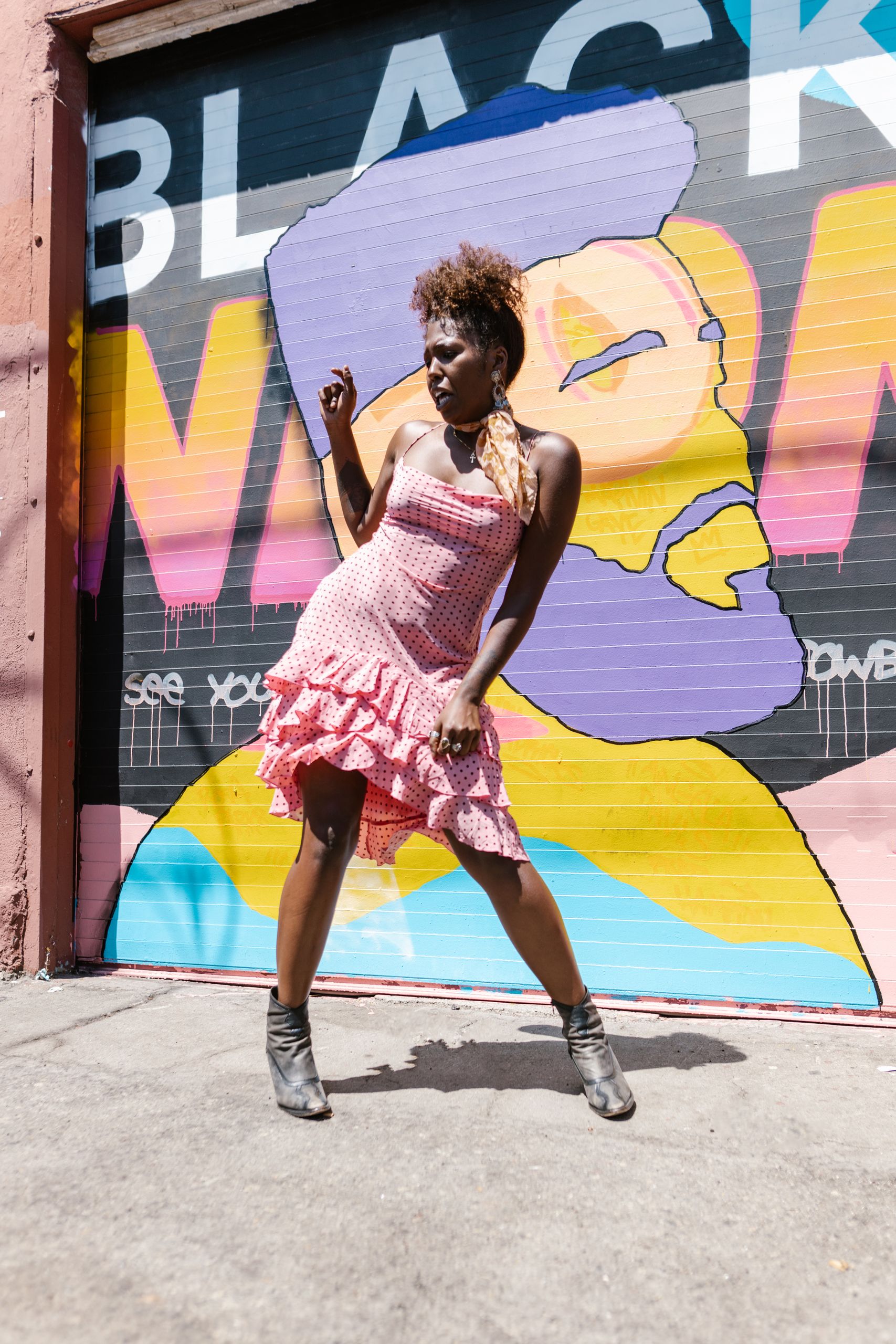
The Top 5 Black Girl Power Anthems That Resonate With Me and The Reasons Why
Music reaches places in us that ordinary conversation cannot.
The songs that move us become part of our personal history. A familiar bass line can return us to a particular room, relationship, city, struggle, or version of ourselves before the first verse even begins.
For Black women, music can offer celebration and recognition. However, it can also reinforce harmful ideas about our bodies, sexuality, relationships, and value.
Black women have always occupied a complicated position within popular music. Our voices, style, language, labor, and bodies help shape the culture, yet we do not always control the institutions that profit from our influence.
That is one reason I hold tightly to songs that allow Black women to sound powerful, confident, ambitious, sexual, imperfect, and fully aware of our own value.
Traditional conversations about women’s empowerment often expect the message to sound polished, respectable, and universally inspiring. However, empowerment does not always arrive wrapped in polite language.
Sometimes it sounds like bragging. Sometimes it sounds like survival. At other times, it sounds like a woman naming her beauty, money, sexuality, influence, or authority without asking anyone’s permission.
These five Black girl power anthems resonate with me because each one gives women permission to claim something we are often expected to minimize.
For more reflections on voice, confidence, and self-definition, read my guide to self-discovery books by Black women that encourage us to live out loud.
1. “Conceited” by Remy Ma
Listen to “Conceited” on Spotify
The first time I remember seeing Remy Ma was in the video for M.O.P.’s “Ante Up” remix.
Glamorous would not have been the first word I used to describe her appearance. She looked like a New York around-the-way girl dressed for combat, and her delivery matched the visual.
She entered an otherwise male-dominated performance with enough presence and lyrical force to make herself impossible to overlook.
Later, “Conceited” introduced a more polished and openly self-celebratory version of Remy. The energy felt like a declaration: I know exactly who I am, I know what I bring, and I will not dim my light to make anyone else comfortable.
That message reached me deeply.
For much of my life, I felt that few people genuinely celebrated me or my accomplishments. My mother did, but outside of her love, I often felt as though I had to accomplish something extraordinary before anyone noticed.
Women are frequently warned against sounding too impressed with ourselves. Black women face an additional tension because confidence can quickly be recast as arrogance, aggression, or an inflated sense of importance.
“Conceited” rejects that expectation.
The song reminds me that self-recognition is not a moral failure. I do not have to wait for an audience, partner, employer, friend, or institution to validate what I know about myself.
Celebrating yourself does not mean believing you are better than everyone else. It means refusing to participate in your own erasure.
What this anthem gives me: permission to acknowledge my beauty, accomplishments, talent, and value without immediately softening the statement.
2. “Bodak Yellow” by Cardi B
Listen to “Bodak Yellow” on Spotify
I have experienced periods of extreme poverty as an adult.
There were moments when my housing was not secure and when I understood that survival sometimes requires choices people with more resources find easy to judge.
That experience shaped the way I responded to Cardi B.
Before becoming a global celebrity, she spoke openly about working as a stripper and using the opportunities available to her to survive and create a different future.
I do not believe anyone has the right to dictate what another adult may do with her own body. Nor do I believe people should be criminalized, endangered, or stripped of dignity because they performed sexual labor or made choices under economic pressure.
That does not mean stripping or sex work should become every girl’s aspiration. It means we should understand the conditions that shape people’s decisions before reducing their lives to easy moral judgments.
“Bodak Yellow” exploded because Cardi did not present herself as ashamed of her past.
She treated survival as part of her story rather than something that disqualified her from success. The song transformed that story into a victory lap about money, ambition, independence, and upward movement.
Women everywhere began talking about making money moves because the phrase captured something larger than income.
It expressed the decision to stop waiting for permission, stop accepting less, and take concrete action toward a different life.
Cardi’s appeal also came from her refusal to manufacture respectability after achieving success. She remained loud, funny, vulgar, emotional, and unmistakably herself.
People may debate every choice she has made. Nevertheless, “Bodak Yellow” gave millions of women a soundtrack for ambition that did not require pretending the path had been clean or easy.
What this anthem gives me: permission to respect the woman who survived, even when her path does not fit someone else’s definition of respectable.
3. “Feeling Myself” by Nicki Minaj Featuring Beyoncé
Listen to “Feeling Myself” on Spotify
A list of Black girl power anthems would feel incomplete without Beyoncé.
I remember when she first emerged as a teenager with Destiny’s Child. Despite her youth, people criticized her voice, body, dancing, acting, appearance, and personality.
The level of hostility directed toward a young woman developing her craft felt excessive to me. Yet she continued working.
Project after project, she became more disciplined, more commanding, and more deliberate about how she presented her art. Watching that evolution taught me something important about refusing to let public criticism determine the limits of your potential.
Of course, “Feeling Myself” is Nicki Minaj’s song, and Nicki is a Black girl force in her own right.
The pairing works because neither woman approaches the record as though she needs to apologize for being successful, talented, wealthy, desirable, or influential.
They know they are at the top of their game, and the song creates space for listeners to borrow that confidence for a few minutes.
Women are frequently instructed to remain humble in ways that make our accomplishments less visible. We may acknowledge success only after crediting luck, mentors, timing, teamwork, or someone else’s sacrifice.
Gratitude matters, but constantly minimizing ourselves is not gratitude. Sometimes it is conditioning.
“Feeling Myself” asks a wonderfully simple question: Why should I not feel good about who I am and what I have accomplished?
That question remains radical in a culture that often prefers powerful women to act surprised by their own power.
What this anthem gives me: permission to enjoy the version of myself I worked hard to become.
4. “Milkshake” by Kelis
Listen to “Milkshake” on Spotify
Kelis appears twice on this list because she has always been that powerful to me.
I remember first discovering her while I was living in Atlanta and spending time at my friend Shawna’s house.
At that point in my life, I was dating women. Shawna’s home functioned almost like a lesbian clubhouse. There always seemed to be seven or eight women around, many navigating overlapping relationships and varying degrees of polyamory.
The house contained more than enough drama. Still, the love and freedom inside it made the experience worthwhile.
Regardless of where any of us fell on the sexuality spectrum, we had a place where we could relax and be ourselves.
One day, Kelis appeared on the television in the video for “Caught Out There,” screaming her frustration with wild half-pink, half-blonde hair and an energy none of us had seen before.
The entire house went wild.
Kelis did not present herself as a polished pop princess. She looked experimental, emotional, loud, sexually confident, and completely uninterested in being easily categorized.
Then came “Milkshake.”
The song was playful, provocative, bass-heavy, and unapologetically sensual. Its power did not come from asking whether men found Kelis desirable. She already knew they did.
That distinction matters.
Women’s sexuality is often presented as something performed for male approval. “Milkshake” felt different because Kelis appeared fully aware of the effect she created and completely in control of the invitation.
The video’s diner setting, choreography, humor, food imagery, and simmering sensuality made the entire experience unforgettable.
Even now, the opening beat makes my hips move before I have consciously decided to dance.
The song reminds me that bodily confidence can be playful. A woman can enjoy being seen without surrendering ownership of herself.
What this anthem gives me: permission to enjoy my sexuality without treating desire as shameful.
5. “Bossy” by Kelis Featuring Too Short
Just when I thought Kelis had already given women everything we needed, she released “Bossy.”
This is the song for a woman who knows how to lead, makes decisions, sets the standard, and refuses to pretend she arrived by accident.
The word “bossy” has often been used to punish girls and women for the same behavior praised as leadership in men.
A man speaks directly, and people call him decisive. A woman does the same, and someone may describe her as difficult, controlling, intimidating, or bossy.
Kelis does not defend herself against the label. She claims it.
That reclamation gives the insult nowhere to land.
The song’s confidence comes from a woman openly stating that she creates momentum, raises expectations, and influences what happens around her.
She does not pretend to be standing on the sidelines while somebody else runs the show.
I love that energy because women are often encouraged to do the work quietly while allowing someone else to receive the recognition.
“Bossy” rejects that arrangement. It says: I know I changed the room, and I am not going to act confused about it.
What this anthem gives me: permission to lead without translating my authority into language that feels more comfortable to other people.
Black Women Deserve Songs That Let Us Take Up Space
None of these songs presents a perfect theory of liberation.
They are commercial records created within an industry that still profits from narrow ideas about women, beauty, sexuality, money, and power.
However, art does not need to solve every social problem before it can give us something meaningful.
These songs gave me moments when Black women sounded certain of ourselves.
Remy Ma celebrates herself. Cardi B refuses shame. Nicki Minaj and Beyoncé enjoy their success. Kelis claims both sexuality and authority.
Each record pushes against the expectation that women should remain small enough to be easily managed.
That expectation follows Black women into workplaces, relationships, families, classrooms, creative industries, and public life.
We are told to be confident but not intimidating. Attractive but not conceited. Sexual but not too sexual. Ambitious but still available to care for everyone else.
The standard keeps moving because the real demand is not balance. It is control.
A power anthem interrupts that control, even temporarily.
It gives us three or four minutes to stop explaining, softening, apologizing, and making ourselves easier to digest.
Confidence Does Not Require Perfection
One reason these records still resonate with me is that none of the women sounds as though she waited to become perfect before claiming power.
That lesson matters beyond music.
Many women postpone confidence until we lose weight, earn more money, receive another credential, find a partner, heal every wound, or become successful enough that nobody can question us.
Yet someone will always question us.
Confidence cannot depend on universal agreement because universal agreement will never arrive.
Living fully requires us to know ourselves while remaining unfinished.
That includes celebrating our achievements without pretending we never struggled. It includes setting boundaries before we have mastered them and claiming beauty even when we are still learning how to love our reflections.
I explored that lesson from another angle in my personal story about hair loss, beauty, and finding my identity beyond my appearance.
The person we celebrate does not have to be flawless. She only has to be ours.
The Soundtrack to Living Out Loud
My definition of living out loud has never meant performing every private detail for an audience.
It means refusing to construct my life entirely around fear, shame, respectability, or someone else’s definition of who I should be.
Some days, living out loud looks courageous and dramatic.
Other days, it looks like dancing in my own space, remembering what I have survived, and allowing a song to reconnect me with my power.
That is what these tracks do for me.
They remind me that I can celebrate myself, pursue money without shame, enjoy my body, acknowledge my accomplishments, and lead with authority.
I do not need every song to offer a policy platform or a perfect feminist message.
Sometimes I need the beat to drop and a Black woman to sound completely certain that she belongs at the center of her own life.
Which Black girl power anthem makes you stand taller, dance harder, or remember exactly who you are? Share your song in the comments.
Frequently Asked Questions
What is a Black girl power anthem?
A Black girl power anthem is a song that helps Black women feel confident, celebrated, ambitious, autonomous, or unapologetic. The message may focus on success, survival, beauty, sexuality, independence, leadership, or self-worth.
Are all empowerment songs politically conscious?
No. Some songs offer direct social or political messages, while others empower listeners through confidence, pleasure, ambition, self-celebration, or the refusal to feel ashamed.
Why do confidence anthems matter for Black women?
Black women regularly encounter stereotypes that frame us as too loud, aggressive, difficult, sexual, ambitious, or self-important. Songs that confidently embrace those qualities can help listeners challenge the pressure to shrink themselves.
Which artists appear on this Black girl power playlist?
The list features Remy Ma, Cardi B, Nicki Minaj, Beyoncé, and Kelis. Each artist represents a different expression of confidence, ambition, sexuality, survival, or leadership.
Where can I listen to these songs?
Each section includes a link to the song on Spotify. Availability may vary by region and subscription level.
Keep Exploring on DG Speaks
- Five Self-Discovery Books by Black Women
- Best Books to Read in January: A Celebration of Black Girl Magic
- When My Hair Fell Out, I Had to Find Myself Again
- Explore More DG Speaks Stories
Editorial note: The interpretations in this article reflect my personal experiences and responses to the songs. Song titles and artist names belong to their respective rights holders.



One Comment
Comments are closed.